About 193 minutes
The Adventure Girls at Happiness House — Context and Discussion
Childrens Adventures
44,274 recorded words. 0 minutes difference from this book's estimate.
View Gutenberg source #45343
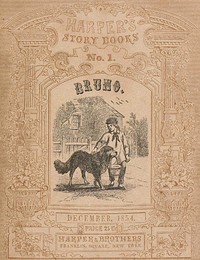
This digital edition of Bruno; or, lessons of fidelity, patience, and self-denial taught by a dog — Reading Notes is described by source-level measurements including 44,244 words, 3 hr 13 min estimated reading time, and 7 detected text sections.
The text analysis averages about 17.7 words per sentence, while the detected sections provide another way to judge how the source is divided.
Project Gutenberg metadata also associates the work with “Dogs -- Juvenile fiction,” connecting these edition facts with the source record’s subject description.
Explore this collection
These alternatives are selected using recorded categories and estimated reading time.
About 193 minutes
Childrens Adventures
44,274 recorded words. 0 minutes difference from this book's estimate.
View Gutenberg source #45343About 193 minutes
Childrens Adventures
44,285 recorded words. 0 minutes difference from this book's estimate.
View Gutenberg source #53448About 194 minutes
Childrens Adventures
44,482 recorded words. 1 minutes difference from this book's estimate.
View Gutenberg source #48655Search stored excerpts and compare books → Choose by your preferences →
Choices use stored catalog measurements. Estimates vary with reading speed. A shared category is a catalog label, not a claim that two books have the same argument or literary quality.
Search reads excerpt text stored with this catalog and links to its associated Gutenberg record. The connection is stored in the site database; this tool does not recheck that every excerpt is word-for-word identical to that external record. Excerpt search does not cover every chapter and does not verify historical publication dates.
Catalog snapshot checked: 2026-09-25. Coverage: 98 public books, 98 available source excerpts.
Calculated from edition completeness, EPUB availability, text structure and catalogue metadata. Not a user rating.
Total of 100 points, scaled to a 2.5-5.0 range. Editions with an empty description or a missing EPUB file are not scored.
Public-domain source text
The source text is kept in the dedicated reader, separate from this catalogue record and its commentary.
Jacob Abbott opens Bruno; or, Lessons of Fidelity, Patience, and Self-Denial Taught by a Dog with a preface that frames the book as the first of a monthly series intended to combine amusement with substantial instruction. The narrative itself, however, quickly moves from didactic framing to concrete scenes: a harbor, a boat, and two boys waiting for the tide. Abbott’s method is to embed moral exempla within physical predicaments, using the natural world—especially water and its movements—as both setting and teacher.
The excerpt centers on a single, patient action: waiting for the tide to turn. Abbott devotes careful attention to the physical details of the boys’ situation—the ripple at the bows, the falling water level, the increasing shallowness. The tide is not merely a backdrop but a mechanism that drives the scene’s tension and resolution. The boys watch the bottom, discuss the danger of grounding, and decide against drifting seaward. This focus on a natural process allows Abbott to dramatize patience without abstract moralizing. The tide’s gradual ebb and flow becomes a recurring image that structures the boys’ decision-making, mirroring the self-denial and fidelity promised in the title.
When Antony proposes warping the boat—pulling up the anchor, throwing it forward, and drawing the boat toward it—Abbott describes the operation step by step. The rope passes obliquely under water; the grapnel is swung and thrown. This precise, physical sequence embodies the lesson of patience through methodical effort. The boys do not wait passively; they act within their limited means. The warping process, repeated several times, becomes a metaphor for incremental progress. Abbott’s prose mirrors this: short, declarative sentences track each movement, grounding the moral in tangible action rather than precept.
The scene’s climax arrives not through the boys’ own efforts but through an external sound: the splash of oars. Larry’s attention is suddenly caught; he sees a boat headed directly toward them. Abbott uses this moment to shift focus from the boys’ internal patience to the arrival of help. The gig, with Jack on board, represents the community’s fidelity—a counterpart to Bruno’s canine loyalty. The excerpt ends before the rescue is complete, leaving the reader with the image of approach rather than resolution. This structural choice emphasizes the ongoing nature of the lessons: patience is not rewarded with a neat conclusion but with the promise of continued assistance.
Throughout the excerpt, water is described with sensory precision: the ripple at the bows, the gliding current, the oblique rope under the surface. Abbott uses water to create a tangible environment for moral instruction. The harbor is not a generic setting but a specific space where depth, current, and tide dictate action. The boys’ view of the town from their boat underscores their isolation, yet the water also connects them to the pier and the gig. This dual role—separating and linking—mirrors the tension between self-denial and community. Abbott’s recurring images of water, boats, and tides give the narrative a cohesive physical logic that supports its moral framework.
Readers approaching Bruno will find that Abbott’s lessons emerge not from direct exhortation but from the careful arrangement of physical details. The tide, the boat, the rope, and the sound of oars all carry moral weight without being reduced to symbols. Pay attention to how Abbott uses movement between scenes—from the ship to the harbor, from waiting to action—to structure the narrative. The dog Bruno himself appears only briefly in these excerpts, but the lessons of fidelity, patience, and self-denial are already at work in the boys’ predicament.
Reading about Bruno waiting for the tide, I remember sitting on our porch watching our old dog stare at a closed gate, expecting a friend who never came. That patient stillness felt like the whole world slowed down. The Flying Machine Boys in the Wilds; Or, The Mystery of the Andes — Themes and Context stirred a similar quiet ache, boys lost in mountains, learning to wait without knowing the answer.
Build a private reading journal entry for this title.









