About 241 minutes
Wings Over the Rockies; Or, Jack Ralston's New Cloud Chaser — Reading Notes
Childrens Adventures
55,361 recorded words. 2 minutes difference from this book's estimate.
View Gutenberg source #45627
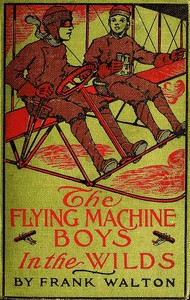
The Flying Machine Boys in the Wilds; Or, The Mystery of the Andes — Themes and Context can be approached with a clearer sense of reading commitment from its source measurements: 54,918 words, 3 hr 59 min estimated reading time, and 24 detected text sections.
The text analysis averages about 13.1 words per sentence, while the detected sections provide another way to judge how the source is divided.
Project Gutenberg metadata also associates the work with “Mystery and detective stories,” connecting these edition facts with the source record’s subject description.
Explore this collection
These alternatives are selected using recorded categories and estimated reading time.
About 241 minutes
Childrens Adventures
55,361 recorded words. 2 minutes difference from this book's estimate.
View Gutenberg source #45627About 237 minutes
Childrens Adventures
54,510 recorded words. 2 minutes difference from this book's estimate.
View Gutenberg source #50897About 237 minutes
Childrens Adventures
54,365 recorded words. 2 minutes difference from this book's estimate.
View Gutenberg source #52394Search stored excerpts and compare books → Choose by your preferences →
Choices use stored catalog measurements. Estimates vary with reading speed. A shared category is a catalog label, not a claim that two books have the same argument or literary quality.
Search reads excerpt text stored with this catalog and links to its associated Gutenberg record. The connection is stored in the site database; this tool does not recheck that every excerpt is word-for-word identical to that external record. Excerpt search does not cover every chapter and does not verify historical publication dates.
Catalog snapshot checked: 2026-09-25. Coverage: 98 public books, 98 available source excerpts.
Calculated from edition completeness, EPUB availability, text structure and catalogue metadata. Not a user rating.
Total of 100 points, scaled to a 2.5-5.0 range. Editions with an empty description or a missing EPUB file are not scored.
Public-domain source text
The source text is kept in the dedicated reader, separate from this catalogue record and its commentary.
The Flying Machine Boys in the Wilds opens with a striking juxtaposition: the characters shiver under the equator, their teeth chattering like minstrel-show bones. This early detail—a plateau fifteen thousand feet above the Pacific—immediately establishes a setting where physical discomfort and adventure coexist. The narrative voice, carried through dialogue and third-person observation, shifts between brisk action and playful banter, creating a rhythm that mirrors the boys' own restless energy.
The dialogue among Ben, Jimmie, Carl, and Sam drives much of the early pacing. Their exchanges are quick, often sarcastic, and layered with inside jokes. For instance, when Jimmie warns Carl about mocking ghosts, Carl retorts, “I’m not trying to decide the question… but when I see the lot of cheap imitations like we’ve been put against to-night, I just have to express my opinion.” This back-and-forth not only reveals character but also controls the tempo: moments of tension are undercut by humor, while quieter observations allow the mystery to breathe. The narrator rarely intervenes with lengthy exposition, instead letting the boys’ voices carry the story forward.
The sequence in the haunted temple demonstrates a careful modulation of pace. The sound that “lifted into something like a shrill appeal, which resembled nothing so much as the scream of a woman in deadly peril” is described with restraint, avoiding overstatement. The boys’ reactions—stepping closer, whispering, analyzing—create a gradual escalation. Carl’s skepticism (“Ghosts!”) is immediately countered by Jimmie’s more serious tone, and Sam’s calm explanations add a layer of rationality. The author uses sensory details (red and blue lights, disappearing figures) sparingly, allowing the reader’s imagination to fill gaps. The sudden cessation of sound, followed by silence, heightens the unease before the group decides to investigate.
The narrative alternates between physical action—chasing around a fire, planning a midnight ride—and moments of reflection, such as when the boys discuss the nature of the ghostly manifestations. This rhythm prevents monotony. For example, after a burst of activity, the text slows for Jimmie’s philosophical question: “How do we know that spirits don’t come back to earth?” Such pauses give weight to the mystery. The author also varies sentence length: short, punchy lines during action (“Come on,” “Now, listen”) contrast with longer, descriptive passages. This structural choice keeps the reader engaged without overwhelming them with constant excitement.
The Andean setting is not merely a backdrop but an active element in pacing. The cold plateau forces the boys into close quarters, their shivering and banter filling the early pages. Later, the temple’s labyrinthine corridors and hidden passages slow the narrative, demanding careful exploration. The author uses the environment to dictate tempo: open spaces allow for quick movement, while enclosed spaces encourage deliberation. Sam’s warning to “remain right here, and not attempt to investigate that closed apartment until I return” introduces a pause, a moment of suspense that the boys promptly ignore, accelerating the pace again.
Readers attentive to shifts in tempo will notice how Walton uses dialogue, setting, and sensory detail to create a rhythm that mirrors the boys’ own impulsive yet cautious nature. The mystery unfolds not through rapid revelations but through a careful balance of action and reflection, making the Andean wilds as much a narrative device as a location.
There’s something about how the boys in The Flying Machine Boys in the Wilds fill cold silences with nervous chatter—that same shy warmth lingers in another old story, where a small prince hides his loneliness behind polite formality. I keep thinking of that quiet ache, and how both books whisper it differently. That’s why His Little Royal Highness — Text and Context stayed with me, like a half-remembered tune.
Save your reaction, strongest insight, and memorable passage.









