About 237 minutes
The Banner Boy Scouts in the Air — Story, Setting & Ideas
Childrens Adventures
54,365 recorded words. 0 minutes difference from this book's estimate.
View Gutenberg source #52394
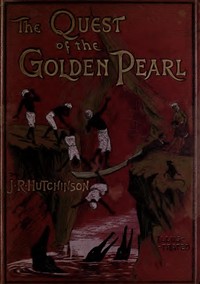
The Quest of the Golden Pearl — Key Ideas to Explore can be approached with a clearer sense of reading commitment from its source measurements: 54,510 words, 3 hr 57 min estimated reading time, and 8 detected text sections.
The text analysis averages about 17.0 words per sentence, while the detected sections provide another way to judge how the source is divided.
Project Gutenberg metadata also associates the work with “Conduct of life -- Juvenile fiction,” connecting these edition facts with the source record’s subject description.
Explore this collection
These alternatives are selected using recorded categories and estimated reading time.
About 237 minutes
Childrens Adventures
54,365 recorded words. 0 minutes difference from this book's estimate.
View Gutenberg source #52394About 239 minutes
Childrens Adventures
54,918 recorded words. 2 minutes difference from this book's estimate.
View Gutenberg source #50287About 235 minutes
Childrens Adventures
53,981 recorded words. 2 minutes difference from this book's estimate.
View Gutenberg source #51979Search stored excerpts and compare books → Choose by your preferences →
Choices use stored catalog measurements. Estimates vary with reading speed. A shared category is a catalog label, not a claim that two books have the same argument or literary quality.
Search reads excerpt text stored with this catalog and links to its associated Gutenberg record. The connection is stored in the site database; this tool does not recheck that every excerpt is word-for-word identical to that external record. Excerpt search does not cover every chapter and does not verify historical publication dates.
Catalog snapshot checked: 2026-09-25. Coverage: 98 public books, 98 available source excerpts.
Calculated from edition completeness, EPUB availability, text structure and catalogue metadata. Not a user rating.
Total of 100 points, scaled to a 2.5-5.0 range. Editions with an empty description or a missing EPUB file are not scored.
Public-domain source text
The source text is kept in the dedicated reader, separate from this catalogue record and its commentary.
From its opening chapter, "The Shark-Charmer Walks the Plank," J. R. Hutchinson's The Quest of the Golden Pearl establishes a pattern of movement between open sea and enclosed, threatening spaces. The narrative repeatedly descends—into diving grounds, tunnels, and pagodas—using physical descent to mark stages of the quest. The excerpt of the tunnel passage, where characters navigate "seemingly interminable tiers of steps" and "ooze of a vivid prismatic green," exemplifies how Hutchinson builds tension through confined, layered environments. This note traces how structure and recurring images of descent, water, and darkness shape the novel's adventure.
The novel's chapters are organized around literal descents. The table of contents includes "Into the Heart of the Hill" and "The Crocodile Pit," while the excerpt shows a prolonged underground journey: "the level intervals growing less and less frequent, the seemingly interminable tiers of steps more precipitous." This descent is not merely scenic; it mirrors the quest's progression. Each downward movement—into the sea, a tunnel, or a pit—corresponds to a new obstacle or revelation. The characters' physical trajectory from the schooner's deck to subterranean passages creates a clear spatial hierarchy, with danger and mystery concentrated below.
Hutchinson emphasizes tactile and auditory details in enclosed settings. The tunnel passage notes "the roof and walls contracted until they seemed to press with an insupportable weight upon their shoulders." Sounds are amplified: "the very echoes hurried back to them as if fearful of venturing the abysmal depths." Water appears as "pellucid, elongated drops overhead" that "shivered for an instant as if startled by the unwonted light." These sensory cues create a claustrophobic atmosphere distinct from the open-air scenes, reinforcing the contrast between freedom and entrapment that runs through the adventure.
Water is a constant presence, but its form shifts. In the tunnel, it appears as "ooze of a vivid prismatic green," "pellucid drops," and a "tiny pool shimmered like crystal." The captain tastes the water and identifies it as "reg'lar genewine old briny," linking the underground to the sea above. This motif connects disparate settings—the pearl-fishing grounds, the creek, the subterranean passages—and underscores the characters' dependence on and vulnerability to water. The quest for a pearl, itself a product of the sea, is pursued through environments where water is both life-giving and threatening.
The narrative frequently shifts between light and darkness, often within a single scene. The tunnel is lit only by a lantern, whose light startles lizards and makes water drops "shiver." Characters move from the bright deck into "the darkness of the tunnel," then back toward daylight. This alternation structures the pacing: moments of illumination (literal or figurative) are followed by renewed obscurity. The lantern becomes a fragile barrier against the unknown, and its limited reach heightens suspense. The pattern of emerging from darkness into light—as when the tunnel finally ascends—provides periodic relief while reminding readers that the quest remains incomplete.
Readers attentive to spatial cues will find that The Quest of the Golden Pearl rewards close observation of how characters move through its world. The descent-and-ascent rhythm, the sensory weight of enclosed spaces, and the shifting forms of water all contribute to a cohesive adventure that is as much about navigating physical environments as about seeking a prize. These structural elements invite comparison to other late-Victorian quest narratives, but Hutchinson's particular emphasis on subterranean detail gives his tale a distinctive texture.
There’s a moment in The Quest of the Golden Pearl where the hero pauses between the bright surface and the dark silt below, and I found myself thinking of a much older book I once leafed through, The Motor Boys Under the Sea; or, From Airship to Submarine — A Reader’s Guide. That same quiet threshold, the breath held before going under, lingered in my mind like an echo.
Build a private reading journal entry for this title.









