About 250 minutes
Boys of Oakdale Academy — Reading Notes
Childrens Adventures
57,330 recorded words. 0 minutes difference from this book's estimate.
View Gutenberg source #48467
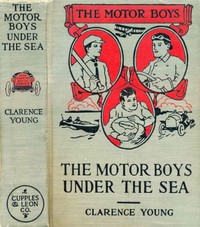
The Motor Boys Under the Sea; or, From Airship to Submarine — A Reader’s Guide can be approached with a clearer sense of reading commitment from its source measurements: 57,440 words, 4 hr 10 min estimated reading time, and 31 detected text sections.
The text analysis averages about 13.0 words per sentence, while the detected sections provide another way to judge how the source is divided.
Project Gutenberg metadata also associates the work with “Sea stories,” connecting these edition facts with the source record’s subject description.
Explore this collection
These alternatives are selected using recorded categories and estimated reading time.
About 250 minutes
Childrens Adventures
57,330 recorded words. 0 minutes difference from this book's estimate.
View Gutenberg source #48467About 249 minutes
Childrens Adventures
57,229 recorded words. 1 minutes difference from this book's estimate.
View Gutenberg source #46375About 249 minutes
Childrens Adventures
57,179 recorded words. 1 minutes difference from this book's estimate.
View Gutenberg source #48304Search stored excerpts and compare books → Choose by your preferences →
Choices use stored catalog measurements. Estimates vary with reading speed. A shared category is a catalog label, not a claim that two books have the same argument or literary quality.
Search reads excerpt text stored with this catalog and links to its associated Gutenberg record. The connection is stored in the site database; this tool does not recheck that every excerpt is word-for-word identical to that external record. Excerpt search does not cover every chapter and does not verify historical publication dates.
Catalog snapshot checked: 2026-09-25. Coverage: 98 public books, 98 available source excerpts.
Calculated from edition completeness, EPUB availability, text structure and catalogue metadata. Not a user rating.
Total of 100 points, scaled to a 2.5-5.0 range. Editions with an empty description or a missing EPUB file are not scored.
Public-domain source text
The source text is kept in the dedicated reader, separate from this catalogue record and its commentary.
The Motor Boys Under the Sea opens with three boys aboard the airship Comet, peering through its glass floor at a strange object in Massachusetts Bay. The first line—'Look down there! What do you suppose that is?'—immediately establishes the boys' perspective from above, a vantage point that recurs throughout the early chapters. The glass floor is a distinctive feature, allowing the characters to observe the ocean surface and later the submarine's deck. The narrative voice is brisk and dialogue-driven, with short exclamations and rapid questions propelling the scene forward.
This aerial viewpoint sets up the book's central transition: from airship to submarine. The boys' initial speculation about a whale gives way to the discovery of a submarine, foreshadowing the shift in setting that defines the story. The opening chapter thus primes readers for a journey that moves not just across geographies but between elements.
The Comet's glass cabin floor is more than a novelty; it shapes how the boys perceive their world. In Chapter I, they spot the submarine through this window, and later, during the storm, Jerry looks 'down through the glass cabin floor' to gauge their altitude. This repeated detail gives readers a consistent visual anchor. The floor transforms the airship into a mobile observation platform, blending the thrill of flight with the mystery of the sea below.
Young uses this device to create dramatic irony: the boys see what lies beneath, but the reader knows only what they see. The glass floor also literalizes the theme of transparency versus concealment—the submarine, initially mistaken for a whale, is itself a hidden vessel. As the boys transition from air to water, the glass floor becomes a symbol of the shifting boundaries between elements and knowledge.
The storm sequence in the early chapters showcases Young's method of escalating peril through sensory detail. Lightning, thunder, and rain are described in cumulative strokes: 'many flashes of lightning,' 'thunder still rolled and crashed.' The Comet is crippled by a lightning strike that polarizes the storage battery, leaving the boys powerless. Jerry's command—'Better get outside, boys'—shifts the action from the cabin to the deck, a spatial move that heightens urgency.
The crash itself is rendered in short, fragmented sentences: 'There was a crash—a sound of splitting and rending wood—then a silence.' This abrupt punctuation mirrors the suddenness of the impact. The boys' discovery that they have landed on a submarine, not a raft, is a twist that redefines their predicament. The scene ends with them pounding on the steel deck, a desperate plea for rescue that underscores their vulnerability.
Young relies heavily on dialogue to advance the plot and reveal character. Lines like 'Look down there! What do you suppose that is?' and 'By Jove you're right!' are typical: short, exclamatory, and often punctuated with dashes or exclamation points. This style gives the narrative a breathless quality, matching the boys' excitement and danger. Each character speaks in a distinct register—Jerry tends to issue commands, Ned makes quick observations, Bob reacts with enthusiasm.
The dialogue also serves as a tool for exposition. When Jerry says 'Three times and out. We've landed on the deck of that mysterious submarine!', he condenses backstory and stakes into a single line. Readers learn that the submarine has been encountered before, though the excerpts do not reveal when. This technique keeps the pace swift, leaving gaps that later chapters presumably fill.
From the moment the boys step onto the submarine's deck, the setting becomes unstable. The submarine is described in terms of industrial materials—'riveted plates,' 'steel plates,' 'thick glass bullseye'—contrasting with the wooden Comet. This material shift signals a change in the story's physical and tonal landscape. The submarine is both a refuge and a trap: it offers safety from the sinking airship, but its hatch is closed, and the boys must 'pound for all you're worth' to gain entry.
The excerpts hint at a larger mystery: the submarine is 'mysterious,' and its captain, Dr. Klauss, is later described as 'crazed.' The setting thus carries narrative weight beyond mere location. It is a vessel of unknown origin and intent, and the boys' transition from air to sea is also a transition from known technology (airship) to unknown (submarine). This shift primes readers for the underwater adventures promised by the title.
Readers approaching The Motor Boys Under the Sea for the first time should pay attention to how Young uses physical details—the glass floor, the storm, the submarine's steel plates—to create a sense of immediacy. The story moves quickly, with dialogue and action taking precedence over description. The excerpts suggest a pattern of escalating encounters: each new setting brings new dangers. The book rewards attention to the boys' resourcefulness and the gradual revelation of the submarine's secrets.
There’s something about those old adventure serials—how the boys tumble from one element into another, the sea swallowing the sky. It makes me think of quiet rivalries, the kind that simmer rather than shout, like the one in Lily Norris' Enemy — Story, Setting & Ideas. A different sort of depth, perhaps, but the same ache for something hidden just beneath the surface.
Save your reaction, strongest insight, and memorable passage.









