About 250 minutes
The Motor Boys Under the Sea; or, From Airship to Submarine — A Reader’s Guide
Childrens Adventures
57,440 recorded words. 0 minutes difference from this book's estimate.
View Gutenberg source #49049
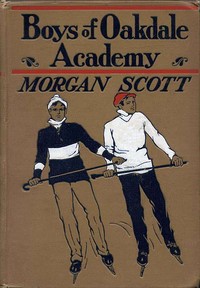
This digital edition of Boys of Oakdale Academy — Reading Notes is described by source-level measurements including 57,330 words, 4 hr 10 min estimated reading time, and 8 detected text sections.
The text analysis averages about 15.6 words per sentence, while the detected sections provide another way to judge how the source is divided.
Project Gutenberg metadata also associates the work with “Dogs -- Juvenile fiction,” connecting these edition facts with the source record’s subject description.
Explore this collection
These alternatives are selected using recorded categories and estimated reading time.
About 250 minutes
Childrens Adventures
57,440 recorded words. 0 minutes difference from this book's estimate.
View Gutenberg source #49049About 249 minutes
Childrens Adventures
57,229 recorded words. 1 minutes difference from this book's estimate.
View Gutenberg source #46375About 249 minutes
Childrens Adventures
57,179 recorded words. 1 minutes difference from this book's estimate.
View Gutenberg source #48304Search stored excerpts and compare books → Choose by your preferences →
Choices use stored catalog measurements. Estimates vary with reading speed. A shared category is a catalog label, not a claim that two books have the same argument or literary quality.
Search reads excerpt text stored with this catalog and links to its associated Gutenberg record. The connection is stored in the site database; this tool does not recheck that every excerpt is word-for-word identical to that external record. Excerpt search does not cover every chapter and does not verify historical publication dates.
Catalog snapshot checked: 2026-09-25. Coverage: 98 public books, 98 available source excerpts.
Calculated from edition completeness, EPUB availability, text structure and catalogue metadata. Not a user rating.
Total of 100 points, scaled to a 2.5-5.0 range. Editions with an empty description or a missing EPUB file are not scored.
Public-domain source text
The source text is kept in the dedicated reader, separate from this catalogue record and its commentary.
The opening chapter of Boys of Oakdale Academy establishes a pattern of debate and doubt that recurs throughout the novel. Chipper Cooper declares the new student, Rodney Grant, “a fake,” and the ensuing argument among the boys—over Grant’s Texan claims, his speech, and his stories of ranch life—immediately frames the central tension: the gap between a person’s word and their reputation. The narrative structure relies on these clustered dialogues, often set against a backdrop of winter activity, to advance the plot without direct exposition.
The novel frequently uses group debate to introduce and develop conflict. In the first chapter, Chipper, Sile, Chub, and Phil trade opinions about Grant’s authenticity, each voice distinct: Chipper’s aggressive certainty, Sile’s drawling skepticism, Phil’s stuttered precision. These exchanges are not mere banter; they serve as the narrative’s primary method of character revelation and plot propulsion. Later, when Ben Stone confronts Grant about the hazing and the cider incident, the debate shifts from public speculation to private, more serious negotiation of truth and loyalty. The structure thus alternates between open, multi-voiced arguments and intimate, two-person confrontations, creating a rhythm of exposure and retreat.
Recurring winter imagery—steam radiators, frozen cider, skating at Bass Cove, the first snow—anchors the story in a specific season that mirrors the social chill surrounding Grant. The illustration caption “He landed himself through the air with a long graceful leap” (from the skating scene) highlights how physical prowess becomes a counterpoint to verbal sparring. The narrative moves from the schoolroom’s heated arguments to outdoor settings where action speaks louder: skating, rabbit hunting, encounters in the woods. These scenes provide relief from dialogue-heavy passages and allow characters to demonstrate qualities—courage, skill, recklessness—that words alone cannot settle.
The word “fake” appears early and reverberates. Chipper’s accusation is not just about geography; it questions Grant’s entire identity. The narrative returns to this doubt in various forms: the rumor that Grant “peached to the professor,” the suspicion of drunkenness, the whispered history of Bunk Lander’s thefts. Each repetition of doubt tests the boundary between appearance and reality. Notably, when Ben Stone warns Grant about Lander’s past, Grant reframes the moral calculus by comparing Lander’s theft to the “permissible sport” of orchard robbing. This moment of ethical debate, embedded in a longer conversation, shows how the novel uses recurring accusations to probe deeper questions of fairness and judgment.
The narrative structure deliberately shifts between public arenas—the school radiator where boys gather, the skating cove, the woods—and private rooms where confidences are exchanged. The excerpt of Ben Stone’s visit to Grant’s room exemplifies this: the door closes on the schoolyard chatter, and a more measured, revealing conversation unfolds. This movement is not random; it mirrors the protagonist’s struggle to establish a private self against public rumor. The chapter titles hint at this pattern: “A Boy of Mystery,” “Playing the Part,” “The Fellow Who Refused,” “Ambushed.” Each title suggests a threshold crossed, a space entered or violated. The reader is invited to track how physical movement—from radiator to room, from cove to woods—corresponds to shifts in social standing and self-knowledge.
Readers attentive to the novel’s structure will notice how each debate and outdoor scene builds toward a cumulative portrait of integrity under pressure. The winter setting is not merely atmospheric; it provides a stage where actions—a leap on skates, a refusal to deny a lie—carry more weight than words. The book rewards those who track the recurring motifs of doubt and defense, and who observe how the narrative’s movement between public and private spaces shapes the characters’ fates.
There is a certain honest warmth in how Boys of Oakdale Academy hovers over winter fields and quick fisticuffs, where a lad’s word becomes his shadow. It reminds me, quietly, of the tender resolutions found in Kittyleen Flaxie Frizzle Stories — Key Ideas to Explore—different worlds, yet both whispering that character, once tested, settles like snow on still ground.
Build a private reading journal entry for this title.









