About 134 minutes
Flaxie Growing Up Flaxie Frizzle Stories — Edition Insights
Childrens Adventures
30,700 recorded words. 3 minutes difference from this book's estimate.
View Gutenberg source #49186
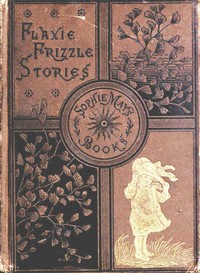
Kittyleen Flaxie Frizzle Stories — Key Ideas to Explore can be approached with a clearer sense of reading commitment from its source measurements: 31,473 words, 2 hr 17 min estimated reading time, and 6 detected text sections.
The text analysis averages about 15.8 words per sentence, while the detected sections provide another way to judge how the source is divided.
Project Gutenberg metadata also associates the work with “Orphans -- Juvenile fiction,” connecting these edition facts with the source record’s subject description.
Explore this collection
These alternatives are selected using recorded categories and estimated reading time.
About 134 minutes
Childrens Adventures
30,700 recorded words. 3 minutes difference from this book's estimate.
View Gutenberg source #49186About 141 minutes
Childrens Adventures
32,237 recorded words. 4 minutes difference from this book's estimate.
View Gutenberg source #52130About 142 minutes
Childrens Adventures
32,565 recorded words. 5 minutes difference from this book's estimate.
View Gutenberg source #52143Search stored excerpts and compare books → Choose by your preferences →
Choices use stored catalog measurements. Estimates vary with reading speed. A shared category is a catalog label, not a claim that two books have the same argument or literary quality.
Search reads excerpt text stored with this catalog and links to its associated Gutenberg record. The connection is stored in the site database; this tool does not recheck that every excerpt is word-for-word identical to that external record. Excerpt search does not cover every chapter and does not verify historical publication dates.
Catalog snapshot checked: 2026-09-25. Coverage: 98 public books, 98 available source excerpts.
Calculated from edition completeness, EPUB availability, text structure and catalogue metadata. Not a user rating.
Total of 100 points, scaled to a 2.5-5.0 range. Editions with an empty description or a missing EPUB file are not scored.
Public-domain source text
The source text is kept in the dedicated reader, separate from this catalogue record and its commentary.
Sophie May's Kittyleen (1883) is the fifth volume of the Flaxie Frizzle Series, but as the preface states, the title character is "from first to last an interloper." The narrative centers on nine-year-old Flaxie Frizzle's gradual improvement under the "disciplines of child-life." The excerpts show a domestic world where children's mischief is managed by adults with gentle firmness: when Flaxie fails to listen to a sermon, her father merely looks at her, prompting her to promise to "hear every single word." The book's moral framework is embedded in everyday events rather than overt preaching.
The opening chapter introduces Kittyleen as a "snip of a girl, three years old," dressed in brown and white like a dove. Her nurse Martha, suffering from toothache, delivers her to the Grays' home with a warning: "She's full of mischief." Martha's one-sided smile makes her "look like a squirrel with a nut in his cheek"—a vivid physical detail that characterizes her discomfort and wry humor. Kittyleen herself is shown trying to "wing the bell myse'f," bursting a button off her boot. The scene establishes that Kittyleen's mother is "always painting china," leaving her six children in others' care. This detail recurs as a subtle commentary on maternal absence, though the excerpts do not develop it further.
Chapter VIII, "Flaxie in Church," depicts a Sunday-school session where Dr. Gray quizzes his children on a sermon about Elijah. Preston recalls the ravens feeding Elijah, while Julia adds that Elijah "had long thick hair hanging down his back, and he wore a cape of sheepskin." Flaxie's contribution—"I thought it was a kind of ostrich"—draws a smile from Preston and a corrective from her father. Dr. Gray then tells a missionary story about an ostrich nest with forty eggs, arranged "with perfect exactness" in a circle. The story serves as a moral lesson about God's provision, but Flaxie's interruptions reveal her distractible nature. The scene showcases the period's religious instruction style, with children expected to recite and reflect on biblical narratives.
The catalog lists "Orphans," "Death," "Dogs," and "Dolls" as subjects, but the excerpts do not confirm these elements. No orphan appears; Kittyleen has a mother and siblings. Death is mentioned only in the table of contents ("The Little Widow"), but the excerpts do not show a widow or deceased character. Dogs and dolls are absent from the provided text. Instead, the excerpts emphasize Flaxie's moral education, sibling dynamics, and domestic routines. The subject "Conduct of life" is supported by Flaxie's promise to reform, but the other subjects may refer to later chapters not included here. Readers should note that the catalog reflects the full book, while the excerpts offer only a partial view.
Readers approaching Kittyleen through these excerpts will find a story more concerned with Flaxie's moral growth than with the title character. The preface's claim that Kittyleen is an "interloper" is borne out by the early chapters, where Flaxie's care for the younger child serves as a vehicle for her own development. Pay attention to how May uses small physical details—a button bursting, a squirrel-like smile—to anchor moral lessons in concrete, everyday life.
Reading about Flaxie watching three-year-old Kittyleen learn the world reminds me of holding my own sister’s hand at Sunday school, marveling at stories I half-understood. That same quiet wonder returned with The Saddle Boys at Circle Ranch; Or, In at the Grand Round-Up — A Closer Reading, where boys discover courage not in grand speeches but in small, patient acts—like remembering to water a pony before dinner.
Your answers remain private and are stored only in this browser.









