About 137 minutes
Kittyleen Flaxie Frizzle Stories — Key Ideas to Explore
Childrens Adventures
31,473 recorded words. 3 minutes difference from this book's estimate.
View Gutenberg source #49227
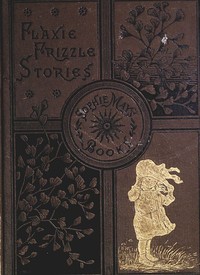
Flaxie Growing Up Flaxie Frizzle Stories — Edition Insights can be approached with a clearer sense of reading commitment from its source measurements: 30,700 words, 2 hr 14 min estimated reading time, and 4 detected text sections.
The text analysis averages about 15.3 words per sentence, while the detected sections provide another way to judge how the source is divided.
Project Gutenberg metadata also associates the work with “Conduct of life -- Juvenile fiction,” connecting these edition facts with the source record’s subject description.
Explore this collection
These alternatives are selected using recorded categories and estimated reading time.
About 137 minutes
Childrens Adventures
31,473 recorded words. 3 minutes difference from this book's estimate.
View Gutenberg source #49227About 141 minutes
Childrens Adventures
32,237 recorded words. 7 minutes difference from this book's estimate.
View Gutenberg source #52130About 142 minutes
Childrens Adventures
32,565 recorded words. 8 minutes difference from this book's estimate.
View Gutenberg source #52143Search stored excerpts and compare books → Choose by your preferences →
Choices use stored catalog measurements. Estimates vary with reading speed. A shared category is a catalog label, not a claim that two books have the same argument or literary quality.
Search reads excerpt text stored with this catalog and links to its associated Gutenberg record. The connection is stored in the site database; this tool does not recheck that every excerpt is word-for-word identical to that external record. Excerpt search does not cover every chapter and does not verify historical publication dates.
Catalog snapshot checked: 2026-09-25. Coverage: 98 public books, 98 available source excerpts.
Calculated from edition completeness, EPUB availability, text structure and catalogue metadata. Not a user rating.
Total of 100 points, scaled to a 2.5-5.0 range. Editions with an empty description or a missing EPUB file are not scored.
Public-domain source text
The source text is kept in the dedicated reader, separate from this catalogue record and its commentary.
The opening chapter, 'Punishing Ethel,' immediately establishes Mary Gray as a self-appointed disciplinarian, scolding her younger sister for skipping notes during piano practice. Mary's sigh of responsibility—'her mother was ill; Julia, the eldest of the family, was confined to her room with headache'—sets a tone of domestic duty that runs through the excerpts. Unlike the catalog subjects' emphasis on 'conduct of life' and 'kindness,' Mary's authority is sharp and conditional: she releases Ethel only after extracting a promise to finish practicing later. This early scene suggests that the book's moral lessons emerge less from gentle guidance than from the friction of sibling hierarchies.
The catalog lists 'Responsibility -- Juvenile fiction' and 'Siblings -- Juvenile fiction,' but the excerpts show responsibility as a contested, often arbitrary exercise. Mary Gray, left in charge, speaks with an adult's tone: 'I’m obliged to be severe with you, Ethel, for it never will do to allow you to play carelessly.' Yet her authority is undercut by the fact that she is herself a child—and by the presence of Kittyleen, a neighbor who 'was an innocent little truant, whose mother never objected to her straying about the streets.' Kittyleen's freedom contrasts with the Gray household's strictures, hinting that the book may explore different models of childhood discipline. The catalog's 'Kindness' is notably absent from Mary's approach; she prioritizes order over warmth.
When the children set up 'Camp Comfort' without adult supervision, the narrative shifts to collaborative invention. The grocer's visit reveals their comedic negotiation: Sadie declares the cottage a 'convent' and herself a 'Capuchin nun' to explain why they need groceries immediately. The adults, rather than intervening, laugh and let them 'have their own way for a while.' The charade that follows—a pantomime featuring 'Madame Graylocks' and 'Don Albertus'—is described with precise, playful detail: walnut-juice stains, a stove-pipe hat, a feather duster as a war-plume. This section showcases the children's creativity and social negotiation, qualities the catalog's 'Friendship' and 'Conduct of life' subjects only partially capture.
Sophie May's prose is marked by colloquial, period-specific dialogue and narration. The grocer's deferential 'Anything else?' and Sadie's quick retort about fasting give the exchanges a brisk, natural rhythm. Details like 'Cape Cod turkey' (salt codfish) and the mention of a 'cornet' and 'harmonica' for musical interludes ground the story in late-nineteenth-century New England. The catalog's 'general-literature' secondary topic is apt, as the excerpts blend moral instruction with domestic comedy and adventure. Readers should note that the excerpts cover only the first two chapters and part of a later one; the full book may develop these threads differently, but the surviving text already reveals a world where children's autonomy is both granted and gently mocked.
Readers approaching Flaxie Growing Up should attend to the gap between the catalog's moral categories and the excerpts' more ambiguous, humorous reality. The book rewards attention to its period-specific details and the children's inventive language. Because the excerpts are incomplete, the overall arc of Flaxie's growth remains partially obscured, but the surviving scenes offer a vivid portrait of childhood as a negotiation between adult expectations and peer-driven play.
I’ve often thought that Mary Gray’s makeshift camp, with its earnest little household trying to hold together, remembers what the sea does in The Dark Frigate — Key Ideas to Explore—that both learn how fragile order stays brave. There’s a quiet kinship there, a shared patience for storms we meet with improvised oars and gentle jokes.
Save your reaction, strongest insight, and memorable passage.









