About 340 minutes
The White Conquerors: A Tale of Toltec and Aztec — Inside the Classic
Childrens Adventures
78,182 recorded words. 14 minutes difference from this book's estimate.
View Gutenberg source #47810
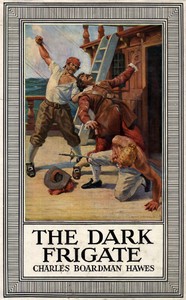
Before opening The Dark Frigate — Key Ideas to Explore, the edition data offers a quick orientation: 74,847 words, 5 hr 26 min estimated reading time, and 7 detected text sections.
The text analysis averages about 20.6 words per sentence, while the detected sections provide another way to judge how the source is divided.
Project Gutenberg metadata also associates the work with “Sea stories,” connecting these edition facts with the source record’s subject description.
Explore this collection
These alternatives are selected using recorded categories and estimated reading time.
About 340 minutes
Childrens Adventures
78,182 recorded words. 14 minutes difference from this book's estimate.
View Gutenberg source #47810About 288 minutes
Childrens Adventures
66,220 recorded words. 38 minutes difference from this book's estimate.
View Gutenberg source #53407About 287 minutes
Childrens Adventures
65,979 recorded words. 39 minutes difference from this book's estimate.
View Gutenberg source #46762Search stored excerpts and compare books → Choose by your preferences →
Choices use stored catalog measurements. Estimates vary with reading speed. A shared category is a catalog label, not a claim that two books have the same argument or literary quality.
Search reads excerpt text stored with this catalog and links to its associated Gutenberg record. The connection is stored in the site database; this tool does not recheck that every excerpt is word-for-word identical to that external record. Excerpt search does not cover every chapter and does not verify historical publication dates.
Catalog snapshot checked: 2026-09-25. Coverage: 98 public books, 98 available source excerpts.
Calculated from edition completeness, EPUB availability, text structure and catalogue metadata. Not a user rating.
Total of 100 points, scaled to a 2.5-5.0 range. Editions with an empty description or a missing EPUB file are not scored.
Public-domain source text
The source text is kept in the dedicated reader, separate from this catalogue record and its commentary.
Charles Boardman Hawes opens The Dark Frigate with a compact, declarative sentence that immediately establishes the protagonist's lifelong connection to the sea: “Philip Marsham was bred to the sea as far back as the days when he was cutting his milk teeth.” The voice is that of a seasoned storyteller, using a slightly formal, archaic register that persists throughout the excerpts. Hawes frequently employs nautical terminology and period-appropriate phrasing, such as “she thrust her bows down” and “shipped enough water to douse him from head to heels,” grounding the narrative in a specific historical and maritime context.
The language of The Dark Frigate is deliberately antiquated, drawing from “curious old books” as Hawes notes in his preface. Words like “ketch,” “waist,” “shrouds,” and “linstock” appear without explanation, assuming a reader familiar with sailing vessels. Dialogue is especially rich in period flavor: characters exclaim “pop-eyed fool” and refer to a ship as “lame as a pipped hen.” This vernacular is not merely decorative; it distinguishes the pirates from the more restrained Philip Marsham. The Old One’s commands are given “softly and briskly,” while Harry Malcolm’s speech is peppered with urgent, fragmented orders. The effect is a layered auditory texture that conveys both the roughness of the crew and the tension of life at sea.
Hawes controls pace through sentence length and paragraph structure. In the opening chapter, long, flowing sentences mirror the boy’s early years: “He lost his mother before he went into breeches and he was climbing the rigging before he could walk alone.” Later, during the approach to a strange sail, the prose becomes clipped and urgent: “The sun set and the sea darkened and a light flamed up on board the chase.” The action sequence is built from short, parallel clauses: “The gunners moved like shadows among the guns. And high on the poop, three shadows again merged into one.” This rhythmic compression heightens suspense, while the occasional return to longer descriptive passages—such as the detailed preparation of guns—provides a momentary lull before the next burst of activity.
Dialogue in the excerpts serves as the primary vehicle for character differentiation. The Old One speaks with a deceptive softness that belies his authority: “Master Boatswain, do thou take it upon thyself… to make sure that powder and balls and sponges and ladles and rammers are laid ready.” Harry Malcolm, by contrast, is brusque and direct: “Come, my bullies below there, knock open your ports!” The exchange between Jacob and the Old One reveals a subtle power dynamic, with Jacob’s interjection “Well?” and the Old One’s measured response “It proves nothing that a man will not drink damnation to a king.” Philip Marsham himself is often silent or observed, as when a fellow crew member whispers to him, “God be thanked it is thou!” This contrast between the loquacious pirates and the reserved protagonist underscores Philip’s outsider status and the moral ambiguity of his situation.
Readers attentive to shifts in register will notice how Hawes modulates between the formal, almost biblical tone of the narrator and the rough, idiomatic speech of the crew. The excerpts suggest that the novel’s tension arises not only from external dangers—storms, pirates, naval engagements—but also from the protagonist’s internal navigation of loyalty and survival. Pay particular attention to moments when the narrative voice becomes more colloquial or when the pace slows to dwell on sensory details; these often signal turning points in Philip’s fortunes.
There’s a moment in The Dark Frigate where the sea-talk feels less like dialect and more like memory, the kind of thing you half-remember from a grandfather’s stories. That unhurried, layered voice stays with you, the way certain quiet afternoons do. It makes me think of the gentler attentiveness in On Adventure Island — A Closer Reading, which reads like a hand resting on the same wooden rail. A shared weather, perhaps.
Save your reaction, strongest insight, and memorable passage.









