About 287 minutes
Bessie and Her Friends — Text and Context
Childrens Adventures
65,979 recorded words. 1 minutes difference from this book's estimate.
View Gutenberg source #46762
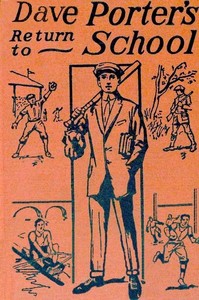
This digital edition of Dave Porter's Return to School; Or, Winning the Medal of Honor — Reading Notes is described by source-level measurements including 66,220 words, 4 hr 48 min estimated reading time, and 37 detected text sections.
The text analysis averages about 12.1 words per sentence, while the detected sections provide another way to judge how the source is divided.
Project Gutenberg metadata also associates the work with “Schools -- Juvenile fiction,” connecting these edition facts with the source record’s subject description.
Explore this collection
These alternatives are selected using recorded categories and estimated reading time.
About 287 minutes
Childrens Adventures
65,979 recorded words. 1 minutes difference from this book's estimate.
View Gutenberg source #46762About 283 minutes
Childrens Adventures
64,906 recorded words. 5 minutes difference from this book's estimate.
View Gutenberg source #44780About 282 minutes
Childrens Adventures
64,750 recorded words. 6 minutes difference from this book's estimate.
View Gutenberg source #45683Search stored excerpts and compare books → Choose by your preferences →
Choices use stored catalog measurements. Estimates vary with reading speed. A shared category is a catalog label, not a claim that two books have the same argument or literary quality.
Search reads excerpt text stored with this catalog and links to its associated Gutenberg record. The connection is stored in the site database; this tool does not recheck that every excerpt is word-for-word identical to that external record. Excerpt search does not cover every chapter and does not verify historical publication dates.
Catalog snapshot checked: 2026-09-25. Coverage: 98 public books, 98 available source excerpts.
Calculated from edition completeness, EPUB availability, text structure and catalogue metadata. Not a user rating.
Total of 100 points, scaled to a 2.5-5.0 range. Editions with an empty description or a missing EPUB file are not scored.
Public-domain source text
The source text is kept in the dedicated reader, separate from this catalogue record and its commentary.
The football game that closes the excerpt is not merely a sporting event; it is a crucible for the moral and financial tensions that drive the plot. Dave Porter’s team wins, but the victory is shadowed by a serious injury to Phil Lawrence, and the losers—Plum, Poole, and Jasniff—are consumed not by sportsmanship but by the money they have lost through gambling. The narrative voice treats the game as a test of character, contrasting the Oak Hall players’ fair play with the bitter calculations of their rivals.
Stratemeyer’s prose is brisk and functional, focusing on action and dialogue rather than interior reflection. The setting shifts from the field to a tavern where Plum and Jasniff smoke cigarettes and scheme, revealing a subplot of debt and dishonesty that runs beneath the school’s orderly surface.
The football match is described with a clear sense of stakes: the Oak Hall team, against expectations, pulls together and plays with a ferocity that “nothing could stand before them.” Yet the victory is immediately complicated. Dave says, “I’d rather lose than have anybody seriously hurt,” and the doctor calls Phil’s injury “the one dark spot.” The Rockville captain insists the tackle was fair, but the tone suggests a lingering unease about rough play.
Meanwhile, the defeated trio—Plum, Poole, and Jasniff—react not with grace but with financial panic. Gus Plum laments “the money I have lost,” and Jasniff admits he thought removing key players would guarantee a win. Their conversation reveals a pattern of gambling and borrowing that has left them desperate. The narrative does not condemn them outright but lets their selfishness speak through their own words.
After the game, Plum and Jasniff retreat to a tavern in Hampton, where Jasniff spends his last twenty cents on liquor. The setting—a back room with cigarettes and drink—underscores their moral drift. Plum confesses he is “dead-broke” and in debt, having borrowed from several parties. Jasniff, lowering his voice, hints at a plan to “earn a little pile,” promising to reveal details after consulting someone else.
The dialogue is terse and loaded with implication. When Plum asks how, Jasniff’s evasive “I don’t know exactly” suggests a scheme that is not yet fully formed but is clearly illicit. The narrator notes that Plum answers “boldly” when asked to stand by Jasniff, signaling a willing descent into dishonesty. This scene sets up a mystery that will likely involve theft or fraud, though the excerpts do not reveal the plan’s nature.
Gus Plum, the “bully of Oak Hall,” is portrayed as a character caught between bravado and vulnerability. He is quick to grumble about his losses but also shows a flicker of unease—he leaves the feast early, “sick of it here,” and seeks escape in smoking and drinking. His dependence on Jasniff for a way out of debt suggests a weak will beneath the bluster.
In contrast, Dave and Roger are depicted as concerned for their injured teammate, unable to enjoy the victory feast. The school’s moral order is reinforced by Dr. Clay’s praise for fair play and by the narrative’s implicit approval of Dave’s priorities. The excerpts do not resolve the tension between the upright protagonists and the scheming antagonists, leaving the reader to anticipate how the medal of honor—mentioned in the title—will be contested.
The excerpts offer a focused view of a single crisis—the football game and its aftermath—but the title promises a broader arc about earning a medal of honor. Readers should watch for how the hinted scheme unfolds and whether Dave’s integrity will be tested beyond the playing field. The contrast between the public celebration of victory and the private scheming of the losers is the engine of the story.
Rereading Dave Porter's Return to School, I found myself lingering on Gus Plum’s quiet desperation, that gnawing shame beneath his bluster. It reminded me, oddly, of an old dog story I once loved—Bruno; or, lessons of fidelity, patience, and self-denial taught by a dog — Reading Notes. Both books whisper about what we owe ourselves when nobody is watching. Strange, how a football match and a faithful hound can teach the same gentle truth.
Answer a few questions and save a private reflection on this device.









