About 326 minutes
The Dark Frigate — Key Ideas to Explore
Childrens Adventures
74,847 recorded words. 14 minutes difference from this book's estimate.
View Gutenberg source #50598
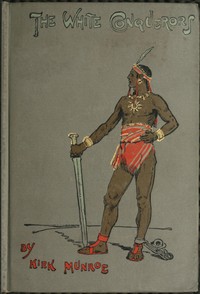
The catalog record for The White Conquerors: A Tale of Toltec and Aztec — Inside the Classic provides practical reading context through 78,182 words, 5 hr 40 min estimated reading time, and 8 detected text sections.
The text analysis averages about 24.8 words per sentence, while the detected sections provide another way to judge how the source is divided.
Project Gutenberg metadata also associates the work with “Biographical fiction,” connecting these edition facts with the source record’s subject description.
Explore this collection
These alternatives are selected using recorded categories and estimated reading time.
About 326 minutes
Childrens Adventures
74,847 recorded words. 14 minutes difference from this book's estimate.
View Gutenberg source #50598About 370 minutes
Childrens Adventures
85,083 recorded words. 30 minutes difference from this book's estimate.
View Gutenberg source #53074About 288 minutes
Childrens Adventures
66,220 recorded words. 52 minutes difference from this book's estimate.
View Gutenberg source #53407Search stored excerpts and compare books → Choose by your preferences →
Choices use stored catalog measurements. Estimates vary with reading speed. A shared category is a catalog label, not a claim that two books have the same argument or literary quality.
Search reads excerpt text stored with this catalog and links to its associated Gutenberg record. The connection is stored in the site database; this tool does not recheck that every excerpt is word-for-word identical to that external record. Excerpt search does not cover every chapter and does not verify historical publication dates.
Catalog snapshot checked: 2026-09-25. Coverage: 98 public books, 98 available source excerpts.
Calculated from edition completeness, EPUB availability, text structure and catalogue metadata. Not a user rating.
Total of 100 points, scaled to a 2.5-5.0 range. Editions with an empty description or a missing EPUB file are not scored.
Public-domain source text
The source text is kept in the dedicated reader, separate from this catalogue record and its commentary.
Kirk Munroe's The White Conquerors: A Tale of Toltec and Aztec (1893) opens with a captive warrior and quickly establishes a pattern of narrow escapes, secret passages, and supernatural omens. The catalog subjects list biographical fiction, conduct of life, and adventure stories, but the excerpts focus less on moral instruction and more on physical peril: Huetzin, a Toltec prince, is repeatedly threatened with sacrifice, only to be saved by hidden mechanisms or priestly deception. The novel's voice is brisk and action-oriented, with dialogue that advances plot rather than character interiority.
The excerpts show that divine intervention is not merely atmospheric but drives key plot turns. When Topil the chief priest fabricates a vision to persuade Montezuma to kill Cortés, he claims the gods struck down a sacrificial victim and left a heart "as fresh and whole as though just torn from the living body." This invented omen allows Topil to conceal that the victim actually escaped. The narrative treats the supernatural as a tool for manipulation rather than a genuine spiritual force. Huetzin's own escape from the altar relies on a stone door that opens when he beats the floor in despair—a mechanical trick presented without divine explanation. The contrast between Topil's staged miracles and Huetzin's practical luck suggests that the novel uses the supernatural primarily to create suspense and justify character decisions.
Munroe draws a clear line between Toltec and Aztec characters, though both are Indigenous. Huetzin is repeatedly identified as a Toltec, and the chapter title "Remember that Thou Art a Toltec!" signals that his identity carries expectations of honor or resilience. In contrast, Montezuma is portrayed as superstitious and easily swayed by his chief priest. The excerpts do not show Huetzin interacting with Spanish characters directly; his conflicts are with Aztec priests and the sacrificial system. This suggests that the novel's "white conquerors" (Cortés and his men) may function more as a looming external force than as active participants in the Toltec protagonist's storyline. The catalog subject "Toltecs" appears alongside "Aztecs," but the excerpts indicate that Toltec identity is central to the hero's perspective, while Aztec society is the setting for his trials.
The physical environment in the excerpts is claustrophobic and layered: Huetzin is imprisoned in a stone cell that he recognizes as the pedestal of Huitzil's image, above a hidden stairway. The description of his search for an exit—feeling "every inch of its cold surface"—emphasizes the tactile, confined space. When the trap door opens, it releases "cool, damp air," contrasting with the stifling cell. This underground passage, previously used for escape, becomes a recurring spatial motif. The marketplace of Tenochtitlan and the temple are named but not described in the excerpts; instead, the narrative dwells on enclosed, secret spaces. Readers should pay attention to how architecture—stone walls, hidden doors, stairways—functions as both obstacle and ally, a pattern that likely continues throughout the novel's many imprisonments and rescues.
Readers approaching The White Conquerors should note that the excerpts reveal a story driven by physical action and narrow margins of survival rather than by historical accuracy or character depth. The catalog's biographical fiction label may overstate the focus on real figures like Cortés and Montezuma, who appear more as plot devices than as developed personalities. The novel rewards attention to its mechanics of escape and deception, where a hidden door or a priest's lie can change the course of events.
I’ve often sat with The White Conquerors, watching Huetzin cling to his world as it shifts beneath him, and it reminds me of another quiet volume—Sweet P's — Text and Context—where identity is likewise carried through upheaval. Both have that ache of belonging, a soft insistence on memory. I find myself reaching for them on the same kind of evenings.
Your answers remain private and are stored only in this browser.









