About 204 minutes
Gypsy Flight A Mystery Story for Girls — Text and Context
Childrens Adventures
46,895 recorded words. 1 minutes difference from this book's estimate.
View Gutenberg source #46814
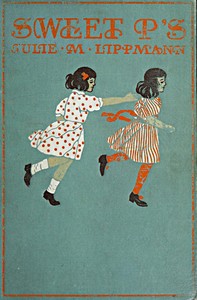
For Sweet P's — Text and Context, the stored edition analysis reports 46,584 words, 3 hr 23 min estimated reading time, and 5 detected text sections.
The text analysis averages about 18.0 words per sentence, while the detected sections provide another way to judge how the source is divided.
Project Gutenberg metadata also associates the work with “Orphans -- Juvenile fiction,” connecting these edition facts with the source record’s subject description.
Explore this collection
These alternatives are selected using recorded categories and estimated reading time.
About 204 minutes
Childrens Adventures
46,895 recorded words. 1 minutes difference from this book's estimate.
View Gutenberg source #46814About 207 minutes
Childrens Adventures
47,459 recorded words. 4 minutes difference from this book's estimate.
View Gutenberg source #45663About 198 minutes
Childrens Adventures
45,465 recorded words. 5 minutes difference from this book's estimate.
View Gutenberg source #50794Search stored excerpts and compare books → Choose by your preferences →
Choices use stored catalog measurements. Estimates vary with reading speed. A shared category is a catalog label, not a claim that two books have the same argument or literary quality.
Search reads excerpt text stored with this catalog and links to its associated Gutenberg record. The connection is stored in the site database; this tool does not recheck that every excerpt is word-for-word identical to that external record. Excerpt search does not cover every chapter and does not verify historical publication dates.
Catalog snapshot checked: 2026-09-25. Coverage: 98 public books, 98 available source excerpts.
Calculated from edition completeness, EPUB availability, text structure and catalogue metadata. Not a user rating.
Total of 100 points, scaled to a 2.5-5.0 range. Editions with an empty description or a missing EPUB file are not scored.
Public-domain source text
The source text is kept in the dedicated reader, separate from this catalogue record and its commentary.
The novel opens with Priscilla, an only child, being lifted into a big armchair on her eighth birthday, instructed to sit still so as not to rumple her frock. The narrative voice immediately establishes a tension between external expectations and internal bewilderment: Priscilla is called both “a pity” and “lucky,” a contradiction she cannot resolve. Lippmann’s prose lingers on small sensory details—the quantity of bright hair that must be brushed until her eyes water—and on the child’s quiet, obedient stillness, which becomes a recurring motif. The pace is unhurried, mirroring Priscilla’s own cautious observation of the adult world around her.
From the opening chapter, Priscilla is defined by her stillness: she “sat obediently still” in the armchair, watching Hannah bustle. This physical passivity is paired with a prohibition on questioning—after a severe illness, she was told not to ask questions. The narrative voice adopts a close third-person perspective that stays within Priscilla’s limited understanding, noting her attempts to “puzzle things out for herself” on the nursery couch. The prose slows to match her contemplative pace, using short, declarative sentences and repeated phrases like “without a word” to emphasize her quietness. This technique creates a sense of interiority that contrasts sharply with the bustling, directive speech of adults like Hannah and Theresa. Readers are invited to inhabit Priscilla’s world of unspoken questions and careful observation, where even birthday presents arrive with instructions on how to behave.
When the narrative shifts to Polly, the prose accelerates. Polly “picked her way carefully” but is soon in motion, carrying a money-bag and congratulating herself on avoiding mishaps. The sentences grow longer and more complex, with clauses tumbling forward: “she never knew how it happened, but before she had time to prevent it, she had missed her footing, had fallen, struck her head sharply against the iron railing…” The fall is described in a rapid sequence of verbs—missed, fallen, struck, saved—that contrasts with Priscilla’s static scenes. Polly’s dialogue is urgent and fragmented, full of exclamations and repetitions (“I fell—— I tripped and fell”). Theresa’s speech, by contrast, is manipulative and drawn out, with feigned sympathy and hypothetical threats (“Like’s not your bag is at the bottom of the ravine”). The change in voice is marked: Polly’s internal thoughts are action-oriented, focused on proving herself, while Priscilla’s were reflective and puzzled.
Throughout the excerpts, physical spaces mirror emotional states. Priscilla is confined to the nursery armchair, the nursery couch, and later the house itself, with Hannah’s instructions to “not stir” reinforcing her isolation. The only child’s world is one of supervised stillness. Polly, however, moves through a more dangerous landscape: a driveway guarded by an iron railing, a steep bank, a ravine, and a brook where the money-bag might be floating. Theresa’s suggestion to “run away” introduces the idea of escape as both temptation and threat. Polly’s refusal—“It wouldn’t be right to run away”—ties moral choice to physical location. The contrast between Priscilla’s indoor, regulated space and Polly’s outdoor, accident-prone terrain underscores the novel’s exploration of agency. Even the language of the excerpts reflects this: Priscilla’s scenes use words like “obediently,” “still,” “quiet,” while Polly’s include “fall,” “terror,” “groping,” “sobbed.”
Readers attentive to shifts in narrative pace will notice how Lippmann uses sentence length and dialogue rhythm to distinguish her two young protagonists. The novel’s early chapters reward slow, careful reading, while later sections demand quick attention to action and consequence. Pay particular attention to moments when the narrator steps back to let a character’s internal conflict unfold through gesture or silence—these are the hinges on which the story turns.
I keep thinking about how Sweet P's quiet, lonely Priscilla finds her anchor in Polly’s noisy warmth, and it drifts me back to a gentle little volume about a dog named Bruno. There’s something similar in how steadfastness—whether from a friend or a faithful animal—can feel like the still point around which a whole childhood turns. Bruno; or, lessons of fidelity, patience, and self-denial taught by a dog — Reading Notes carries that same hush of quiet teaching.
Save your reaction, strongest insight, and memorable passage.









