About 143 minutes
The Boy Scouts with the Red Cross — A Reader’s Guide
Childrens Adventures
32,685 recorded words. 1 minutes difference from this book's estimate.
View Gutenberg source #49799
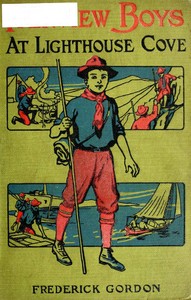
The source record for Fairview Boys at Lighthouse Cove; or, Carried out to Sea — Text and Context measures this digital text at 32,565 words, 2 hr 22 min estimated reading time, and 4 detected text sections.
The text analysis averages about 12.3 words per sentence, while the detected sections provide another way to judge how the source is divided.
Project Gutenberg metadata also associates the work with “Boys -- Juvenile fiction,” connecting these edition facts with the source record’s subject description.
Explore this collection
These alternatives are selected using recorded categories and estimated reading time.
About 143 minutes
Childrens Adventures
32,685 recorded words. 1 minutes difference from this book's estimate.
View Gutenberg source #49799About 141 minutes
Childrens Adventures
32,237 recorded words. 1 minutes difference from this book's estimate.
View Gutenberg source #52130About 146 minutes
Childrens Adventures
33,449 recorded words. 4 minutes difference from this book's estimate.
View Gutenberg source #49983Search stored excerpts and compare books → Choose by your preferences →
Choices use stored catalog measurements. Estimates vary with reading speed. A shared category is a catalog label, not a claim that two books have the same argument or literary quality.
Search reads excerpt text stored with this catalog and links to its associated Gutenberg record. The connection is stored in the site database; this tool does not recheck that every excerpt is word-for-word identical to that external record. Excerpt search does not cover every chapter and does not verify historical publication dates.
Catalog snapshot checked: 2026-09-25. Coverage: 98 public books, 98 available source excerpts.
Calculated from edition completeness, EPUB availability, text structure and catalogue metadata. Not a user rating.
Total of 100 points, scaled to a 2.5-5.0 range. Editions with an empty description or a missing EPUB file are not scored.
Public-domain source text
The source text is kept in the dedicated reader, separate from this catalogue record and its commentary.
The opening pages of Fairview Boys at Lighthouse Cove introduce three school friends—Sammy Brown, Frank, and Bob Bouncer—in a schoolyard scene that establishes Bob as a prankster who trips Sammy, only to have Frank catch him. The dialogue is brisk and colloquial, with exclamations like “Last day of school; hurray!” and “Nothing but fun, from now on!” The boys’ banter and physical comedy set a lighthearted tone, but the catalog subjects—mystery and lighthouses—are not yet visible. Instead, the excerpts focus on a crabbing expedition that goes awry when a crab nips Frank’s toe, leading to a capsized boat and a swim to the lighthouse dock. The light-keeper, Mr. Floyd, appears only briefly, offering crabs and asking where the boys have been. The promised mystery and the lighthouse itself remain offstage in these early chapters.
The story opens with a burst of schoolyard energy: “Last day of school; hurray!” and “No more lessons! No more books!” The three boys are quickly differentiated through action. Bob Bouncer, true to his name, is the instigator—he trips Sammy and then calls for Frank to catch him. Sammy reacts with mock anger, but his smile betrays his amusement. Frank is the steady one, physically catching Sammy and later offering calm advice during the crab crisis. The dialogue is peppered with playful threats and exclamations, such as “Look here, Bob Bouncer, what do you mean by that?” and “I wanted to have some fun.” This opening establishes a familiar trio dynamic: the troublemaker, the straight man, and the mediator. The author, Frederick Gordon, relies on rapid-fire exchanges and physical humor rather than descriptive narration to define the characters.
The longest excerpt details the boys’ crabbing trip, which quickly descends into disorder. A “big blue-claw crab” nips Frank’s toe, and as he tries to remove it, other crabs escape from the basket. The scene is vivid and tactile: the crab’s claw comes off when smashed against the gunwale, and Bob, attempting the same trick, loses his balance and capsizes the boat. The narrative shifts to swimming: “Gasping and choking, from their sudden and unexpected bath, the boys came to the surface.” They recover oars and nets, then swim the boat to the lighthouse dock. The light-keeper, Mr. Floyd, comments laconically, “Had an upset; didn’t you?” and offers them some of his own crabs. This episode showcases the boys’ resourcefulness—they don’t panic—but also their lack of foresight. The crab-catching details (claws that regrow, baskets under seaweed) feel authentic, likely drawn from coastal experience.
Despite the book’s title and catalog subjects, the lighthouse appears only as a setting—the dock where the boys land after their swim. Mr. Floyd is introduced but not developed; he asks where the boys have been but receives no answer in the excerpt. The word “mystery” does not appear in the provided text, nor does any clue or suspicious event. The chapter titles promise “Sammy Gets a Clue” and “The Dark Beacon,” but these lie ahead. The catalog subjects—Boys -- Juvenile fiction; Boats and boating -- Juvenile fiction; Mystery fiction; Lighthouses -- Juvenile fiction—are only partially reflected in the excerpts. The boating and boys are present, but the mystery and lighthouse elements are absent from the sample. Readers should expect the plot to shift from lighthearted adventure to something more suspenseful, but the excerpts do not reveal how or when.
The excerpts from Fairview Boys at Lighthouse Cove show a story rooted in everyday mishaps—tripping, crabbing, capsizing—rather than the mystery and lighthouse intrigue promised by the catalog. The boys’ voices are distinct, and the action is immediate, but the plot’s direction remains unclear. Readers who enjoy early 20th-century series fiction will find familiar rhythms, but those seeking the advertised mystery may need patience. The full text likely delivers on its title, but the opening chapters prioritize character and comedy over suspense.
The rain kept me indoors with the Fairview boys, their capsized boat and salt-soaked shouts still ringing past the final page. I sat awhile, thinking how easily any voyage can turn unexpected. Then, off the shelf, came The White Conquerors: A Tale of Toltec and Aztec — Inside the Classic, and I missed the storm entirely, lost in older currents.
Save your reaction, strongest insight, and memorable passage.









