About 142 minutes
Fairview Boys at Lighthouse Cove; or, Carried out to Sea — Text and Context
Childrens Adventures
32,565 recorded words. 1 minutes difference from this book's estimate.
View Gutenberg source #52143
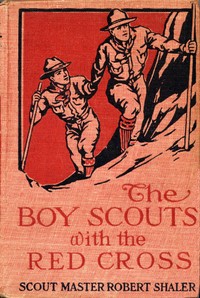
The catalog record for The Boy Scouts with the Red Cross — A Reader’s Guide provides practical reading context through 32,685 words, 2 hr 23 min estimated reading time, and 5 detected text sections.
The text analysis averages about 20.9 words per sentence, while the detected sections provide another way to judge how the source is divided.
Project Gutenberg metadata also associates the work with “Strikes and lockouts -- Juvenile fiction,” connecting these edition facts with the source record’s subject description.
Explore this collection
These alternatives are selected using recorded categories and estimated reading time.
About 142 minutes
Childrens Adventures
32,565 recorded words. 1 minutes difference from this book's estimate.
View Gutenberg source #52143About 141 minutes
Childrens Adventures
32,237 recorded words. 2 minutes difference from this book's estimate.
View Gutenberg source #52130About 146 minutes
Childrens Adventures
33,449 recorded words. 3 minutes difference from this book's estimate.
View Gutenberg source #49983Search stored excerpts and compare books → Choose by your preferences →
Choices use stored catalog measurements. Estimates vary with reading speed. A shared category is a catalog label, not a claim that two books have the same argument or literary quality.
Search reads excerpt text stored with this catalog and links to its associated Gutenberg record. The connection is stored in the site database; this tool does not recheck that every excerpt is word-for-word identical to that external record. Excerpt search does not cover every chapter and does not verify historical publication dates.
Catalog snapshot checked: 2026-09-25. Coverage: 98 public books, 98 available source excerpts.
Calculated from edition completeness, EPUB availability, text structure and catalogue metadata. Not a user rating.
Total of 100 points, scaled to a 2.5-5.0 range. Editions with an empty description or a missing EPUB file are not scored.
Public-domain source text
The source text is kept in the dedicated reader, separate from this catalogue record and its commentary.
The first chapter of Robert Shaler's The Boy Scouts with the Red Cross opens not with a description of setting or character, but with a burst of dialogue: "It's going to be all right now, fellows!" This immediate immersion into the scouts' voices establishes a conversational, team-oriented tone that persists throughout the excerpts. The author relies heavily on colloquial banter among the boys—Billy's self-deprecating humor, Alec's teasing, and Hugh's measured leadership—to convey camaraderie and hierarchy without explicit narration. Shaler also uses the ambulance's arrival as a pivot point, shifting the scene from relief to mystery, and introduces Nurse Jones through a tense negotiation that highlights gender roles and the scouts' evolving sense of duty.
Shaler's dialogue does more than advance the plot; it defines each scout's personality. Billy Worth's self-mocking line, "as sure as my name's Billy Worth," and Alec's retort that Hugh and Arthur "have done about all the tough work" immediately establish a pecking order. The author avoids lengthy descriptions, letting the boys' speech reveal their relationships: Hugh's commands are firm but inclusive, while Ralph's boast about tracking "without hounds" shows competitive pride. The exchange over Nurse Jones's request to join the hunt is particularly telling—her insistence ("I will not be refused") contrasts with Hugh's polite reluctance, and Alec's snicker at her walking prowess undercuts the tension. This reliance on spoken word keeps the narrative brisk and aligns with the scout value of direct communication.
Shaler occasionally breaks the narrative to address readers directly or editorialize about scout principles. When Hugh assigns camp guards, the text notes: "That is one of the things scouts learn—obedience to orders. It is a splendid foundation for their future guidance in life." This passage, while didactic, reveals the author's intent to model behavior for his young audience. Similarly, the opening chapter includes a meta-commentary: "For the special benefit of those readers who may not have enjoyed reading the preceding books of this series, a little explanation may not come in amiss." These interjections create a conversational, almost paternal tone, positioning the scout master as both character and moral instructor. The effect is a blend of adventure story and character-building manual, typical of early 20th-century juvenile fiction.
The excerpts offer sparse but effective sensory cues. The "six well-battered campaign hats" waved energetically and "lusty young lungs" roaring cheers create a vivid auditory and visual snapshot. The setting—a field hospital near a roaring river called the Hurricane—is sketched with minimal description, focusing instead on the boys' exhaustion and relief. Shaler uses the ambulance as a structural device: its arrival ends one phase (medical duty) and initiates another (the kidnapping mystery). The shift is abrupt, signaled by Nurse Jones's sudden appearance and her eavesdropping on the scouts' plans. This technique keeps the plot moving rapidly, with little time for reflection, mirroring the scouts' own action-oriented ethos. The author trusts readers to infer the hospital's chaos from the boys' weary dialogue rather than from exhaustive description.
Nurse Jones's insistence on joining the manhunt introduces a subtle tension around gender expectations. Hugh's objection—"a woman was hardly fitted for enduring the fatigue"—is met with her counterargument: she is a "famous walker" and prepared for peril. Alec's snicker and the boys' exchanged looks suggest discomfort, but Shaler does not resolve the conflict within the excerpts. The nurse's persistence ("I will not be refused") challenges the scouts' assumptions, and her professional identity as a nurse gives her a legitimate claim to be present in case of injuries. This dynamic reflects contemporary debates about women's roles in public life and emergency services. Shaler leaves the question open, using the nurse as a catalyst for both plot and character development, without fully endorsing or rejecting her request.
Readers approaching The Boy Scouts with the Red Cross should attend to how Shaler balances action with instruction. The dialogue-heavy style rewards attention to who speaks and how, as each scout's voice carries distinct traits. The author's occasional editorial asides, while dated, clarify the moral framework underpinning the adventure. The excerpts suggest a narrative that values preparedness, teamwork, and quick decision-making over detailed world-building. For those interested in early 20th-century juvenile series fiction, this book offers a clear example of how adventure plots were used to reinforce scout ideals and social norms.
Decades of shelving have taught me how two books can whisper to each other across the stacks. Shaler’s scouts learn steadiness amid stretchers and sirens, while that other volume—The Motor Boys Under the Sea; or, From Airship to Submarine — A Reader’s Guide—finds its own quiet courage in pressure and deep water. Different depths, same steady pulse of boys finding their bearings.
Answer a few questions and save a private reflection on this device.









