About 249 minutes
The Family at Misrule — Edition Insights
Childrens Adventures
57,179 recorded words. 0 minutes difference from this book's estimate.
View Gutenberg source #48304
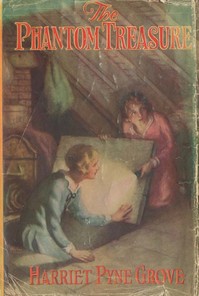
For The Phantom Treasure — Context and Discussion, the stored edition analysis reports 57,229 words, 4 hr 9 min estimated reading time, and 20 detected text sections.
The text analysis averages about 15.1 words per sentence, while the detected sections provide another way to judge how the source is divided.
Project Gutenberg metadata also associates the work with “Family -- Juvenile fiction,” connecting these edition facts with the source record’s subject description.
Explore this collection
These alternatives are selected using recorded categories and estimated reading time.
About 249 minutes
Childrens Adventures
57,179 recorded words. 0 minutes difference from this book's estimate.
View Gutenberg source #48304About 249 minutes
Childrens Adventures
57,185 recorded words. 0 minutes difference from this book's estimate.
View Gutenberg source #52809About 250 minutes
Childrens Adventures
57,330 recorded words. 1 minutes difference from this book's estimate.
View Gutenberg source #48467Search stored excerpts and compare books → Choose by your preferences →
Choices use stored catalog measurements. Estimates vary with reading speed. A shared category is a catalog label, not a claim that two books have the same argument or literary quality.
Search reads excerpt text stored with this catalog and links to its associated Gutenberg record. The connection is stored in the site database; this tool does not recheck that every excerpt is word-for-word identical to that external record. Excerpt search does not cover every chapter and does not verify historical publication dates.
Catalog snapshot checked: 2026-09-25. Coverage: 98 public books, 98 available source excerpts.
Calculated from edition completeness, EPUB availability, text structure and catalogue metadata. Not a user rating.
Total of 100 points, scaled to a 2.5-5.0 range. Editions with an empty description or a missing EPUB file are not scored.
Public-domain source text
The source text is kept in the dedicated reader, separate from this catalogue record and its commentary.
The novel opens with a brisk exchange between Janet Eldon and her schoolmate Allie May, whose teasing about an “April fool” package quickly gives way to a more serious tone. Janet’s initial indifference—she does not look up from her book—contrasts with her later eagerness, and the dialogue reveals her habit of mimicking teachers and her preference for poetry. The scene establishes a voice that is both playful and self-aware, with Janet’s “fluffy, golden locks” and “rapid descent” down a dark staircase hinting at the energy and curiosity that will drive the plot.
The narrative voice in The Phantom Treasure undergoes a notable shift as Janet moves from the boarding-school setting to the mysterious house of her uncle. Early chapters are dominated by lively dialogue and lighthearted interactions—Janet recites poetry, dares classmates, and jokes about April Fools’ Day. The prose is brisk, with short sentences and frequent exclamations. Once Janet arrives at the old house, however, the pace slows. Descriptions become more detailed: she examines a desk “going over every inch of it,” runs her hands down paneled walls, and peers into a chimney. The language grows more introspective, with phrases like “regret was almost a pain” and “she exhausted in thought the whole range of possibility.” This change in tempo mirrors Janet’s transition from carefree student to determined investigator.
Grove uses Janet’s internal reflections to build tension around family relationships. Janet is “used to ladies, her teachers, and knew scarcely any gentlemen except the lawyer in Philadelphia,” which makes her interactions with her uncle and cousins fraught with uncertainty. When she considers whether her uncle might have taken the pearls, the thought is presented as a possibility, not an accusation: “Could her uncle have taken them out by a sudden thought of surprising her?” The narrative withholds judgment, leaving the reader to weigh each suspect. Cousin Diana’s easy manner—“I used to like to poke around in attics, too”—offers a contrast to Janet’s more intense curiosity. The dialogue about ghosts is deliberately ambiguous: Diana dismisses the “Dutch Banshee” as wind, but Janet’s impulse to ask about it suggests she is not entirely convinced.
Throughout the excerpts, physical objects carry narrative weight. The package that is not a cake, the empty drawer where the pearl case lay, the “lovely case and pearls” themselves—each item prompts a chain of questions. Janet’s methodical search of her room is described in precise, almost procedural language: she examines the desk, the paneled walls, the chimney, and a small closet. The narrative lingers on the sensory details of the search—the feel of boards, the soot in the chimney—creating a tactile sense of place. Even the attic, which Janet hopes will contain “old chests and trunks,” is presented as a repository of family history. These objects are not mere props; they are clues that Janet must interpret, and the narrative voice treats them with the same seriousness she brings to her investigation.
Readers attentive to shifts in tone will notice how Grove modulates the pace between scenes of dialogue and solitary reflection. The early chapters’ rapid-fire exchanges give way to longer, more deliberate passages as Janet searches for answers. Pay particular attention to the moments when Janet pauses to think—these are where the narrative’s true mystery unfolds, not in dramatic reveals but in the quiet accumulation of detail.
That rainy afternoon, Janet’s lantern-lit search through the attic felt less like adventure and more like quiet inheritance—how we sift through what others left behind. Later, a similar hush settled over me while reading The Family at Misrule — Edition Insights, its household chaos somehow holding the same warmth, the same slow ache of growing up. One mystery simply leaned into another.
Capture what you thought, learned, and would like to remember.









