About 234 minutes
Don Winslow of the Navy — Reading Companion
Childrens Adventures
53,691 recorded words. 1 minutes difference from this book's estimate.
View Gutenberg source #45613
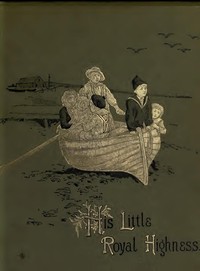
His Little Royal Highness — Text and Context can be approached with a clearer sense of reading commitment from its source measurements: 53,981 words, 3 hr 55 min estimated reading time, and 9 detected text sections.
The text analysis averages about 19.4 words per sentence, while the detected sections provide another way to judge how the source is divided.
Project Gutenberg metadata also associates the work with “Friendship -- Juvenile fiction,” connecting these edition facts with the source record’s subject description.
Explore this collection
These alternatives are selected using recorded categories and estimated reading time.
About 234 minutes
Childrens Adventures
53,691 recorded words. 1 minutes difference from this book's estimate.
View Gutenberg source #45613About 234 minutes
Childrens Adventures
53,661 recorded words. 1 minutes difference from this book's estimate.
View Gutenberg source #48478About 234 minutes
Childrens Adventures
53,622 recorded words. 1 minutes difference from this book's estimate.
View Gutenberg source #50260Search stored excerpts and compare books → Choose by your preferences →
Choices use stored catalog measurements. Estimates vary with reading speed. A shared category is a catalog label, not a claim that two books have the same argument or literary quality.
Search reads excerpt text stored with this catalog and links to its associated Gutenberg record. The connection is stored in the site database; this tool does not recheck that every excerpt is word-for-word identical to that external record. Excerpt search does not cover every chapter and does not verify historical publication dates.
Catalog snapshot checked: 2026-09-25. Coverage: 98 public books, 98 available source excerpts.
Calculated from edition completeness, EPUB availability, text structure and catalogue metadata. Not a user rating.
Total of 100 points, scaled to a 2.5-5.0 range. Editions with an empty description or a missing EPUB file are not scored.
Public-domain source text
The source text is kept in the dedicated reader, separate from this catalogue record and its commentary.
The story opens not in a palace but on a low porch surrounding a dull red cottage, where two children wait to visit a friend who has fallen from a cherry tree. The king of the title is Reginald Fairfax, a boy laid up with a broken limb, and his bodyguard consists of Nan and Harry in calico and knickerbockers. Ruth Ogden immediately establishes a pattern of deflated grandeur: coronation day is a hospital visit, the court is a porch, and the monarch is a rollicking little fellow brought low by a brittle bough.
The narrative moves between the cottage interior and the exposed beach, with storms and barking dogs signaling trouble. A real-life life-saving crew appears in a chapter the author claims is true, and the story's structure alternates quiet convalescent scenes with sudden, weather-driven action.
The opening chapter hinges on a single accident: a cherry tree bough gives way, and Reginald tumbles to the ground. Ogden uses this fall to establish the story's central tension between childhood daring and physical vulnerability. The children's play—cherry throwing, apron catching—is abruptly interrupted, and the narrative shifts from outdoor freedom to the confinement of a hospital cot. The bodyguard, Harry and Nan, wait on the porch, awed and quiet, while the doctor hurries off with his tennis racquet, a detail that underscores the vacation setting. This movement from reckless play to enforced stillness recurs throughout the novel, as the children are repeatedly drawn from the cottage to the beach and back again.
Much of the early action takes place inside the red cottage, where characters wait for news, for visitors, or for the weather to clear. Ogden fills these interior scenes with small, telling details: Harry making round holes in the gravel path with his boot heel, Nan balancing a wreath of oak leaves on her hand. The cottage itself is described as a dull red structure with a low porch, and its upper story is impossible to heat in a storm. These domestic constraints create a sense of enclosure that contrasts with the open beach. The children's waiting is punctuated by the arrival of adults—Sister Julia, Mrs. Murray—who bring news from outside. The cottage becomes a threshold space, where the interior quiet is perpetually disturbed by the wind, the barking of dogs, and the distant shouts of men.
In the later chapters, the narrative moves decisively outdoors. A gale whips papers off a table and overturns a lamp; the children go to bed comforted by the thought of a lighthouse. Sister Julia, pressing her white face to the pane, spots the masts of a schooner near the beach. Ogden then inserts a remarkable authorial note: the life-saving rescue that follows is every word true, based on a letter and a gold medal from the Government at Washington. This shift from fiction to reported fact changes the book's texture. The storm scene is rendered with sensory detail—the wind blowing a hurricane, the men shouting in cheery tones—and the barking dogs Hereward and Ned become guides through the darkness. The wreck of the Spanish brig introduces a new character, the captain, whose story will later be told.
Ogden threads several images through the novel. Dogs appear repeatedly: Hereward and Ned bound about excitedly before the wreck, and they accompany Sister Julia into the storm. The cherry tree bough is brittle and gives way; the lamp is overturned by a gust; the schooner runs ashore. These broken or displaced objects mirror the children's own vulnerability. Lantern light and firelight provide comfort against the cold and dark. The narrative itself moves between these poles: the safe, warm cottage and the dangerous, wind-whipped beach. Even the children's play is tinged with risk—cherry throwing, tree climbing, running on the sand. The structure of the book, with its alternating interior and exterior scenes, reinforces this pattern of safety and exposure.
Readers will find that Ogden's novel rewards attention to its small, concrete details: the feel of canvas shoes, the weight of a calico dress, the sound of men calling in the wind. The story does not offer a grand adventure so much as a series of quiet, closely observed moments punctuated by genuine danger. The real-life rescue at its center gives the fiction an unexpected anchor. Approach the book as a study in how children and adults alike navigate the boundary between domestic safety and the unpredictable forces of nature.
Years shelving by each other, those two books whisper of the same quiet truth: how convalescence steadies a heart, and how a child's steady hand—whether holding a lantern or a captain's wheel—mends what storms broke. Ruth Ogden's king found his anchor in a cottage; Little Prudy's Captain Horace — A Closer Reading finds it in a different sort of shore. Both smell of salt and patient healing.
Answer a few questions and save a private reflection on this device.









