
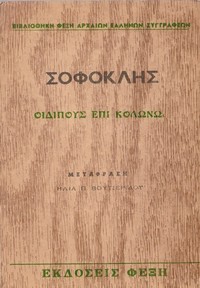
Οιδίπους επί Κολωνώ by Sophocles
Sophocles’ Oedipus at Colonus isn’t the famous tragedy where the king discovers his terrible secret. That happened years ago. This is the sequel, the final chapter. We meet Oedipus again, but he’s not a king. He’s a blind, ragged old man, wandering in exile with his loyal daughter Antigone. He’s broken by his past, a figure of shame and pollution.
The Story
The play opens as Oedipus and Antigone stumble into the sacred grove at Colonus, a place near Athens. They’re told it’s forbidden ground, but Oedipus feels a strange pull to it. He learns from the locals that this grove is destined to be his final resting place—a place where his bones will bring protection to the land that shelters him. His peace is shattered when his other daughter, Ismene, arrives with news: his sons are fighting for control of Thebes, and an oracle says whichever side has Oedipus on it will win. Suddenly, this cursed outcast becomes a political prize. His son Polynices comes to beg for his support, but Oedipus, filled with bitter rage over his abandonment, delivers a blistering curse instead. The heart of the story is his confrontation with the king of Athens, Theseus, a man who offers him compassion and sanctuary not because of what he can offer, but simply because he is a suffering man. The play builds to a mysterious, almost supernatural end for Oedipus.
Why You Should Read It
If Oedipus the King is about the shattering fall, this play is about what comes after. It’s quieter, more philosophical, but just as powerful. We see a man transformed by immense suffering. This Oedipus is angry, yes, but he’s also gained a strange, defiant wisdom. He argues with the gods about his fate, claiming his crimes were not entirely his fault. The most moving part is the relationship between the broken father and his daughters, Antigone and Ismene. Their love is the only pure thing left in his life. The play asks deep questions: Can a person be redeemed after committing the worst acts imaginable? What do we owe to our family, and what do they owe to us? It finds a strange, peaceful beauty in the idea of an end chosen with dignity.
Final Verdict
This is for the reader who loves character studies and big questions more than fast-paced action. It’s perfect if you’ve read the more famous Theban plays and wondered, “But what happened to Oedipus *after*?” It’s also a great pick for anyone interested in themes of forgiveness, exile, and the quiet power of mercy, as shown by the noble character of Theseus. Don’t expect the tense, plot-driven mystery of the first Oedipus play. Come for a slower, poetic, and profoundly thoughtful look at the end of a legendary life, and how even a cursed man can find a kind of peace.
You are viewing a work that belongs to the global public domain. You are welcome to share this with anyone.
Nancy Gonzalez
2 years agoI decided to give this a try based on a colleague's recommendation, the wealth of information provided exceeds the average market standard. Top-tier content that deserves more recognition.
Linda Johnson
10 months agoThe balance between academic rigor and readability is perfect.
Christopher Harris
2 months agoFrom a researcher's perspective, the emphasis on ethics and sustainability within the topic is commendable. It’s a comprehensive resource that doesn't feel bloated.
Mary Davis
1 year agoComparing this to other titles in the same genre, the narrative arc keeps the reader engaged while delivering factual content. It cleared up a lot of the confusion I had previously.


Mary Thompson
11 months agoI took detailed notes while reading through the chapters and the clarity of the writing makes even the most dense sections readable. It cleared up a lot of the confusion I had previously.