
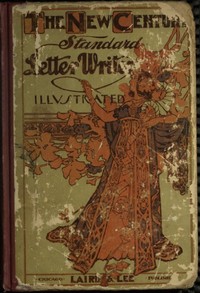
The New Century Standard Letter-Writer by Alfred B. Chambers
Let's be clear from the start: this isn't a book with a plot. There's no hero's journey. 'The New Century Standard Letter-Writer' is a tool, a social script from over a century ago. Published in the early 1900s by Alfred B. Chambers, it's a collection of template letters meant to guide people through the minefield of polite correspondence. The 'story' is the glimpse it gives us into daily life. The book is divided into sections covering business, family, love, and friendship. It provides the exact wording you should use to apply for a job, complain about a bad product, console a grieving friend, or even break off an engagement.
The Story
Think of it as an early form of 'copy and paste.' Each letter is a formal recipe. Need to write to your landlord about a repair? Turn to page 84. Want to gently remind a friend they owe you money? Page 120 has you covered. The most fascinating sections are on personal matters. The templates for love letters are painfully proper, and the letters of condolence are so elaborate they feel like small performances. The book assumes a world where every social interaction, especially in writing, followed a strict code. Reading it is like listening to one side of a thousand forgotten conversations.
Why You Should Read It
I loved this book because it's a mirror held up to a different time. The stiffness of the language—'My Dear Sir, I beg to acknowledge the receipt of your favour of the 12th inst.'—is hilarious to us now. But underneath the formality, you see the same human worries: money, love, grief, and not wanting to sound foolish. It highlights how much communication has changed. We value speed and authenticity now; they valued structure and propriety. It made me appreciate the ease of my own texts, but also wonder if we've lost something in not taking the time to craft our words so carefully.
Final Verdict
This is a niche read, but a delightful one. It's perfect for history buffs who enjoy social history over dates and battles, for writers curious about language evolution, or for anyone who needs a genuinely funny and insightful peek into the everyday past. Don't read it cover-to-cover. Dip in and out. Read a template for a job application from 1905, then one for a love letter. You'll be entertained, and you'll never complain about writing a simple email again. It's a five-star experience for the right, curious reader.
No rights are reserved for this publication. Preserving history for future generations.
Daniel Moore
1 year agoAs someone who reads a lot, it provides a comprehensive overview perfect for everyone. I couldn't put it down.
Nancy Flores
1 year agoThe fonts used are very comfortable for long reading sessions.
Daniel Garcia
1 month agoThis book was worth my time since the arguments are well-supported by credible references. One of the best books I've read this year.





Richard Lee
2 months agoJust what I was looking for.