
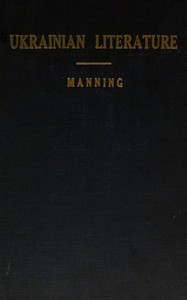
Ukrainian literature : Studies of the leading authors by Clarence Augustus Manning
Let's be clear from the start: this isn't a novel. You won't find a murder mystery or a love story here. Clarence Manning's 'Ukrainian Literature: Studies of the Leading Authors' is a work of advocacy. Written in the mid-20th century, it's a guided tour through centuries of Ukrainian writing, from early folk songs and epic poems to the novelists and poets of Manning's own time. He introduces you to figures like Taras Shevchenko, the national poet, and Ivan Franko, a towering intellectual, explaining not just what they wrote, but why it mattered in the fight to preserve a language and a national consciousness.
The Story
There's no traditional plot. The "story" Manning tells is the struggle of Ukrainian literature itself to exist and be heard. He walks you through different historical periods, showing how writers faced censorship, oppression, and outright bans on publishing in their own language. Each chapter focuses on a key author, placing their work in the context of their tumultuous times—under the Russian Empire, the Austro-Hungarian Empire, and later Soviet rule. The narrative is the slow, persistent growth of a literary tradition against all odds.
Why You Should Read It
I picked this up out of a desire to understand more, and it delivered in a way I didn't expect. Manning's writing, while academic, has a quiet fire to it. You can feel his respect and his frustration. Reading it today, his descriptions of cultural suppression and the resilience of the written word hit harder than ever. It turns names on a page into real people who risked everything for their art. It made me realize how much history shapes the stories we get to tell, and which ones get remembered.
Final Verdict
This book is a specialized pick, but a rewarding one. It's perfect for history buffs or literature lovers who feel like they only know one side of the Eastern European story. It's also for anyone who wants to grasp the deep cultural roots of modern Ukraine. Don't go in looking for a light read—go in looking for a key to understanding a nation's soul. It's a slow, thoughtful conversation with the past, and right now, that conversation feels incredibly important.
This content is free to share and distribute. You do not need permission to reproduce this work.
Thomas Jackson
4 months agoNot bad at all.
Charles Martin
1 year agoHelped me clear up some confusion on the topic.


Michelle Wilson
1 year agoI had low expectations initially, however the clarity of the writing makes this accessible. I would gladly recommend this title.