About 93 minutes
The Overall Boys in Switzerland — A Closer Reading
Childrens Adventures
21,349 recorded words. 5 minutes difference from this book's estimate.
View Gutenberg source #45155
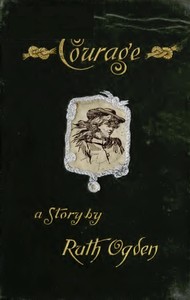
For Courage A story wherein every one comes to the conclusion that the Courage in question proved a courage worth having — Inside the Classic, the stored edition analysis reports 22,421 words, 1 hr 38 min estimated reading time, and 3 detected text sections.
The text analysis averages about 22.6 words per sentence, while the detected sections provide another way to judge how the source is divided.
Project Gutenberg metadata also associates the work with “Orphans -- Juvenile fiction,” connecting these edition facts with the source record’s subject description.
Explore this collection
These alternatives are selected using recorded categories and estimated reading time.
About 93 minutes
Childrens Adventures
21,349 recorded words. 5 minutes difference from this book's estimate.
View Gutenberg source #45155About 116 minutes
Childrens Adventures
26,568 recorded words. 18 minutes difference from this book's estimate.
View Gutenberg source #45552About 116 minutes
Childrens Adventures
26,563 recorded words. 18 minutes difference from this book's estimate.
View Gutenberg source #49724Search stored excerpts and compare books → Choose by your preferences →
Choices use stored catalog measurements. Estimates vary with reading speed. A shared category is a catalog label, not a claim that two books have the same argument or literary quality.
Search reads excerpt text stored with this catalog and links to its associated Gutenberg record. The connection is stored in the site database; this tool does not recheck that every excerpt is word-for-word identical to that external record. Excerpt search does not cover every chapter and does not verify historical publication dates.
Catalog snapshot checked: 2026-09-25. Coverage: 98 public books, 98 available source excerpts.
Calculated from edition completeness, EPUB availability, text structure and catalogue metadata. Not a user rating.
Total of 100 points, scaled to a 2.5-5.0 range. Editions with an empty description or a missing EPUB file are not scored.
Public-domain source text
The source text is kept in the dedicated reader, separate from this catalogue record and its commentary.
The narrator of Ruth Ogden's 1891 novel announces a preference for plain facts over fairy-tale mystery, setting the tone for a story grounded in everyday life. The heroine, Courage Masterson, is introduced not as an abstract virtue but as an auburn-haired, brown-eyed girl who disliked her name—a name she acquired only after six years of being called simply 'Baby Masterson.' Her father, Hugh, a clever but grieving inventor, hired Mary Duff to care for her after his wife's death. The opening chapters establish a world where kindness and practical help matter more than sentiment, as seen in the careful descriptions of the Masterson household and the later scenes aboard the lighter Courage Masterson.
The story places unusual weight on how characters acquire their names. Courage herself was unnamed for half a dozen years, a fact the narrator treats as a puzzle to be solved. Sylvia Sylvester, a Black girl from the asylum, chose her own surname by asking a Kitchen Garden lady to be her namesake. Sylvia explains: 'Dis chile wa'nt, Miss Courage; leastways nobody didn't know at de 'sylum what name I was bawn to, cep'n jes' Sylvy, so I picked mine out mysel'.' This act of self-naming contrasts with the formal naming of the boat Courage Masterson and the titular 'Courage' that proves 'worth having.' The text suggests that names are not fixed but earned or chosen, a pattern visible in the way characters define themselves through action rather than inheritance.
The Kitchen Garden, a real 19th-century charitable program for poor children, appears as a source of rules and rituals. Sylvia recites a game: 'We all stood up in a ring, an' a girl came an' knocked on yer back and axed, "Is Mis' Brown to home?" Den you turn roun' an' say, "Mis' Brown are to home, but begs to be excuged."' This scripted politeness contrasts with the spontaneous courage required during the collision with the Sandy Hook boat. The narrator does not explicitly moralize, but the juxtaposition implies that true courtesy and bravery go beyond memorized responses. The Kitchen Garden also provides Sylvia with books and a sense of belonging, yet the story never reduces her to a lesson; her dialect and humor remain distinct.
The climax hinges on a maritime accident: the lighter Courage Masterson is struck by a larger boat despite Larry's pride in 'his observance of harbor rules.' The narrator builds tension through precise details—the furled sail, the anchor dropped too close to the island, the 'deafening, heart-sickening crash.' Larry's earlier annoyance at breaking the rule ('we'll show 'em we meant to obey orders anyway') makes the collision ironic: competence is not enough. The girls' reaction—'they clung as for their lives'—is described without melodrama. The chapter title 'Courage Does It' promises resolution, but the excerpt ends mid-crash, leaving the reader to infer that the titular virtue emerges from this failure of seamanship, not from flawless execution.
Readers should attend to the way Ogden balances dialect, description, and incident. Sylvia's speech is rendered phonetically but never mocked; the harbor setting is rendered with technical accuracy; and the moral is embedded in action rather than stated. The story rewards attention to small details—the naming of the boat, the Kitchen Garden game, the anchor's position—that accumulate into a coherent vision of courage as a practical, earned quality rather than a grand ideal.
Rereading Courage, I remembered how my own grandmother’s name meant “brave,” though she never spoke of danger—only quiet mornings. That same warmth came back reading The Overall Boys in Switzerland — A Closer Reading, where ordinary fears soften into gentle wonder, like mist lifting off the lake. Both books hold courage not as a shout, but as a small, steady hand. That lingers.
Save your reaction, strongest insight, and memorable passage.









