About 116 minutes
The Old Market-Cart — Text and Context
Childrens Adventures
26,568 recorded words. 0 minutes difference from this book's estimate.
View Gutenberg source #45552
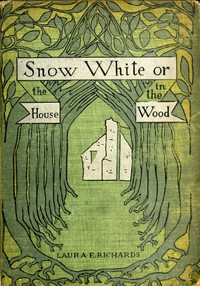
The source record for Snow-White; or, The House in the Wood — Reading Notes measures this digital text at 26,563 words, 1 hr 56 min estimated reading time, and 3 detected text sections.
The text analysis averages about 14.7 words per sentence, while the detected sections provide another way to judge how the source is divided.
Project Gutenberg metadata also associates the work with “Christian life -- Juvenile fiction,” connecting these edition facts with the source record’s subject description.
Explore this collection
These alternatives are selected using recorded categories and estimated reading time.
About 116 minutes
Childrens Adventures
26,568 recorded words. 0 minutes difference from this book's estimate.
View Gutenberg source #45552About 117 minutes
Childrens Adventures
26,774 recorded words. 1 minutes difference from this book's estimate.
View Gutenberg source #48146About 118 minutes
Childrens Adventures
27,121 recorded words. 2 minutes difference from this book's estimate.
View Gutenberg source #53306Search stored excerpts and compare books → Choose by your preferences →
Choices use stored catalog measurements. Estimates vary with reading speed. A shared category is a catalog label, not a claim that two books have the same argument or literary quality.
Search reads excerpt text stored with this catalog and links to its associated Gutenberg record. The connection is stored in the site database; this tool does not recheck that every excerpt is word-for-word identical to that external record. Excerpt search does not cover every chapter and does not verify historical publication dates.
Catalog snapshot checked: 2026-09-25. Coverage: 98 public books, 98 available source excerpts.
Calculated from edition completeness, EPUB availability, text structure and catalogue metadata. Not a user rating.
Total of 100 points, scaled to a 2.5-5.0 range. Editions with an empty description or a missing EPUB file are not scored.
Public-domain source text
The source text is kept in the dedicated reader, separate from this catalogue record and its commentary.
The house in the wood is introduced as something almost invisible, hidden by tall pines and hemlocks that form a natural circle around a rocky ledge. The narrative voice describes the stones as if they might have been “flung together by a boy at play,” blurring the line between human construction and natural formation. This opening establishes a setting where the boundaries between inside and outside, wild and domestic, are deliberately porous. The house is not merely a backdrop but an active presence: creepers look in at windows, squirrels and birds enter freely, and a pine tree is clasped by the stone walls. From the first paragraph, the reader is placed in a world where the physical environment is animated and intimately connected to the characters who inhabit it.
The description of the house emphasizes its integration with the surrounding forest. The stones “fitted close, and kept the weather out,” yet the roof is of bark and the whole is half-covered with creepers descending from the ledge above. The narrative notes that the trees “jostled one another so close that one almost fancied they must be uncomfortable,” a personification that extends to the house itself. The pine tree disappears into the stone wall, as if the house had “clasped it in a rough embrace.” This architectural blending recurs throughout the excerpts: the dwarf’s home is not separate from nature but embedded within it. The windows stand open all summer, and animals come and go freely. The house is less a shelter from the wild than a node within it, a place where the distinction between human dwelling and forest habitat is deliberately softened.
The narrative frequently follows characters as they move through the forest, and these journeys are marked by specific details of terrain and wildlife. When the dwarf carries Snow-white on his back, they travel along “little paths wound here and there through the forest, as if some one walked in it a great deal.” The ground is covered with a “thick carpet of brown needles,” and the hermit thrush calls from deeper woods. The dwarf whistles to summon squirrels, who come in half a dozen varieties—gray, red, and a striped one—and sit up on the needles with “bright, asking eyes.” One gray squirrel makes a little bow. The dwarf names him Simeon Stylites, after the pillar saint, and explains the name with a playful logic that blends natural observation with literary allusion. These scenes of movement are not merely transitional; they are opportunities for the child to encounter the forest’s inhabitants and for the dwarf to reveal his character through interaction.
Several images recur across the excerpts, creating a web of connections. The dwarf’s hump is mentioned twice: first when the child uses it as a seat, and later when the dwarf himself notes that it is “round, smooth” and makes a good seat. This physical detail becomes a point of comfort and play. The squirrel Simeon Stylites appears in a scene where the dwarf feeds him and tells a story about the saint’s pillar, and the child immediately wants to imitate the saint by sitting in a tree hole. The child’s desire to “be him” and to perform a story herself echoes the dwarf’s earlier promise to tell a story. The act of storytelling is itself a recurring motif: the child demands a story, referencing the fairy tale of Snow-white and Rosy Red, and the dwarf responds with a tale about Simeon. These repeated elements—the hump, the squirrel, the story-within-a-story—give the narrative a layered, almost folkloric texture.
The narrative voice shifts between a detached, descriptive tone and a more intimate, colloquial register. The opening chapter uses a formal, almost architectural language: “the house was so well hidden, one might almost stumble against it before one became aware of it.” But when the child speaks, her dialogue is marked by contractions and playful syntax: “All I forgot her!” and “'Most I wish I was a dwarf, to stay little like you.” The dwarf’s speech is rough but tender, and his voice carries a dry humor: “I never thought much about his getting up. I suppose he must have shinned, don’t you?” The narrative also occasionally addresses the reader directly, as when it says “I said that the trees stood well back” and then corrects itself. These shifts in voice create a sense of a story being told aloud, with the narrator adjusting tone for different moments. The child’s perspective dominates the later excerpts, filtering the world through her wonder and her desire for stories.
Readers attentive to structure will notice how the house, the forest paths, and the recurring images of the hump and the squirrel form a cohesive pattern that rewards close reading. The narrative’s movement between scenes—from the hidden house to the milking of the cow to the squirrel-feeding—is never arbitrary; each transition deepens the relationship between the child and the dwarf. The story-within-a-story device, though only glimpsed in the excerpts, suggests a layered narrative that may mirror the child’s own journey. Approach this text as a carefully constructed woodland tale where every detail of setting and gesture carries meaning.
The rain slid down the window as I finished Richards’ little house in the wood, thinking how the dwarf’s quiet revelations softened the gloom. That lingering mood of slow unfolding led me, almost by habit, to The Walcott Twins — Background and Themes. Their tangled mischief felt familiar, less a story than a remembering. The afternoon held both, side by side, like two shades of the same grey.
Build a private reading journal entry for this title.









