About 193 minutes
The Adventure Girls at Happiness House — Context and Discussion
Childrens Adventures
44,274 recorded words. 2 minutes difference from this book's estimate.
View Gutenberg source #45343
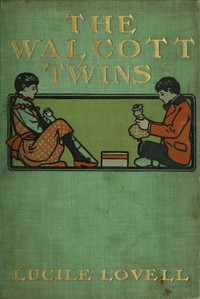
The Walcott Twins — Background and Themes can be approached with a clearer sense of reading commitment from its source measurements: 43,715 words, 3 hr 11 min estimated reading time, and 6 detected text sections.
The text analysis averages about 14.6 words per sentence, while the detected sections provide another way to judge how the source is divided.
Project Gutenberg metadata also associates the work with “Twins -- Juvenile fiction,” connecting these edition facts with the source record’s subject description.
Explore this collection
These alternatives are selected using recorded categories and estimated reading time.
About 193 minutes
Childrens Adventures
44,274 recorded words. 2 minutes difference from this book's estimate.
View Gutenberg source #45343About 193 minutes
Childrens Adventures
44,244 recorded words. 2 minutes difference from this book's estimate.
View Gutenberg source #51859About 193 minutes
Childrens Adventures
44,285 recorded words. 2 minutes difference from this book's estimate.
View Gutenberg source #53448Search stored excerpts and compare books → Choose by your preferences →
Choices use stored catalog measurements. Estimates vary with reading speed. A shared category is a catalog label, not a claim that two books have the same argument or literary quality.
Search reads excerpt text stored with this catalog and links to its associated Gutenberg record. The connection is stored in the site database; this tool does not recheck that every excerpt is word-for-word identical to that external record. Excerpt search does not cover every chapter and does not verify historical publication dates.
Catalog snapshot checked: 2026-09-25. Coverage: 98 public books, 98 available source excerpts.
Calculated from edition completeness, EPUB availability, text structure and catalogue metadata. Not a user rating.
Total of 100 points, scaled to a 2.5-5.0 range. Editions with an empty description or a missing EPUB file are not scored.
Public-domain source text
The source text is kept in the dedicated reader, separate from this catalogue record and its commentary.
The Walcott Twins opens not with the twins themselves but with a domestic crisis: the birth of a new baby. The father, Mr. Walcott, orders the infant removed from the mother's room, declaring, 'Take him away. He has made trouble enough.' The nurse, an 'imported English nurse,' bristles at his tone, moving slowly to assert her dignity. Meanwhile, the twins Gay and May, along with little Ned, create 'boisterous mirth' in the nursery, prompting Mr. Walcott to insist they must go for the mother's recovery. This early scene establishes a household where children are both cherished and exasperating, and where adult authority is often challenged by the sheer energy of youth.
The opening chapter, 'Gay and May,' introduces the Walcott family through a tense bedside scene. Mr. Walcott's repeated command to 'take him away' reveals his impatience with the new baby, whom he blames for causing trouble. The mother, Elinor, is described as having a 'gentle countenance' and struggles to stifle a sigh at the thought of sending her children away. The father's characterization as a 'great bear' by the nurse hints at a stern but perhaps loving patriarch. The twins are not yet distinguished from each other; they are simply part of the 'torments' that must be removed. This opening efficiently sets up the central conflict: the parents' desire for order versus the children's natural chaos.
By the middle of the novel, the twins have begun to swap identities, as suggested by chapter titles like 'Being a Boy' and 'Being a Girl.' In one excerpt, May, dressed in her brother's clothes, faces Philip, a boy who taunts her for sewing. Philip calls her a 'sissy' and a 'freak,' but May responds with wit, saying, 'You got one on me that time, Philip.' She resists his pressure to smoke, tearing up a cigarette and stamping out a match. The narrative notes that May 'was not an Amazon nor a miniature virago,' but she has learned boxing from Uncle George. This scene highlights the theme of gender performance: May must navigate being perceived as a timid boy while possessing skills and courage that contradict that perception.
Philip's bullying escalates in the barn scene. He lights matches and throws them 'carelessly down on the hay,' forcing May to jump up and stamp out the flames. Philip's actions are reckless, but the text suggests he 'meant only to arouse May's resentment.' May's internal thoughts reveal her frustration: 'I wish I wasn't a girl—or if Gay were here, he'd give it to him!' This moment underscores the limitations May feels in her assumed identity. She cannot fight back as Gay might, but she also refuses to be cowed. The barn setting, with its 'fragrant hay' and afternoon sunshine, contrasts with the tension of the confrontation, emphasizing the stakes of May's secret.
Lovell's narrative voice is direct and often humorous, with asides like 'Nurse thought the father a great bear.' The dialogue is lively, with characters speaking in distinct registers: the nurse's affected 'H'indeed' and Philip's sneering 'What an awful sissy you are.' The chapter titles offer a roadmap: 'The First Separation,' 'Just for Fun,' 'A Remarkable Household.' These headings hint at the episodic structure and the central conceit of mistaken identity. Readers should pay attention to how the twins' names—Gay and May—are used; the similarity may be a deliberate clue to their interchangeability. The story's moral lessons about courage and honesty are embedded in action rather than stated outright.
As you read The Walcott Twins, note how the author uses the twins' physical resemblance to explore questions of selfhood and social roles. The excerpts show May struggling with the constraints of being a girl in a boy's world, but the full novel likely develops this theme further. Pay attention to the supporting characters—Philip, Uncle George, the parents—as they each challenge or reinforce the twins' choices. The story rewards close attention to dialogue and detail, offering a nuanced portrait of childhood that goes beyond simple adventure.
I keep returning to the moment May's frustration at the sewing needle mirrors old misplacements, yet it's the quieter identity shifts that linger. There's something tender in swapping one's self for another, as a forgotten kingdom might echo through its ruins. I found a similar gentle weight in The White Conquerors: A Tale of Toltec and Aztec — Inside the Classic, where conquest itself becomes a kind of exchanged mask, and both stories feel like small mirrors held up to passing time.
Answer a few questions and save a private reflection on this device.









