About 514 minutes
With the Allies to Pekin: A Tale of the Relief of the Legations — Reading Companion
Childrens Adventures
117,994 recorded words. 48 minutes difference from this book's estimate.
View Gutenberg source #47008
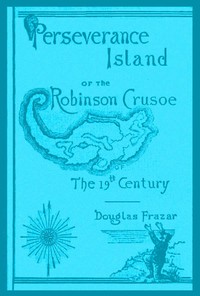
The catalog record for Perseverance Island; Or, The Robinson Crusoe of the Nineteenth Century — Edition Insights provides practical reading context through 107,047 words, 7 hr 46 min estimated reading time, and 10 detected text sections.
The text analysis averages about 33.4 words per sentence, while the detected sections provide another way to judge how the source is divided.
Project Gutenberg metadata also associates the work with “Islands -- Juvenile fiction,” connecting these edition facts with the source record’s subject description.
Explore this collection
These alternatives are selected using recorded categories and estimated reading time.
About 514 minutes
Childrens Adventures
117,994 recorded words. 48 minutes difference from this book's estimate.
View Gutenberg source #47008About 370 minutes
Childrens Adventures
85,083 recorded words. 96 minutes difference from this book's estimate.
View Gutenberg source #53074About 340 minutes
Childrens Adventures
78,182 recorded words. 126 minutes difference from this book's estimate.
View Gutenberg source #47810Search stored excerpts and compare books → Choose by your preferences →
Choices use stored catalog measurements. Estimates vary with reading speed. A shared category is a catalog label, not a claim that two books have the same argument or literary quality.
Search reads excerpt text stored with this catalog and links to its associated Gutenberg record. The connection is stored in the site database; this tool does not recheck that every excerpt is word-for-word identical to that external record. Excerpt search does not cover every chapter and does not verify historical publication dates.
Catalog snapshot checked: 2026-09-25. Coverage: 98 public books, 98 available source excerpts.
Calculated from edition completeness, EPUB availability, text structure and catalogue metadata. Not a user rating.
Total of 100 points, scaled to a 2.5-5.0 range. Editions with an empty description or a missing EPUB file are not scored.
Public-domain source text
The source text is kept in the dedicated reader, separate from this catalogue record and its commentary.
The preface of Perseverance Island immediately distinguishes this castaway story from its predecessors: the narrator is thrown ashore “almost literally naked,” with no wreck to plunder for tools or dry powder. The opening chapters confirm this stark start—after losing the schooner Good Luck and all companions, the protagonist takes inventory of his effects (a knife, a tinder-box, a few nails) and begins a calendar. The early narrative dwells on elemental needs: making fire, distilling salt water, and fashioning a knife and spear from an anchor. These passages establish a tone of practical ingenuity rather than romantic adventure.
Frazar’s preface explicitly critiques the Robinson Crusoe tradition, noting that earlier castaways always had their wreck “near at hand” with dry powder and calm weather for rafting. By contrast, the protagonist of Perseverance Island must rely solely on “the use of his brains, the skill of his hands, and a practical knowledge of the common arts and sciences.” This framing primes the reader to watch for problem-solving rather than lucky salvage. The early chapters bear this out: the narrator’s first tools are improvised from a ship’s anchor, and his initial shelter is a hut built without nails or saw. The absence of a convenient wreck forces a slower, more deliberate pace of invention.
As the narrative progresses, the castaway’s efforts shift from immediate survival to long-term defense. The later excerpts describe an elaborate fortress: a nine-foot-high iron fence, underground water pipes from “Rapid River,” a subterranean escape passage, and a stockpile of six months’ salted provisions. The level of detail—pottery pipes glazed and fitted, a stopcock made from cane, iron shutters bolted from inside—reflects a methodical, almost obsessive approach to security. The narrator also manufactures rifles and pistols with smooth-bored barrels and steel bullets, acknowledging the limitations of his materials. These passages reward a reader attentive to the incremental accumulation of skill and infrastructure.
Throughout the excerpts, the narrator’s voice is that of a patient craftsman. He describes failures as readily as successes: his early attempts at fire-making, the labor of casting iron fencing, the difficulty of making spherical steel bullets by revolving them in sand. The prose is dense with process—how he built his lamp-tower, how he churned butter using a water wheel, how he tiled his roof to be fireproof. This technical specificity gives the story a documentary quality. Readers should note that the narrator rarely reflects emotionally on his isolation; his focus is on the next task. The effect is less a tale of solitude than a manual of one-man civilization-building.
The provided text cuts off before any encounter with pirates or other humans, though the catalog subjects list “Pirates” and “Utopias,” and the fortress-building suggests anticipated conflict. The narrator’s preparations—the hidden passage, the stockpiled weapons, the underground water supply—imply a threat that may or may not materialize. Readers should approach the later chapters with curiosity about whether these defenses are ever tested. The preface’s claim that the story “proves the limitless ingenuity and invention of man” also hints at a possible utopian turn, but the excerpts alone do not confirm this. The ending remains unknown from the available material.
For a first reading, pay attention to the rhythm of invention: each chapter typically introduces a problem, describes the narrator’s trial-and-error solution, and then moves to the next need. The book rewards patience with process. The preface is essential context—it announces the author’s intent to outdo Crusoe, and the narrative delivers on that promise by stripping away the usual advantages. Whether the later story fulfills the utopian promise of its subtitle is a question best answered by reading on.
That editorial note about methodical fortification stayed with me—how we shore ourselves up, plank by plank, in stories and in life. It made me think of late nights with Wings Over the Rockies; Or, Jack Ralston's New Cloud Chaser — Reading Notes, where the quiet building of trust feels just as sturdy.
Use these questions to collect your thoughts before moving on.









