
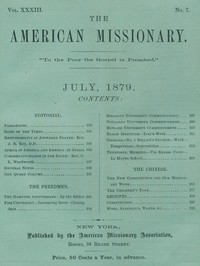
The American Missionary — Volume 33, No. 07, July, 1879 by Various
Forget a single, linear plot. The American Missionary from July 1879 is a mosaic of voices and missions. It's the official monthly publication of the American Missionary Association, and this issue throws you right into their overwhelming to-do list. The central thread is the massive effort to educate formerly enslaved people in the American South during Reconstruction. The 'story' is told through financial appeals, field reports from teachers, lists of new school buildings, and updates on 'foreign' missions in places like China and Africa.
The Story
The book opens with a blunt financial statement—they're in the red. From there, it's a whirlwind tour of their world. You'll read a detailed report from a teacher in South Carolina describing her 200 students and their eagerness to learn. There's a sobering account of a church burned down by opposition groups. Another section lists every missionary and teacher by name and location, making the scale of the operation personal. It jumps from a statistical breakdown of student attendance in Tennessee to a letter from a missionary in Egypt. There's no main character, unless it's the Association itself, trying desperately to hold everything together with grit and faith.
Why You Should Read It
This is history without the filter. The passion and the panic are right on the surface. You feel the urgency in the repeated calls for donations. You see the pride in the lists of students who have mastered arithmetic or grammar. What struck me most was the tension between high ideals and hard reality. These people believed they were building a new nation, one classroom at a time, but the reports also show how exhausting and dangerous that work was. It completely shatters any simple, romantic view of the period. You're not getting a historian's polished analysis; you're getting the messy, firsthand draft.
Final Verdict
Perfect for history buffs who want to get out of the textbook and into the archives, or for anyone curious about the raw mechanics of social change. It's not a casual novel—it demands a bit of focus. But if you give it a chance, you'll be rewarded with a profoundly authentic and moving look at a pivotal moment. Think of it as the most insightful blog or newsletter of 1879, full of hope, frustration, and a relentless drive to make a difference.
This book is widely considered to be in the public domain. You do not need permission to reproduce this work.
Jackson Wright
1 year agoAmazing book.
Mark Lewis
9 months agoAfter hearing about this author multiple times, it provides a comprehensive overview perfect for everyone. A valuable addition to my collection.
Karen Smith
6 months agoEnjoyed every page.






Donald Nguyen
1 year agoSurprisingly enough, the flow of the text seems very fluid. I learned so much from this.