
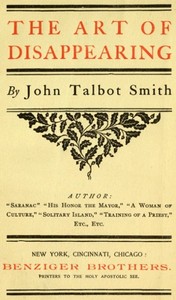
The Art of Disappearing by John Talbot Smith
Published in 1899, John Talbot Smith's The Art of Disappearing is a quiet, psychological story that feels surprisingly modern. Forget grand adventures or epic romances; this is a book about the quiet act of self-destruction.
The Story
Arthur Loring is a man who feels he has failed at everything. His modest career has stalled, his family relationships are strained, and he sees no future for himself. Instead of a dramatic exit, he makes a cold, calculated decision: he will disappear from his own life. He moves to a different part of New York City, takes a menial job under a false name, and severs every single tie to his past. The plot follows his meticulous efforts to become nobody, observing the people from his old life as they search for him, grieve for him, and eventually move on. The tension comes from watching this experiment unfold. Will he be discovered? Will the loneliness break him? Or will he succeed in his grim goal of becoming a living ghost?
Why You Should Read It
What grabbed me was how Smith makes Arthur's internal struggle feel so real. This isn't a villain's story; it's the story of a deeply sad, exhausted person. You don't always agree with Arthur, but you understand his desperate need for a blank slate. The book asks hard questions about identity. How much of who we are is tied to other people's expectations? If no one knows you, do you even exist? Smith doesn't give easy answers. The writing is clear and direct, pulling you into Arthur's isolated world without a lot of fussy description. It's a slow burn, but the emotional payoff is worth it.
Final Verdict
This is a book for readers who love character studies and quiet, thoughtful stories. If you enjoy authors who explore the darker corners of the human mind, or if you've ever wondered about just walking away from it all, this book will fascinate you. It's not a cheerful read, but it's a powerful and memorable one. Perfect for a rainy afternoon when you're in the mood for something introspective and a little bit haunting.
This historical work is free of copyright protections. Access is open to everyone around the world.
Christopher Thompson
2 years agoFrom the very first page, the arguments are well-supported by credible references. Highly recommended.
Edward Thompson
1 year agoAmazing book.
Emma Lewis
2 months agoHaving read this twice, the clarity of the writing makes this accessible. Exactly what I needed.
Kimberly Jones
1 year agoVery helpful, thanks.
Barbara Harris
2 months agoRecommended.