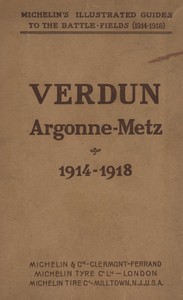
Verdun, Argonne-Metz, 1914-1918 by Pneu Michelin (Firm)
Forget what you know about history books. This isn't a narrative; it's an artifact. Published just a year after the Armistice, this guide was part of a series Michelin created to encourage 'pilgrimages' to the battlefields by car. The book covers three brutal sectors of the Western Front: Verdun, the Argonne Forest, and the Metz region.
The Story
There's no traditional plot. Instead, the book is organized like a tour. It gives you driving directions from Paris, lists hotels, and marks points of interest. But those points of interest are obliterated villages, shattered forts, and vast cemeteries. Each location gets a blunt, factual account of the fighting that occurred there, accompanied by sobering 'before and after' photographs. The text doesn't sensationalize; it simply states the facts—which battalion attacked, how many were lost, what was left standing. The effect is chilling. The 'story' is the landscape itself, silently screaming its recent history.
Why You Should Read It
This book gets under your skin because of its jarring format. The cheerful, practical tone of a travel guide collides with the horrific subject matter. Reading a suggestion to 'visit the excellent hotel in Bar-le-Duc' just pages from photos of human bones being gathered from the Verdun battlefield creates a cognitive dissonance that's more powerful than any graphic war description. It shows how a society, still in shock, tried to process and commodify its trauma. You're not just learning history; you're seeing how history was packaged and sold before the myths fully set in.
Final Verdict
This isn't for someone looking for a thrilling war story. It's perfect for history buffs who want a primary source that's off the beaten path, or for anyone interested in how we memorialize tragedy. It’s also a stark reminder that the places we visit as tourists often have layers of pain beneath them. Think of it as the world's most somber and thought-provoking AAA TripTik.
This work has been identified as being free of known copyright restrictions. It serves as a testament to our shared literary heritage.