About 187 minutes
Lily Norris' Enemy — Story, Setting & Ideas
Childrens Adventures
42,799 recorded words. 3 minutes difference from this book's estimate.
View Gutenberg source #44991
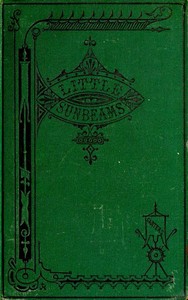
Before opening Belle Powers' Locket — A Reader’s Guide, the edition data offers a quick orientation: 42,229 words, 3 hr 4 min estimated reading time, and 6 detected text sections.
The text analysis averages about 22.3 words per sentence, while the detected sections provide another way to judge how the source is divided.
Project Gutenberg metadata also associates the work with “Christian life -- Juvenile fiction,” connecting these edition facts with the source record’s subject description.
Explore this collection
These alternatives are selected using recorded categories and estimated reading time.
About 187 minutes
Childrens Adventures
42,799 recorded words. 3 minutes difference from this book's estimate.
View Gutenberg source #44991About 181 minutes
Childrens Adventures
41,468 recorded words. 3 minutes difference from this book's estimate.
View Gutenberg source #45494About 191 minutes
Childrens Adventures
43,715 recorded words. 7 minutes difference from this book's estimate.
View Gutenberg source #49060Search stored excerpts and compare books → Choose by your preferences →
Choices use stored catalog measurements. Estimates vary with reading speed. A shared category is a catalog label, not a claim that two books have the same argument or literary quality.
Search reads excerpt text stored with this catalog and links to its associated Gutenberg record. The connection is stored in the site database; this tool does not recheck that every excerpt is word-for-word identical to that external record. Excerpt search does not cover every chapter and does not verify historical publication dates.
Catalog snapshot checked: 2026-09-25. Coverage: 98 public books, 98 available source excerpts.
Calculated from edition completeness, EPUB availability, text structure and catalogue metadata. Not a user rating.
Total of 100 points, scaled to a 2.5-5.0 range. Editions with an empty description or a missing EPUB file are not scored.
Public-domain source text
The source text is kept in the dedicated reader, separate from this catalogue record and its commentary.
The novel opens with a tableau of stillness: Belle sits on a low stool, watching sunbeams travel across a room, her doll and picture-book forgotten. The narrator addresses her directly—"Dear little Belle!"—and the prose lingers on the light's movement, mirroring the child's thoughtful calm. This unhurried pace soon gives way to sharper rhythms when Mabel enters, her peevishness puncturing the quiet. The locket, a gift from Belle's father, becomes a catalyst for conflict, and the narrative voice shifts from lyrical observation to brisk dialogue, as schoolmates crowd around Belle with exclamations like "how lovely!" and "how sweet!"
The narrator's tone is notably flexible. Early chapters adopt a measured, almost painterly style: the sunbeams "poured life and gladness" and "fell softly on a vase of lovely flowers." This descriptive patience establishes Belle's home as a place of order. But when Mabel appears, the prose contracts into short, irritable exchanges. Mabel's speech is clipped and sullen—"Now leave me be"—while Lily Norris's retorts tumble out in tangled grammar: "most always when peoples is selfish themselves, they think other ones are that ain't." The narrator steps back during these quarrels, letting the children's voices carry the tension. The effect is a deliberate contrast: the adult narrator's calm observations versus the raw, unpolished energy of the children's disputes.
The locket is not merely an ornament; it drives the plot and reveals character. Belle initially hesitates to wear it to school, but her nurse Daphne persuades her, motivated by pride: she wants others to see that "her folks was wort somethin'." Daphne's dialect—"I reckon it's not too fancy"—marks her as a distinct voice, separate from the children and the narrator. The locket's appearance triggers a chain of events: classmates crowd around, Mabel grows jealous, and Lily defends Belle. The narrator notes that the locket "was perhaps not quite a proper thing for Belle to wear to school," a quiet moral judgment that foreshadows trouble. The object itself becomes a test of character, and its loss or damage (hinted at in chapter titles like "A Terrible Loss") promises to escalate the conflict.
Mathews varies pacing to underscore moral points. The opening chapter moves slowly, allowing Belle's thoughtful nature to register. But when Mabel's sulkiness takes over, the pace quickens: "all day, Sunday though it was, Mabel was even more peevish, exacting, and troublesome." The narrator compresses time with phrases like "all day" and "when Monday morning came," skipping over hours of friction. This acceleration mirrors the child's impatience and the adult's weariness. Later, the schoolyard scene unfolds in rapid dialogue, each line a new jab. The narrator intervenes only to summarize: "Belle told her story; and..." The effect is a rhythm of slow reflection and swift confrontation, a pattern that likely continues as Belle's locket is lost and found, each episode teaching a lesson about honesty, forgiveness, or generosity.
Readers may find it useful to track how the narrator's distance from the characters changes. In quiet moments, the voice is close and affectionate; in quarrels, it withdraws, letting the children reveal themselves. Notice also how objects—the locket, the sunbeams, the doll—are used to signal shifts in mood. The novel's moral framework is explicit, but its interest lies in the small, precise observations of how children speak and behave under pressure.
There’s a particular ache in old children’s books, the way a locket’s chain can feel heavier than the gold it holds. Belle’s quiet jealousy reminds me of my own childhood summers, all small grievances and big feelings. I found that same hush again, unexpectedly, in the wide woods of The Boy Scouts at the Canadian Border — Reading Notes. Different boys, different borders, but the same slow lesson in patience. Just a familiar, worn feeling, waiting there.
Use these questions to collect your thoughts before moving on.









