About 249 minutes
The Phantom Treasure — Context and Discussion
Childrens Adventures
57,229 recorded words. 1 minutes difference from this book's estimate.
View Gutenberg source #46375
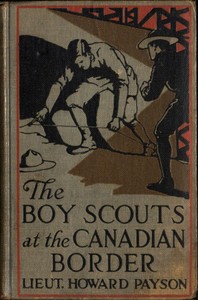
The Boy Scouts at the Canadian Border — Reading Notes can be approached with a clearer sense of reading commitment from its source measurements: 56,986 words, 4 hr 8 min estimated reading time, and 8 detected text sections.
The text analysis averages about 21.1 words per sentence, while the detected sections provide another way to judge how the source is divided.
Project Gutenberg metadata also associates the work with “Maine -- Juvenile fiction,” connecting these edition facts with the source record’s subject description.
Explore this collection
These alternatives are selected using recorded categories and estimated reading time.
About 249 minutes
Childrens Adventures
57,229 recorded words. 1 minutes difference from this book's estimate.
View Gutenberg source #46375About 249 minutes
Childrens Adventures
57,179 recorded words. 1 minutes difference from this book's estimate.
View Gutenberg source #48304About 247 minutes
Childrens Adventures
56,753 recorded words. 1 minutes difference from this book's estimate.
View Gutenberg source #50824Search stored excerpts and compare books → Choose by your preferences →
Choices use stored catalog measurements. Estimates vary with reading speed. A shared category is a catalog label, not a claim that two books have the same argument or literary quality.
Search reads excerpt text stored with this catalog and links to its associated Gutenberg record. The connection is stored in the site database; this tool does not recheck that every excerpt is word-for-word identical to that external record. Excerpt search does not cover every chapter and does not verify historical publication dates.
Catalog snapshot checked: 2026-09-25. Coverage: 98 public books, 98 available source excerpts.
Calculated from edition completeness, EPUB availability, text structure and catalogue metadata. Not a user rating.
Total of 100 points, scaled to a 2.5-5.0 range. Editions with an empty description or a missing EPUB file are not scored.
Public-domain source text
The source text is kept in the dedicated reader, separate from this catalogue record and its commentary.
The Boy Scouts at the Canadian Border opens with a familiar scene of camaraderie: Tubby Hopkins, the stout scout, is teased by Andy Bowles for his labored breathing during a portage in Maine. Yet this lighthearted exchange quickly gives way to a more urgent tone when the scouts encounter Donald McGuffey, a Canadian boy with a bruised leg. The banter—Tubby likening himself to a wash-tub and Andy to a broom-handle—establishes a dynamic of affectionate rivalry that persists throughout the excerpts. However, the narrative soon pivots to a plan to cross into Canada that very night, described as an errand of mercy to prevent a breach of neutrality. This juxtaposition of playful dialogue and serious mission is a recurring structural pattern in the text.
The excerpts reveal that the scouts’ verbal sparring is not mere filler but a deliberate counterpoint to the escalating stakes. When Rob announces the plan to invade Canada, Tubby’s reaction—gasping and demanding an explanation—is met with Andy’s quip about hearing the hoops of the tub creaking. This humor defuses tension while underscoring Tubby’s role as the group’s comic relief. Similarly, the opening dialogue includes Tubby accusing Andy of longing to rest, a charge Andy deflects with a joke about Tubby’s canteen. These exchanges serve to humanize the characters and create a rhythm of tension and release. The author consistently pairs moments of high alert—such as the discovery of Donald’s injury or the mention of a grave breach of neutrality—with lighthearted repartee, suggesting that the scouts’ bond is forged as much through teasing as through shared danger.
Donald McGuffey’s bruised leg is a focal point that highlights the theme of physical endurance. The description of the bruise—a dark black-and-blue mark on white skin—is vivid, and Rob’s careful treatment with magical salve emphasizes the scouts’ preparedness. Donald’s clenched teeth and refusal to wince draw admiration from Andy, who himself sets his teeth grimly when in pain. This moment contrasts with Tubby’s earlier puffing and complaints about his pack, which are treated humorously. The text thus establishes a spectrum of physical response: Tubby’s visible struggle is played for laughs, while Donald’s stoicism is praised. The inclusion of extra-thick drawers as a buffer against injury adds a practical detail that grounds the adventure in everyday Scout preparedness. The injury also serves as a plot device, prompting the scouts to act quickly and demonstrating their resourcefulness.
The Canadian border is not merely a geographical setting but a source of narrative tension. The scouts’ plan to cross into Canada is framed as an errand of mercy to prevent Uncle Sam from being accused of a grave breach of neutrality. This phrasing suggests that the border is a legal and political boundary that the scouts must navigate carefully. The presence of Donald, a Canadian scout, further complicates the border’s significance: he is both a stranger and a fellow scout, bridging the divide. The logging camp where the scouts are based is described as having chinks between logs that let out delicate lances of light, evoking a sense of secrecy and hidden activity. The border thus becomes a threshold between the familiar (the Maine camp) and the unknown (Canada), where the scouts’ loyalty to their country is tested without explicit jingoism.
Readers attentive to the interplay of tone will notice that the author uses the scouts’ banter not only to entertain but to signal shifts in narrative gravity. The border setting, meanwhile, is more than a backdrop—it is a catalyst for the plot and a source of moral complexity. As the story unfolds, the contrast between the scouts’ playful camaraderie and the gravity of their mission may continue to shape the narrative, offering a nuanced portrait of boyhood adventure during World War I.
Years at this desk have taught me that even the sturdiest adventure—like Goldfrap's scouts at the Canadian border—has a tender seam, a place where endurance gives way to quiet worry. I find that same gentle vulnerability in Flaxie Growing Up Flaxie Frizzle Stories — Edition Insights, where growing up is its own kind of border crossing, and the courage needed is softer but no less real.
Answer a few questions and save a private reflection on this device.









