About 246 minutes
The Secret of Steeple Rocks — A Closer Reading
Childrens Adventures
56,498 recorded words. 1 minutes difference from this book's estimate.
View Gutenberg source #45530
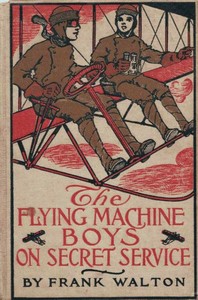
The Flying Machine Boys on Secret Service; Or, The Capture in the Air — Edition Insights can be approached with a clearer sense of reading commitment from its source measurements: 56,753 words, 4 hr 7 min estimated reading time, and 24 detected text sections.
The text analysis averages about 13.5 words per sentence, while the detected sections provide another way to judge how the source is divided.
Project Gutenberg metadata also associates the work with “Kidnapping -- Juvenile fiction,” connecting these edition facts with the source record’s subject description.
Explore this collection
These alternatives are selected using recorded categories and estimated reading time.
About 246 minutes
Childrens Adventures
56,498 recorded words. 1 minutes difference from this book's estimate.
View Gutenberg source #45530About 246 minutes
Childrens Adventures
56,495 recorded words. 1 minutes difference from this book's estimate.
View Gutenberg source #50105About 248 minutes
Childrens Adventures
56,986 recorded words. 1 minutes difference from this book's estimate.
View Gutenberg source #50602Search stored excerpts and compare books → Choose by your preferences →
Choices use stored catalog measurements. Estimates vary with reading speed. A shared category is a catalog label, not a claim that two books have the same argument or literary quality.
Search reads excerpt text stored with this catalog and links to its associated Gutenberg record. The connection is stored in the site database; this tool does not recheck that every excerpt is word-for-word identical to that external record. Excerpt search does not cover every chapter and does not verify historical publication dates.
Catalog snapshot checked: 2026-09-25. Coverage: 98 public books, 98 available source excerpts.
Calculated from edition completeness, EPUB availability, text structure and catalogue metadata. Not a user rating.
Total of 100 points, scaled to a 2.5-5.0 range. Editions with an empty description or a missing EPUB file are not scored.
Public-domain source text
The source text is kept in the dedicated reader, separate from this catalogue record and its commentary.
The opening chapter drops readers into a Rocky Mountain basin where two aeroplanes, the Louise and the Bertha, rest after a flight from New York. The boys—Ben Whitcomb, Jimmie Stuart, and Carl Nichols—are introduced as seasoned young aviators who have already assisted in capturing a cashier in Peru. The catalog subjects list kidnapping, smuggling, and aeronautics, but the excerpts foreground a different tension: the pride of the millionaire aviator Louis Havens in his machines, especially the record-breaking Ann. The story’s energy comes from races and mechanical daring rather than detective work.
The excerpts devote considerable space to the performance of aeroplanes. When a strange machine appears, Carl Nichols begs to take out the Ann and “run ’em both down.” Mr. Havens, though uneasy about staying alone, consents because “the sporting strain was strong in the man’s blood” and he wants the Ann to win. The machines are personified: the Ann is “built for a record-breaker,” while the Louise is criticized for not making “much of a show.” The Englishman DuBois, initially frightened, gains confidence by trusting the boy’s skill. This focus on mechanical prowess and competitive flight overshadows the ostensible secret-service mission.
The setting is not merely background but an active element. The basin lies “in the heart of the Rocky mountains,” with a slope leading to a summit and snowy peaks of the Continental Divide visible thirty miles away. During the race, the strange machine climbs “up, up, up until the summit showed white and sparkling under her flying planes.” Carl sees the Louise following into the snow zone and questions the tactic, thinking altitude wasted. The Englishman, unable to speak over the noise, communicates through gestures, sweeping his arm to include “the shining stars, the drifting clouds, the wide stretch of mountain and valley.” The landscape is both a challenge to be mastered and a source of awe.
The dialogue and narration carry a distinctly 1913 tone. Characters exclaim “don’t you know!” and use phrases like “tolerably well frightened.” The boys address Mr. Havens as “sir” and speak with bravado: “The Ann can run around both those old ice wagons.” The author, Frank Walton, also wrote other series entries set in Mexico and the wilds, and this installment references previous adventures in Peru. The catalog subjects include “mystery and detective stories,” but the excerpts show little detection; instead, the plot moves through physical action—falls, races, and mechanical feats—typical of early aviation adventure series.
Readers should approach The Flying Machine Boys on Secret Service as a period piece that values speed and machinery over plot logic. The catalog subjects hint at kidnapping and smuggling, but the excerpts suggest these elements may be secondary to the thrill of flight. Pay attention to how the boys’ competence and the machines’ capabilities drive the narrative, and note the contrast between the stated mission and the actual scenes of aerial competition.
Reading about the Flying Machine Boys circling the Rockies, I remembered the summer I spent sprawled on my grandmother’s porch, finishing Motor Matt’s Race—the ache of a last flight, the quiet pride in a machine you’ve coaxed skyward. That same tension, risk against duty, lingered here. Motor Matt's Race; or, The Last Flight of the Comet — A Reader’s Guide stirred something similar before, though I can’t recall why. Maybe it’s the clouds themselves.
Save your reaction, strongest insight, and memorable passage.









