
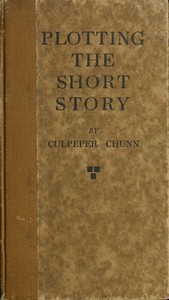
Plotting the short story : a practical exposition of germ-plots, what they are…
Let's be honest, most old writing manuals gather dust for a reason. They can be dry, outdated, and full of rules that don't apply anymore. Seymour Cunningham Chunn's Plotting the Short Story, first published in 1915, is a delightful exception. It doesn't waste time. Chunn gets right to the point with his core concept: the 'germ-plot.'
The Story
This isn't a story in the traditional sense. It's the story of how to build a story. Chunn argues that before characters or settings, you need the germ—the fundamental conflict or situation. Is it a misunderstanding? A secret revealed? A choice between two paths? He identifies and explains these basic plot seeds. Then, chapter by chapter, he shows you how to take that seed, plant it in character and setting, and let it grow into a structured narrative. He uses clear examples (some from classics of his day) to illustrate each step, from the initial idea to the final, satisfying resolution.
Why You Should Read It
In an age of endless writing blogs and complex three-act structures, this book's simplicity is its superpower. It cuts through the noise. Chunn’s advice is practical, almost mechanical in the best way. It removes the mystery from plotting and gives you a toolbox. Reading it, you realize that the core problems writers face—'Where's the conflict?' 'How do I make this matter?'—haven't changed in a hundred years. His voice is direct and confident, like a coach who believes anyone can learn this craft if they understand the fundamentals. It’s a refreshing, back-to-basics approach that makes the daunting task of writing a short story feel suddenly manageable.
Final Verdict
This book is perfect for new writers feeling overwhelmed, or for experienced writers who need a reset and want to revisit the foundation of their craft. It’s also a fascinating read for anyone curious about the history of writing advice. You won't find tips on dialogue tags or social media marketing here. You'll find the timeless engine of story. Think of it less as a strict rulebook and more as a clear, friendly map of the territory every story has to travel through. Keep an open mind about the old-fashioned language and examples, and you might just find the plotting partner you didn't know you needed.
There are no legal restrictions on this material. It is available for public use and education.
Charles Williams
8 months agoExceptional clarity on a very complex subject.
Sarah White
5 months agoSolid information without the usual fluff.
William Anderson
3 months agoA sophisticated analysis that fills a gap in the literature.
Patricia Garcia
1 year agoRight from the opening paragraph, the emphasis on ethics and sustainability within the topic is commendable. It cleared up a lot of the confusion I had previously.
Jessica Anderson
1 year agoThe balance between academic rigor and readability is perfect.