
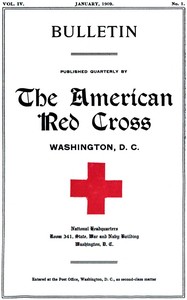
The American Red Cross Bulletin (Vol. IV, No. 1, January 1909)
Let's be clear: this isn't a book with a plot in the traditional sense. The American Red Cross Bulletin from January 1909 is a primary source, a monthly report from the organization itself. Think of it as their internal newsletter made public. The 'story' it tells is the day-to-day work of an institution finding its footing in peacetime America.
The Story
The bulletin opens a window onto a specific moment. The big wars are over (for now), and the Red Cross is pivoting. Instead of battlefield relief, the pages are filled with a push for national preparedness. There are detailed articles on their latest mission: fighting tuberculosis through public education. There are updates on first aid training programs being set up across the country, complete with diagrams of proper bandaging techniques. You'll read meeting minutes, financial statements, and letters from local chapters. The central 'narrative' is the quiet, systematic work of building a national network of safety and health knowledge, brick by bureaucratic brick.
Why You Should Read It
I found this fascinating because of the contrast. Reading it with the knowledge of what comes next—the Titanic in 1912, World War I—gives every paragraph a layer of dramatic irony. Here they are, meticulously planning first aid classes, completely unaware of the unimaginable scale of suffering they will soon face. There's a palpable, almost touching, optimism in their focus on public health. It shows the Red Cross not as the giant disaster responder we know today, but as a community organization earnestly trying to prevent everyday tragedies. You get a real sense of the people behind it, their dedication evident in the dry reports and statistical charts.
Final Verdict
This is a niche read, but a rewarding one. It's perfect for history buffs who love social history and original documents, or anyone curious about how big institutions work from the inside out. If you enjoy the 'slow TV' of historical archives—the feeling of sitting in a quiet library with a piece of the past—you'll find this bulletin incredibly absorbing. It's not a page-turner, but a thoughtful pause, a chance to see a famous organization in its adolescence, diligently doing its homework before the final exam of the modern era began.
This content is free to share and distribute. Preserving history for future generations.
Thomas Moore
5 months agoI found the author's tone to be very professional yet accessible, the structural organization allows for quick referencing of key points. I’ll definitely be revisiting some of these chapters again soon.
Robert Moore
9 months agoI was particularly interested in the case studies mentioned here, the way it challenges the status quo is both daring and well-supported. A mandatory read for anyone in this industry.
Paul Lopez
2 years agoThe peer-reviewed feel of this content gives me great confidence.
Elizabeth Walker
7 months agoEssential reading for students of this field.







Paul Harris
10 months agoIf you're tired of surface-level information, the author’s unique perspective adds a fresh layer to the discussion. I feel much more confident in my knowledge after finishing this.