About 234 minutes
Don Winslow of the Navy — Reading Companion
Childrens Adventures
53,691 recorded words. 2 minutes difference from this book's estimate.
View Gutenberg source #45613
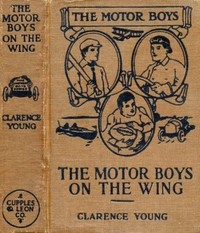
The source record for The Motor Boys on the Wing; Or, Seeking the Airship Treasure — Key Ideas to Explore measures this digital text at 53,187 words, 3 hr 52 min estimated reading time, and 31 detected text sections.
The text analysis averages about 13.8 words per sentence, while the detected sections provide another way to judge how the source is divided.
Project Gutenberg metadata also associates the work with “Mystery and detective stories,” connecting these edition facts with the source record’s subject description.
Explore this collection
These alternatives are selected using recorded categories and estimated reading time.
About 234 minutes
Childrens Adventures
53,691 recorded words. 2 minutes difference from this book's estimate.
View Gutenberg source #45613About 234 minutes
Childrens Adventures
53,661 recorded words. 2 minutes difference from this book's estimate.
View Gutenberg source #48478About 234 minutes
Childrens Adventures
53,622 recorded words. 2 minutes difference from this book's estimate.
View Gutenberg source #50260Search stored excerpts and compare books → Choose by your preferences →
Choices use stored catalog measurements. Estimates vary with reading speed. A shared category is a catalog label, not a claim that two books have the same argument or literary quality.
Search reads excerpt text stored with this catalog and links to its associated Gutenberg record. The connection is stored in the site database; this tool does not recheck that every excerpt is word-for-word identical to that external record. Excerpt search does not cover every chapter and does not verify historical publication dates.
Catalog snapshot checked: 2026-09-25. Coverage: 98 public books, 98 available source excerpts.
Calculated from edition completeness, EPUB availability, text structure and catalogue metadata. Not a user rating.
Total of 100 points, scaled to a 2.5-5.0 range. Editions with an empty description or a missing EPUB file are not scored.
Public-domain source text
The source text is kept in the dedicated reader, separate from this catalogue record and its commentary.
The Motor Boys on the Wing opens with a characteristic blend of mechanical urgency and boyish rivalry: Jerry Hopkins, tired of eating dust behind a hay wagon, forces his touring car through a narrow bridge gap, ignoring his friends' warnings. This small gamble sets the tone for a story where speed and risk are constant companions. The boys are not merely passengers but active mechanics—when their biplane Comet suffers a broken cylinder during a height-record attempt, they immediately set to work replacing it, even as they watch other craft climb past them. The narrative voice is brisk, favoring action over introspection, and the dialogue is peppered with exclamations and technical shorthand. Clarence Young builds his world through physical details: the rattle of a motor, the softness of hay, the narrowness of a bridge. The result is a story that moves as fast as its characters wish to travel.
The aviation meet provides the story's first sustained tension. The boys enter the Comet in a height contest, but a broken cylinder forces them out of the race just as a rival biplane sets a new record of over 15,000 feet. Jerry's rueful comment—"We could have beaten that if our engine hadn't gone back on us"—captures the blend of pride and frustration that runs through the book. The mechanical failure is not a plot contrivance but a practical problem: the boys must travel to Harmolet to find a replacement cylinder, a journey that leads them directly to the bank robbery. Young lingers on the repair process, describing Jerry and Ned laboring in the motor room while Bob runs errands. This emphasis on hands-on work distinguishes the Motor Boys from passive heroes; they earn their adventures through sweat and skill.
Noddy Nixon, the recurring antagonist, appears here as a pilot who abandons the meet in his biplane Winner, leaving abruptly with his companion Bill. The boys watch him depart with suspicion, wondering where he is headed. Later, when a bank in Harmolet is robbed of $50,000 in cash and securities, the narrative hints that Noddy's flight may be connected. The crowd outside the bank, the nervous depositors, and the police investigation create a sudden shift from aerial competition to detective work. Young does not explicitly link Noddy to the crime in the excerpts, but the juxtaposition is deliberate: the same mechanical skill that powers the boys' adventures also enables their rivals' escapes. The story's title promises an "airship treasure," and the reward notice posted after the robbery suggests that the boys will pursue the thieves from the air.
Young's prose is efficient and dialogue-driven, with short paragraphs that mirror the pace of the machines. Characters are defined by their actions: Jerry is impulsive and skilled, Bob cautious and stout, Ned steady and observant. The scientist who accompanies them, described as a "little" man with an interest in a "flying frog," adds a touch of eccentricity. The story's structure alternates between set-piece action—the bridge passage, the race, the repair scene—and transitional travel. The bank robbery is introduced through overheard conversation and a conductor's offhand remark, not through direct witness. This technique keeps the boys as observers who must piece together clues. The excerpts show a clear pattern: each chapter ends with a hook, such as Bob's announcement that Noddy is leaving, propelling the reader forward. The language is period-specific, with terms like "steersman" and "aeroplane" grounding the story in 1912.
Readers should pay attention to the recurring motif of watching and being watched: the boys observe Noddy's departure, the crowd watches the bank, and the aeroplanes are seen from below. This visual framing reinforces the theme of pursuit from above. The incomplete excerpts leave the exact nature of the "airship treasure" unclear, but the reward notice and the presence of two "queer men" in the first chapter suggest a chase that will test both the boys' flying skill and their detective instincts. The story rewards attention to mechanical detail and casual remarks that later become significant.
There’s something about early adventures—like Jerry, Bob, and Ned patching their Comet mid-air—that stays with you quietly, the way old friendships do. I found myself thinking of that patient, scrappy spirit again in The Boy Scouts at the Canadian Border — Reading Notes, where the journey feels less about the destination and more about the small, steady moments between repairs.
Create a short personal record of your experience with this book.









