About 218 minutes
The Saddle Boys at Circle Ranch; Or, In at the Grand Round-Up — A Closer Reading
Childrens Adventures
50,033 recorded words. 0 minutes difference from this book's estimate.
View Gutenberg source #47615
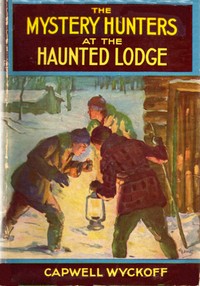
The catalog record for The Mystery Hunters at the Haunted Lodge — Context and Discussion provides practical reading context through 49,927 words, 3 hr 38 min estimated reading time, and 7 detected text sections.
The text analysis averages about 13.8 words per sentence, while the detected sections provide another way to judge how the source is divided.
Project Gutenberg metadata also associates the work with “Kidnapping -- Juvenile fiction,” connecting these edition facts with the source record’s subject description.
Explore this collection
These alternatives are selected using recorded categories and estimated reading time.
About 218 minutes
Childrens Adventures
50,033 recorded words. 0 minutes difference from this book's estimate.
View Gutenberg source #47615About 212 minutes
Childrens Adventures
48,646 recorded words. 6 minutes difference from this book's estimate.
View Gutenberg source #48087About 225 minutes
Childrens Adventures
51,606 recorded words. 7 minutes difference from this book's estimate.
View Gutenberg source #47553Search stored excerpts and compare books → Choose by your preferences →
Choices use stored catalog measurements. Estimates vary with reading speed. A shared category is a catalog label, not a claim that two books have the same argument or literary quality.
Search reads excerpt text stored with this catalog and links to its associated Gutenberg record. The connection is stored in the site database; this tool does not recheck that every excerpt is word-for-word identical to that external record. Excerpt search does not cover every chapter and does not verify historical publication dates.
Catalog snapshot checked: 2026-09-25. Coverage: 98 public books, 98 available source excerpts.
Calculated from edition completeness, EPUB availability, text structure and catalogue metadata. Not a user rating.
Total of 100 points, scaled to a 2.5-5.0 range. Editions with an empty description or a missing EPUB file are not scored.
Public-domain source text
The source text is kept in the dedicated reader, separate from this catalogue record and its commentary.
The story begins not with a ghost but with a school bell. The first chapter, “The Mystery Hunters,” introduces four Cloverfield High School friends—Barry Garrison, Kent Marple, and the Ford twins—as they exit school on a crisp Vermont afternoon. Barry is described as “an outstanding boy” and an all-around athlete, while Kent is broader with “a chin that was a trifle determined.” The twins are introduced with a characteristic remark: “The Ford twins always finish what they start.” This opening establishes a team dynamic and a tone of wholesome adventure, setting the stage for the mystery to come.
The first chapter carefully establishes each character through specific, observable traits. Barry leans against a maple tree and whistles softly, suggesting a relaxed confidence. Kent glances from one school door to another, showing his watchfulness. The twins, when they appear, wave and dash across the hard ground, indicating their energetic nature. These small actions, rather than direct statements, build a sense of camaraderie. The setting—a quiet high school after classes—grounds the story in a familiar reality before the supernatural elements are introduced. Readers can note how the author uses physical details and dialogue to differentiate the four boys, making them distinct individuals rather than interchangeable members of a group.
In the later excerpt, the Ford twins wait at the lodge for Barry and Kent, who are lost in a snowstorm. The passage relies on interior tension: the twins occupy themselves by setting up a table, washing dishes, and preparing supper, but their worry is palpable. Mac admits, “I hate waiting worse than anything else on earth!” Tim repeatedly peers out the window. The storm is described with sensory details—the wind “with a shrill, whistling sound” and windows that rattle. The fire glows, but its warmth is lost on them. This section shows how the author builds suspense not through action but through the characters’ enforced inactivity and the ominous environment. The lodge itself becomes a character: its wicker furniture, bookcases, and cold bedrooms are noted, hinting at its history and potential secrets.
The narrative voice is straightforward and slightly formal, typical of early twentieth-century children’s adventure fiction. Phrases like “the building became a very beehive of sound” and “the nip of the keen Vermont air” create a vivid but dated atmosphere. Dialogue is natural but period-appropriate: “Maybe they are clapping erasers for the teacher,” Kent grins. The boys address each other by last names or nicknames, and their speech is polite even in crisis. The author avoids modern slang, which reinforces the story’s 1934 setting. Readers may notice how the language shapes the tone—earnest, slightly old-fashioned, and focused on action and character rather than interior monologue.
The excerpts span the beginning and middle of the book, showing a clear structural shift. The opening is set in a familiar, safe environment—the high school campus—where the mystery club is formed. By the middle excerpt, the setting has moved to the isolated lodge, and the tone has darkened. The twins’ conversation reveals they have moved from a cabin to the lodge for better shelter, but the lodge itself is described as having “well-filled bookcases” and a wicker couch, suggesting it is a lived-in but possibly abandoned space. The storm traps them, and the waiting creates a sense of impending danger. This progression from normalcy to isolation is a classic adventure structure, and readers can track how the author uses setting to escalate tension.
As you read, pay attention to how the author balances the four main characters, giving each a role in the group. The early chapters establish their personalities through small actions and dialogue; later chapters test those traits under pressure. The lodge itself, with its haunted reputation, is introduced gradually through the characters’ observations and fears. The excerpts suggest that the mystery unfolds through a combination of teamwork, resourcefulness, and atmospheric suspense, rather than through explicit supernatural events.
Snowed in at that lodge, I remembered waiting out a nor’easter in a drafty cabin as a kid, the same taut feeling of listening for what might creak next. That patience, that stubborn problem-solving when everything’s against you—it’s the heartbeat of Perseverance Island; Or, The Robinson Crusoe of the Nineteenth Century — Edition Insights, too. Odd how isolation sharpens both fear and resourcefulness.
Your answers remain private and are stored only in this browser.









