About 227 minutes
The Motor Boys on the Atlantic; or, The Mystery of the Lighthouse — Edition Insights
Childrens Adventures
52,139 recorded words. 2 minutes difference from this book's estimate.
View Gutenberg source #44846
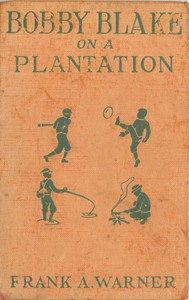
The source record for Bobby Blake on a Plantation; Or, Lost in the Great Swamp — Story, Setting & Ideas measures this digital text at 51,606 words, 3 hr 45 min estimated reading time, and 31 detected text sections.
The text analysis averages about 17.2 words per sentence, while the detected sections provide another way to judge how the source is divided.
Project Gutenberg metadata also associates the work with “Mystery and detective stories,” connecting these edition facts with the source record’s subject description.
Explore this collection
These alternatives are selected using recorded categories and estimated reading time.
About 227 minutes
Childrens Adventures
52,139 recorded words. 2 minutes difference from this book's estimate.
View Gutenberg source #44846About 228 minutes
Childrens Adventures
52,313 recorded words. 3 minutes difference from this book's estimate.
View Gutenberg source #45990About 232 minutes
Childrens Adventures
53,187 recorded words. 7 minutes difference from this book's estimate.
View Gutenberg source #46850Search stored excerpts and compare books → Choose by your preferences →
Choices use stored catalog measurements. Estimates vary with reading speed. A shared category is a catalog label, not a claim that two books have the same argument or literary quality.
Search reads excerpt text stored with this catalog and links to its associated Gutenberg record. The connection is stored in the site database; this tool does not recheck that every excerpt is word-for-word identical to that external record. Excerpt search does not cover every chapter and does not verify historical publication dates.
Catalog snapshot checked: 2026-09-25. Coverage: 98 public books, 98 available source excerpts.
Calculated from edition completeness, EPUB availability, text structure and catalogue metadata. Not a user rating.
Total of 100 points, scaled to a 2.5-5.0 range. Editions with an empty description or a missing EPUB file are not scored.
Public-domain source text
The source text is kept in the dedicated reader, separate from this catalogue record and its commentary.
Frank A. Warner's Bobby Blake on a Plantation; Or, Lost in the Great Swamp opens not in the Louisiana bayou but on the steps of Rockledge Hall, where Bobby and his schoolmates rehash a Thanksgiving football victory. The brisk, colloquial dialogue—"I tell you what, fellows, that was some game yesterday"—establishes a familiar boys'-school voice before the narrative abruptly pivots to a Southern plantation. This shift in setting is accompanied by a change in linguistic texture: the slang of Rockledge gives way to regional dialect and the formal courtesy of characters like Lee Cartier and his mother. The author's handling of these transitions, and the resulting changes in narrative pace, form the focus of this note.
The opening chapter relies heavily on rapid-fire dialogue among the boys, with nicknames like "Shiner," "Pee Wee," and "Sparrow" signaling a tight-knit group. Warner uses this exchange to establish character through voice: Fred Martin is excitable, Bobby Blake modest, Perry Wise boastful. The sentences are short, the rhythm clipped—matching the energy of a football postmortem. Once the scene shifts to Louisiana, the dialogue lengthens and adopts a more deliberate pace. Lee's mother speaks in full, gracious sentences: "I should say it was a tie," she laughs, while the servant Mose uses a heavy dialect: "Yassuh, it's a goodish piece from here." The contrast is deliberate, marking the cultural distance Bobby must navigate.
Warner modulates tension by alternating leisurely description with sudden action. In the buggy ride to town, the narrative slows to note "sandy going" and the horse's need to rest, creating a sense of Southern languor. Then, abruptly, the appearance of Jim Boolus—"the meanest man in the world"—jolts the pace. Lee's voice shakes, and the man's "lean, dyspeptic looking" appearance is rendered in quick, sharp phrases. Later chapters, such as "The Alligator's Jaws" and "Tracked by a Panther," promise heightened peril, but the excerpts show that Warner often undercuts suspense with comic relief or domestic scenes, such as the breakfast-room race. This uneven pacing suggests a story more concerned with variety than sustained dread.
Warner uses dialect sparingly but pointedly. Mose's speech is rendered phonetically ("Ah reckons us kin walk it"), while Jim Boolus's threat is delivered in a compressed, menacing drawl: "You'd better be keerful." The author does not overuse this device; most characters speak standard English. Descriptively, Warner favors economical strokes: a horse "spanking" along, hens "flapping wildly." He avoids lengthy nature writing even in swamp scenes, instead focusing on dialogue and action. This restraint keeps the narrative moving but occasionally leaves setting underdeveloped. The result is a story that prioritizes character interaction over atmosphere, a choice that shapes the reader's experience of the Louisiana landscape as backdrop rather than presence.
Readers attentive to voice will notice how Warner shifts registers between the Rockledge chapters and the plantation episodes, using dialect as a marker of place rather than a consistent stylistic choice. The pacing, too, varies widely—from the rapid-fire schoolyard exchanges to the slower, more formal Southern scenes. These fluctuations give the book an episodic feel, as if each chapter were a separate vignette. For those interested in early twentieth-century boys' adventure fiction, this work offers a case study in how authors balanced regional color with the demands of a serialized, action-driven plot.
That rainy afternoon, Bobby’s swamp felt less like peril and more like hush—the way those Southern voices lingered after the page turned. It made me think of other quiet children, how they carry their landscapes differently. So I found myself drifting, almost by accident, into The Walcott Twins — Background and Themes, and stayed there for the same unhurried reason: not adventure, but company.
Build a private reading journal entry for this title.









