About 227 minutes
The Motor Boys on the Atlantic; or, The Mystery of the Lighthouse — Edition Insights
Childrens Adventures
52,139 recorded words. 1 minutes difference from this book's estimate.
View Gutenberg source #44846
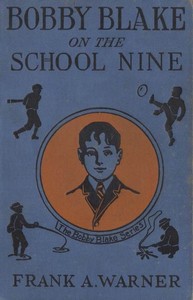
The catalog record for Bobby Blake on the School Nine; Or, The Champions of the Monatook Lake League — Key Ideas to Explore provides practical reading context through 52,313 words, 3 hr 48 min estimated reading time, and 30 detected text sections.
The text analysis averages about 14.8 words per sentence, while the detected sections provide another way to judge how the source is divided.
Project Gutenberg metadata also associates the work with “Baseball stories,” connecting these edition facts with the source record’s subject description.
Explore this collection
These alternatives are selected using recorded categories and estimated reading time.
About 227 minutes
Childrens Adventures
52,139 recorded words. 1 minutes difference from this book's estimate.
View Gutenberg source #44846About 225 minutes
Childrens Adventures
51,606 recorded words. 3 minutes difference from this book's estimate.
View Gutenberg source #47553About 232 minutes
Childrens Adventures
53,187 recorded words. 4 minutes difference from this book's estimate.
View Gutenberg source #46850Search stored excerpts and compare books → Choose by your preferences →
Choices use stored catalog measurements. Estimates vary with reading speed. A shared category is a catalog label, not a claim that two books have the same argument or literary quality.
Search reads excerpt text stored with this catalog and links to its associated Gutenberg record. The connection is stored in the site database; this tool does not recheck that every excerpt is word-for-word identical to that external record. Excerpt search does not cover every chapter and does not verify historical publication dates.
Catalog snapshot checked: 2026-09-25. Coverage: 98 public books, 98 available source excerpts.
Calculated from edition completeness, EPUB availability, text structure and catalogue metadata. Not a user rating.
Total of 100 points, scaled to a 2.5-5.0 range. Editions with an empty description or a missing EPUB file are not scored.
Public-domain source text
The source text is kept in the dedicated reader, separate from this catalogue record and its commentary.
The opening scene of Bobby Blake on the School Nine plunges readers into a snowball fight near the Clinton railroad station, where Bobby and his friends are returning from Christmas holidays. The boys' shouts and laughter are abruptly cut short when a stray missile grazes the baggage man's ear, prompting a reluctant halt. This moment captures the book's central tension: the conflict between spontaneous boyish fun and the rules and grudges that constantly threaten to spoil it. The narrative voice is brisk and colloquial, with dialogue like “Have a heart, fellows!” and nicknames such as “Ginger” for Fred Martin, establishing a lively, informal tone that carries through the baseball season.
The opening chapter establishes a pattern of rule-breaking and its consequences. The boys know they should not be throwing snowballs near the station windows, but the temptation of fresh snow overrides caution. This tension between impulse and authority recurs throughout the excerpts. Later, the boys are forbidden to coast on dangerous hills near the school, but they accept the restriction because the permitted hill is “absolutely safe” and still offers good runs. The narrator notes that the boys felt “no special regret” at the ban, suggesting a pragmatic acceptance of limits—provided the fun remains possible.
However, rules are not always so easily accepted. When a thaw threatens the Lincoln's Birthday coasting carnival, the boys' disappointment is palpable. The sudden freeze that restores the hill is met with jubilation: “Isn't it just bully?” cries Fred, doing a handspring. The contrast between the boys' high spirits and the lurking presence of Tom Hicksley, who overhears their plans and slips away to plot mischief, underscores how external constraints and internal rivalries shape the story's conflicts.
Tom Hicksley is introduced as a sullen, angry figure who “cast sullen and angry glances” at Bobby and his friends. He has only two allies at Rockledge: Bill Bronson and Jack Jinks, “the two most detested boys at school.” The trio are described as “mean and tyrannical,” taking advantage of their size to bully others. This clear division between the protagonists and antagonists is typical of the series, but the excerpts show a more nuanced dynamic: the heroes do not actively avoid Hicksley but simply “left him alone,” while Hicksley nurses his grudge and looks for opportunities to retaliate.
The scene in Chapter XV, where Hicksley goes to Bronson and Jinks's room, reveals the conspiratorial nature of the antagonists. The door is opened slowly after a suspicious delay, and Bronson asks, “Who did you think it was?” The secrecy and the mention of a window being thrown up hint at covert activities. This pattern of hidden resentment and planned revenge contrasts with the open, boisterous camaraderie of Bobby's group, creating a clear moral landscape where teamwork and sportsmanship are pitted against selfishness and spite.
The narrative voice in Bobby Blake on the School Nine is direct and action-oriented, with short paragraphs and frequent exclamations. Dialogue drives the story: “Ouch!” “That was a dandy!” and “Have a heart, fellows!” create an immediate sense of youthful energy. The author, Frank A. Warner, uses nicknames like “Ginger,” “Mouser,” and “Pee Wee” to individualize the characters quickly, and the boys' banter feels natural and unforced.
The structure alternates between group scenes—snowball fights, coasting plans, gymnasium conversations—and moments of solitary plotting by Hicksley. This alternation builds suspense: the reader knows that Hicksley is scheming while Bobby and his friends remain unaware. The chapters are short and titled with vivid phrases like “Flying Snowballs” and “Spoiling the Fun,” which hint at the action within. The baseball plot, signaled by the title and chapter headings such as “Spring Practice” and “The First Game,” is woven into the larger fabric of school life, where athletic competition is inseparable from personal rivalries and moral choices.
Readers approaching this book should pay attention to the way Warner uses setting and weather to mirror the characters' moods. The snow that enables the opening fight also provides the backdrop for the coasting episode, and the thaw that threatens the carnival echoes the temporary setbacks the team will face. The baseball games themselves are not excerpted here, but the patterns of teamwork and conflict established in the early chapters suggest that the sport will serve as a crucible for the boys' values. This is a story less about the mechanics of baseball than about how a group of friends navigates rules, rivals, and their own impulses.
That gray afternoon, rain ticking the window, I finished Bobby Blake on the School Nine and felt the uneasy weight of its simmering grudges linger longer than the snowball fights did. Oddly, the thought of quiet teamwork beneath strain led me to a different shelf entirely—The Boy Scouts with the Red Cross — A Reader’s Guide, where service rather than victory seemed the gentler cure. Sometimes one story simply points home to another.
Use these questions to collect your thoughts before moving on.









