About 246 minutes
The Secret of Steeple Rocks — A Closer Reading
Childrens Adventures
56,498 recorded words. 0 minutes difference from this book's estimate.
View Gutenberg source #45530
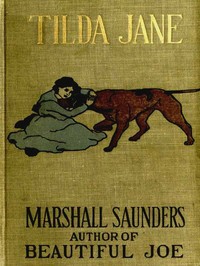
This digital edition of 'Tilda Jane: An Orphan in Search of a Home. A Story for Boys and Girls — Context and Discussion is described by source-level measurements including 56,532 words, 4 hr 6 min estimated reading time, and 7 detected text sections.
The text analysis averages about 14.5 words per sentence, while the detected sections provide another way to judge how the source is divided.
Project Gutenberg metadata also associates the work with “Orphans -- Juvenile fiction,” connecting these edition facts with the source record’s subject description.
Explore this collection
These alternatives are selected using recorded categories and estimated reading time.
About 246 minutes
Childrens Adventures
56,498 recorded words. 0 minutes difference from this book's estimate.
View Gutenberg source #45530About 246 minutes
Childrens Adventures
56,495 recorded words. 0 minutes difference from this book's estimate.
View Gutenberg source #50105About 247 minutes
Childrens Adventures
56,753 recorded words. 1 minutes difference from this book's estimate.
View Gutenberg source #50824Search stored excerpts and compare books → Choose by your preferences →
Choices use stored catalog measurements. Estimates vary with reading speed. A shared category is a catalog label, not a claim that two books have the same argument or literary quality.
Search reads excerpt text stored with this catalog and links to its associated Gutenberg record. The connection is stored in the site database; this tool does not recheck that every excerpt is word-for-word identical to that external record. Excerpt search does not cover every chapter and does not verify historical publication dates.
Catalog snapshot checked: 2026-09-25. Coverage: 98 public books, 98 available source excerpts.
Calculated from edition completeness, EPUB availability, text structure and catalogue metadata. Not a user rating.
Total of 100 points, scaled to a 2.5-5.0 range. Editions with an empty description or a missing EPUB file are not scored.
Public-domain source text
The source text is kept in the dedicated reader, separate from this catalogue record and its commentary.
From the first chapter, 'Tilda Jane is defined by action rather than passivity. When a surly driver tries to abandon her in the snow, she plucks off his cap, throws it over a fence, and takes the reins herself—'If you're goin' to turn me out, I'll turn you out first.' The narrator notes that she 'adored new experiences' and had 'carefully watched every motion of the young lout beside her.' This early scene establishes a pattern: the orphan does not wait for rescue but seizes control of her own journey.
The prose moves briskly, with dialogue that captures rural speech ('I ain't a-goin' one step furder') and a third-person voice that stays close to 'Tilda Jane's perspective. The excerpt also introduces her companions—the dog Poacher and the pony Gippie—who will accompany her on the road.
The opening excerpt shows 'Tilda Jane as a girl who acts decisively under pressure. When the driver Folcutt refuses to continue, she does not plead or cry. Instead, she removes his cap, throws it into a snow-bank, and drives off herself. The narrator emphasizes her careful observation: she had 'watched every motion' of the driver and now applies that knowledge. This is not reckless impulse but calculated risk.
Her inner state is revealed through physical details: 'her blood slowly reached boiling-point,' and she 'fixed him with a glance more determined than his own.' The shawl she protects—worth five dollars—is a concrete link to the orphanage matron, grounding her defiance in practical need. The episode also introduces a pattern of moral judgment by secondary characters: the telegraph operator later rebukes Folcutt, saying 'if she spilt you out, I'll bet you deserved it.'
Saunders uses dialect to distinguish characters and anchor the story in a specific time and place. The driver's speech is rough and bullying: 'I ain't a-goin' one step furder. I'm mos' froze.' 'Tilda Jane's own voice is less marked, but she adopts the local idiom when needed. The narrator's language is standard, creating a contrast between the orphan's internal clarity and the chaotic speech of those she encounters.
The setting is evoked through sensory details: the cold wind, the snow-bank, the 'snake fence,' and the sound of sleigh-bells. The pony shows 'no signs of fatigue,' while the harness is 'patched and mended with rope in a dozen places'—a small detail that suggests the Folcutts' poverty without moralizing. The landscape is both obstacle and opportunity: the road 'toward the sunset' hints at hope beyond the immediate conflict.
Two animals appear in the excerpt: Poacher, the dog who 'raced behind' the sleigh, and Gippie, the plump pony. Neither is anthropomorphized, but their presence softens the harshness of the human world. The driver's mistreatment of the pony—working it despite its willingness—contrasts with 'Tilda Jane's care: she later ensures the pony is 'tied safe and sound' with a lap-robe and shawl over his back.
The dog's name, Poacher, hints at a backstory not yet revealed. The animals are not mere accessories; they share the journey and respond to 'Tilda Jane's commands. The narrator notes that the pony 'could go for miles yet,' aligning the reader's sympathy with the creature's endurance. This early attention to animal welfare aligns with the catalog subject 'Animal welfare -- Juvenile fiction' and suggests a thematic thread.
The excerpt comes from Chapter I, 'A Creamery Shark,' and immediately establishes a pattern of confrontation and escape. The chapter title is ironic—'Tilda Jane is the 'shark' who outwits a larger opponent. The scene is self-contained: it begins with a problem (the driver's refusal), escalates to a physical struggle (the cap-throwing), and resolves with 'Tilda Jane driving away while the boy 'plod[s] over the route.' The telegraph operator's closing comment provides an external validation of her actions.
Readers can expect subsequent chapters to follow a similar rhythm: a new obstacle, a quick decision, and a forward movement. The serial origins (the story first appeared in The Youth's Companion) may explain the episodic structure. The dedication to 'boys of Belmont School' suggests the intended audience, and the opening scene delivers the action and moral clarity that young readers might seek.
The excerpt offers a compact introduction to 'Tilda Jane's character and the novel's method. Readers who enjoy spirited heroines and clear moral lines will find a protagonist who earns her victories through wit and will. The story moves quickly, with each chapter likely presenting a new test. Pay attention to the animals and the minor characters—they often serve as mirrors for 'Tilda Jane's own qualities.
There’s something about 'Tilda Jane’s brisk winter roads—her narrow scrapes with the sleigh, that quick decision with her cap—that lingers like a half-remembered tune. It made me think of The Motor Boys Under the Sea; or, From Airship to Submarine — A Reader’s Guide, not because both are adventurous, but because each carries that same quiet ache for home, even when the horizon keeps moving.
Save your reaction, strongest insight, and memorable passage.









