About 187 minutes
Jessie's Parrot — Inside the Classic
School Stories
42,916 recorded words. 0 minutes difference from this book's estimate.
View Gutenberg source #44123
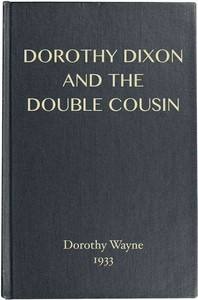
For Dorothy Dixon and the Double Cousin — Story, Setting & Ideas, the stored edition analysis reports 42,781 words, 3 hr 7 min estimated reading time, and 4 detected text sections.
The text analysis averages about 12.9 words per sentence, while the detected sections provide another way to judge how the source is divided.
Project Gutenberg metadata also associates the work with “Mystery and detective stories,” connecting these edition facts with the source record’s subject description.
Explore this collection
These alternatives are selected using recorded categories and estimated reading time.
About 187 minutes
School Stories
42,916 recorded words. 0 minutes difference from this book's estimate.
View Gutenberg source #44123About 187 minutes
School Stories
42,930 recorded words. 0 minutes difference from this book's estimate.
View Gutenberg source #44299About 179 minutes
School Stories
41,024 recorded words. 8 minutes difference from this book's estimate.
View Gutenberg source #44774Search stored excerpts and compare books → Choose by your preferences →
Choices use stored catalog measurements. Estimates vary with reading speed. A shared category is a catalog label, not a claim that two books have the same argument or literary quality.
Search reads excerpt text stored with this catalog and links to its associated Gutenberg record. The connection is stored in the site database; this tool does not recheck that every excerpt is word-for-word identical to that external record. Excerpt search does not cover every chapter and does not verify historical publication dates.
Catalog snapshot checked: 2026-09-25. Coverage: 98 public books, 98 available source excerpts.
Calculated from edition completeness, EPUB availability, text structure and catalogue metadata. Not a user rating.
Total of 100 points, scaled to a 2.5-5.0 range. Editions with an empty description or a missing EPUB file are not scored.
Public-domain source text
The source text is kept in the dedicated reader, separate from this catalogue record and its commentary.
The opening chapter of Dorothy Dixon and the Double Cousin hinges on a case of mistaken identity in a crowded department store. A young man, convinced he is speaking to his fiancée Janet Jordan, instead confronts Dorothy Dixon, who coolly informs him, “I am not Janet Jordan, your fiancee.” This initial confusion sets the stage for a narrative built on impersonation and hidden identities. Dorothy, a young woman of sixteen, agrees to take her cousin’s place, a decision that quickly entangles her in a government operation against criminals. The excerpts reveal a story that balances the tension of undercover work with the everyday details of holiday shopping and Christmas presents, grounding the spy plot in a recognizable domestic setting.
The excerpts show that Dorothy’s impersonation is not a simple swap. She must navigate a household where every interaction tests her cover. When the maid Gretchen recognizes her as Dorothy Dixon, the famous flyer, Dorothy deflects by claiming newspaper pictures are unreliable. This moment, where Gretchen says “you look so much like Dorothy Dixon,” introduces a risk that the protagonist herself is a known figure. The story uses this double awareness: the reader knows Dorothy’s true identity, while characters like Gretchen and the young man from the store see only Janet. The tension arises from how Dorothy maintains her role while those around her sense something amiss.
The excerpts use setting to reflect Dorothy’s precarious position. In Chapter XI, she wakes to “the swirl of snowflakes driven in a high wind,” a cold bedroom that “had lost its cheerful air.” This wintry atmosphere contrasts with the earlier holiday bustle of the department store. The physical details—a sliding panel in a closet, a cold rug under bare feet—serve as both practical elements of the spy plot and markers of unease. Dorothy’s dream of a “long circular staircase” and Mrs. Lawson dressed as a butler underscores the disorienting nature of her task. The story embeds its mystery in these sensory details, making the environment a participant in the intrigue.
Dorothy’s speech patterns distinguish her from the cousin she impersonates. When the young man presses her, she responds with a blend of firmness and humor: “It seems to me that you have the wires twisted—it’s not I who’ve escaped, but you!” This quick wit carries into her interactions with Gretchen, where she adopts a casual tone (“that will be cozy”) while internally racing to manage the situation. The dialogue reveals character through contrast: the young man’s earnest distress, Gretchen’s admiring chatter, and Dorothy’s controlled responses. These vocal cues create a layered performance, where every line must convince while hinting at the truth beneath.
Readers attentive to the excerpts will notice how the story balances the ordinary and the extraordinary. Dorothy buys ties for her father while fending off a stranger who mistakes her for a spy’s fiancée. The narrative rewards close attention to small details—a maid’s recognition, a sliding panel, a change in the weather—as clues to the larger conspiracy. Approach the text as a puzzle where identity is fluid and every conversation carries hidden weight.
Sometimes a story stays because of the masks we wear, like Dorothy pretending to be Janet while a maid sees right through her. It reminded me of another quiet adventure where girls find themselves in a wild place, learning who they are when no one’s watching. The Adventure Girls at K Bar O — Key Ideas to Explore holds that same gentle warmth, lingering long after the last page.
Answer a few questions and save a private reflection on this device.