About 179 minutes
Mamie's Watchword — Reading Companion
School Stories
41,024 recorded words. 143 minutes difference from this book's estimate.
View Gutenberg source #44774
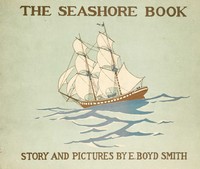
This digital edition of The Seashore Book: Bob and Betty's Summer with Captain Hawes — Text and Context is described by source-level measurements including 8,063 words, 36 min estimated reading time, and 2 detected text sections.
The text analysis averages about 22.5 words per sentence, while the detected sections provide another way to judge how the source is divided.
Project Gutenberg metadata also associates the work with “Sea stories,” connecting these edition facts with the source record’s subject description.
Explore this collection
These alternatives are selected using recorded categories and estimated reading time.
About 179 minutes
School Stories
41,024 recorded words. 143 minutes difference from this book's estimate.
View Gutenberg source #44774About 187 minutes
School Stories
42,916 recorded words. 151 minutes difference from this book's estimate.
View Gutenberg source #44123About 187 minutes
School Stories
42,930 recorded words. 151 minutes difference from this book's estimate.
View Gutenberg source #44299Search stored excerpts and compare books → Choose by your preferences →
Choices use stored catalog measurements. Estimates vary with reading speed. A shared category is a catalog label, not a claim that two books have the same argument or literary quality.
Search reads excerpt text stored with this catalog and links to its associated Gutenberg record. The connection is stored in the site database; this tool does not recheck that every excerpt is word-for-word identical to that external record. Excerpt search does not cover every chapter and does not verify historical publication dates.
Catalog snapshot checked: 2026-09-25. Coverage: 98 public books, 98 available source excerpts.
Calculated from edition completeness, EPUB availability, text structure and catalogue metadata. Not a user rating.
Total of 100 points, scaled to a 2.5-5.0 range. Editions with an empty description or a missing EPUB file are not scored.
Public-domain source text
The source text is kept in the dedicated reader, separate from this catalogue record and its commentary.
E. Boyd Smith opens The Seashore Book with a direct, conversational promise: “Now I will tell you how Bob and Betty spent the summer at the seashore with Captain Ben Hawes.” The sentence establishes an oral storytelling tone, as if Smith is speaking to a child. Captain Hawes is introduced as “bluff and hearty,” a man whose sea yarns are “more interesting to the children than the most fascinating fairy book.” Smith’s diction—words like “sharpey,” “stevedores,” and “longshoremen”—grounds the narrative in maritime specificity. The author does not simply describe; he lets the Captain’s voice carry the exposition, blending instruction with anecdote.
Smith uses Captain Hawes’s dialogue to deliver information without breaking the story’s flow. When explaining dugout canoes, the Captain says, “Down in the South Seas the savages still make them; I’ve seen them many a time.” The phrase “I’ve seen them” authenticates his authority. Later, he describes a ship’s water line: “This was where the green and black paint met.” Such concrete, visual details reflect a sailor’s practical knowledge. The Captain’s speech is peppered with colloquialisms like “no end of sea yarns” and “shipshape order,” reinforcing his character as a weathered mariner. Smith avoids generic exposition; instead, the Captain’s remarks—such as “there was no guesswork about it”—reveal his pride in maritime craft.
Bob and Betty are not passive listeners; their reactions shape the narrative. When Captain Hawes mentions polar bears, Betty exclaims, “Why, we know a polar bear,” connecting his tales to her own experience at Central Park. Smith uses such moments to show how the children integrate new knowledge. The author also describes their wonder: “How delightful it was, skimming so easily over the shining water.” The phrase “shining water” is a child’s sensory impression. Smith balances the Captain’s technical explanations—like how to “trim” sails and set a rudder—with the children’s emotional responses, making the learning feel organic.
Smith’s descriptions are notably precise. He writes of “the donkey engine buzzed, the mate shouted orders,” and calls the loading process “orderly confusion.” Such phrasing captures the controlled chaos of a working dock. He specifies that the ship would “settle deep down to her ‘water line’” when fully loaded, and notes that “all this had been planned before she was built.” These details reflect Smith’s own research or experience. The author also uses sensory language: the “big green parrot” calls “Ship ahoy!” and seashells give “the murmuring echo of the ocean.” These small touches create a vivid, credible setting.
The excerpts reveal a clear structural pattern: each chapter or episode introduces a new maritime topic through the Captain’s storytelling. The first row leads to a history of boats; later, a toy schooner teaches sailing principles; then a visit to a loading dock illustrates cargo stowage. Smith paces the information by alternating action—like watching stevedores—with reflective moments, such as evening tales of “strange lands.” The narrative moves from the immediate (the children’s row) to the historical (raft to steamboat) and then to the global (China seas, Eskimo villages). This structure mirrors the Captain’s method: starting with what the children see, then expanding outward.
Smith’s authorial choices—direct address, maritime jargon, and the Captain’s first-person anecdotes—create a hybrid of fiction and informal instruction. Readers should attend to how the Captain’s voice dominates the text, and how the children’s brief interjections keep the tone light. The excerpts suggest a book that values accuracy over fantasy, grounding wonder in real-world mechanics. For those interested in early 20th-century children’s literature, this work exemplifies how educational content was woven into narrative without sacrificing story.
There’s a quiet tenderness in how Captain Hawes lets the children discover the shore at their own pace, their wonder shaping every word. I felt that same gentle patience in Mamie’s Watchpoint—not a lesson pushed, but a truth allowed to settle. Some stories stay because they never once rushed you. Mamie's Watchword — Reading Companion lingers like that, a soft echo after the last page.
Save your reaction, strongest insight, and memorable passage.