About 259 minutes
The Putnam Hall Rebellion; or, The Rival Runaways — Background and Themes
School Stories
59,346 recorded words. 5 minutes difference from this book's estimate.
View Gutenberg source #47451
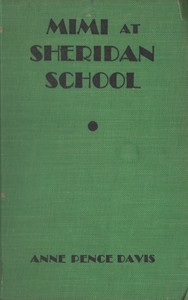
For Mimi at Sheridan School — Key Ideas to Explore, the stored edition analysis reports 58,310 words, 4 hr 14 min estimated reading time, and 26 detected text sections.
The text analysis averages about 12.4 words per sentence, while the detected sections provide another way to judge how the source is divided.
Project Gutenberg metadata also associates the work with “Schools -- Juvenile fiction,” connecting these edition facts with the source record’s subject description.
Explore this collection
These alternatives are selected using recorded categories and estimated reading time.
About 259 minutes
School Stories
59,346 recorded words. 5 minutes difference from this book's estimate.
View Gutenberg source #47451About 263 minutes
School Stories
60,365 recorded words. 9 minutes difference from this book's estimate.
View Gutenberg source #44401About 266 minutes
School Stories
61,160 recorded words. 12 minutes difference from this book's estimate.
View Gutenberg source #47562Search stored excerpts and compare books → Choose by your preferences →
Choices use stored catalog measurements. Estimates vary with reading speed. A shared category is a catalog label, not a claim that two books have the same argument or literary quality.
Search reads excerpt text stored with this catalog and links to its associated Gutenberg record. The connection is stored in the site database; this tool does not recheck that every excerpt is word-for-word identical to that external record. Excerpt search does not cover every chapter and does not verify historical publication dates.
Catalog snapshot checked: 2026-09-25. Coverage: 98 public books, 98 available source excerpts.
Calculated from edition completeness, EPUB availability, text structure and catalogue metadata. Not a user rating.
Total of 100 points, scaled to a 2.5-5.0 range. Editions with an empty description or a missing EPUB file are not scored.
Public-domain source text
The source text is kept in the dedicated reader, separate from this catalogue record and its commentary.
The story opens with a burst of physical energy: Mimi shoves, pushes, and elbows her way off a train, so eager to be home that she forgets manners entirely. The prose matches her impatience—short, breathless sentences and exclamations like “Ooo-ooh” and “Be seein’ you, Mimi.” Yet the homecoming deflates when her family is not there, and the scene pivots from joyful rush to anxious stillness. This pattern of quick movement followed by emotional pause recurs throughout the excerpts, especially in the library scene where Mimi’s study is interrupted by a hand covering her eyes, forcing silence under “SILENCE” placards.
The narrative repeatedly alternates between hurrying and halting. In the opening chapter, Mimi’s frantic dash to the train steps is stopped by the flagman’s arm; later, she is “rooted to one small spot” under the shed. At Sheridan, the proctor’s watchful eye and library silence placards impose stillness on the girls, but Mimi’s curiosity pulls her outside again. The phrase “Goodbye history reading” marks a deliberate shift from quiet study to active investigation. This rhythm gives the school setting a pulse: rules and routines create pauses, while friendships and mysteries drive movement.
Several moments involve hands or eyes being covered or hidden. Chloe covers Mimi’s eyes with “two cold hands” in the library; Mimi earlier pokes her “red-head” out the train window like a “Jack-in-the-box.” The mystery of Chloe’s identity is itself a kind of covering—something unknown that Mimi wants to uncover. Even the proctor’s supervision feels like an invisible hand: “the feeling that some one was holding a stop watch over them.” These small physical gestures echo the larger theme of secrets and surveillance within the boarding school.
The excerpts sketch a clear map of social spaces: the train shed (arrival), the library (silence, rules), Tumble Inn (a gathering place), and the dormitory cells. Movement between these zones defines the girls’ interactions. Mimi’s invitation dilemma—three friends ask her for the holidays—plays out across these locations: the library, then walking “too silently toward Tumble Inn.” The proposed “progressive house party” would extend this geography beyond school grounds. The setting is not just background but a force that shapes conversation and conflict.
Dialogue is marked by exclamation points, repeated words, and overlapping speech. Mimi says “Ooo-ooh,” “Whew,” and “What is this a frame up or a song?” Chloe’s “Guess what?” and Betsy’s “No!” create a rapid, breathless exchange. The narrator often cuts in with Mimi’s thoughts: “Who is Chloe?” or “Goodbye history reading.” This style conveys the girls’ excitement and impatience, but also their occasional embarrassment—Mimi fumbles for words when refusing Chloe. The voice is consistently energetic, matching the episodic, school-story tradition.
Readers should pay attention to how the narrative uses physical motion—rushing, stopping, covering—to signal emotional shifts. The mystery of Chloe’s identity is introduced but not resolved in these excerpts; it remains a thread that may tie the episodic events together. The book’s structure, with 26 short chapters and titles like “Follow the Leader” and “Green Cap Week,” suggests a series of self-contained adventures rather than a single plot arc.
There’s something tender about returning to a place where friends already know your name, as Mimi does at Sheridan. That quiet pull of belonging reminds me of the old boarding-school hours I spent trailing the fellows at Putnam Hall, half-worried, half-hoping for a secret. The Putnam Hall Encampment; or, The Secret of the Old Mill — Context and Discussion holds that same unhurried warmth, like a familiar porch light left on.
Create a short personal record of your experience with this book.