About 263 minutes
The Phantom Yacht — Edition Insights
School Stories
60,365 recorded words. 4 minutes difference from this book's estimate.
View Gutenberg source #44401
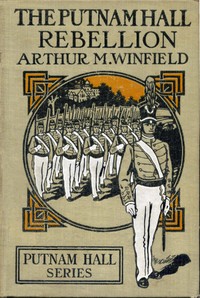
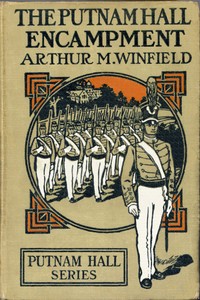
For The Putnam Hall Rebellion; or, The Rival Runaways — Background and Themes, the stored edition analysis reports 59,346 words, 4 hr 19 min estimated reading time, and 9 detected text sections.
The text analysis averages about 12.1 words per sentence, while the detected sections provide another way to judge how the source is divided.
Project Gutenberg metadata also associates the work with “Schools -- Juvenile fiction,” connecting these edition facts with the source record’s subject description.
Explore this collection
These alternatives are selected using recorded categories and estimated reading time.
About 263 minutes
School Stories
60,365 recorded words. 4 minutes difference from this book's estimate.
View Gutenberg source #44401About 254 minutes
School Stories
58,310 recorded words. 5 minutes difference from this book's estimate.
View Gutenberg source #46404About 266 minutes
School Stories
61,160 recorded words. 7 minutes difference from this book's estimate.
View Gutenberg source #47562Search stored excerpts and compare books → Choose by your preferences →
Choices use stored catalog measurements. Estimates vary with reading speed. A shared category is a catalog label, not a claim that two books have the same argument or literary quality.
Search reads excerpt text stored with this catalog and links to its associated Gutenberg record. The connection is stored in the site database; this tool does not recheck that every excerpt is word-for-word identical to that external record. Excerpt search does not cover every chapter and does not verify historical publication dates.
Catalog snapshot checked: 2026-09-25. Coverage: 98 public books, 98 available source excerpts.
Calculated from edition completeness, EPUB availability, text structure and catalogue metadata. Not a user rating.
Total of 100 points, scaled to a 2.5-5.0 range. Editions with an empty description or a missing EPUB file are not scored.
Public-domain source text
The source text is kept in the dedicated reader, separate from this catalogue record and its commentary.
The mess-hall uprising in The Putnam Hall Rebellion hinges on a single, concrete grievance: the cadets' food has been cut. When Josiah Crabtree and Pluxton Cuddle, left in charge of the military academy, bring in men with horsewhips to enforce order, the students arm themselves with plates and saucers. The scene is chaotic but disciplined—Jack Ruddy calls for quiet even as dishes fly, and the cadets demand the same quantity and quality of food they had under Captain Putnam. The catalog subjects list 'school discipline' and 'military education,' but the excerpts show discipline breaking down not over drills or uniforms, but over meals and perceived injustice.
The rebellion does not begin with a grand ideological stand but with a practical complaint: the cadets want 'the same kind of food, and the same quantity' they had before. This is not a generic school story trope—the excerpts show the students organizing around a specific, measurable demand. When Jack Rudky asks whether Captain Putnam authorized the cut, Crabtree and Cuddle refuse to answer, and the cadets interpret that silence as a betrayal. The plate-throwing that follows is impulsive but not random; it targets the teachers and the hired men, not the waiters, who 'grinned from ear to ear' because they side with the students. The rebellion is thus rooted in a shared, bodily experience of deprivation, not abstract principle.
Crabtree and Cuddle escalate the conflict by bringing in 'men with whips'—a detail that shifts the story from a typical school prank to something closer to a labor dispute or a siege. The men are not teachers or officers; they are outsiders hired to intimidate. When the cadets throw dishes, the men retreat, one crying 'We'll be killed!' and running out a side door. This moment undercuts the authority of the teachers, who are left shaking their fists. The catalog subject 'school discipline' implies a structured system, but here discipline is enforced by brute force, and it fails. The cadets' victory is temporary and messy, but it reveals that the teachers have no legitimate power beyond coercion.
After the mess-hall confrontation, the cadets do not declare independence or form a new government. Instead, they decide to 'telegraph to Captain Putnam to come back at once.' This is a crucial detail: the rebellion is not against the school itself but against its temporary managers. Frank Barringer has the captain's address and volunteers to send a telegram that very night. The students want to present their case to the absent authority, not to overthrow him. This frames the rebellion as a appeal to a higher power, a strategy that keeps the story within the bounds of a school story while still allowing for dramatic conflict. The cadets are runaways in title, but their first move is to seek restoration of the old order.
The excerpts end with the cadets imprisoned in their dormitories, uncertain how the standoff will resolve. Readers should pay attention to how the story balances the cadets' collective action with individual characters like Jack Ruddy, who tries to maintain order even in rebellion. The novel's title promises a 'rebellion,' but the text suggests a more complicated negotiation between defiance and loyalty to the school's founder.
I remember the thrill of defiance in The Putnam Hall Rebellion, that hot swirl of plates and righteous anger. It stirred a memory of reading about the K Bar O girls, facing their own wild tests far from any classroom. Both felt like a secret held close.The Adventure Girls at K Bar O — Key Ideas to Explore That same quiet steadfastness, the way friendship outlasts a storm, stayed with me long after the last page.
Capture what you thought, learned, and would like to remember.