About 266 minutes
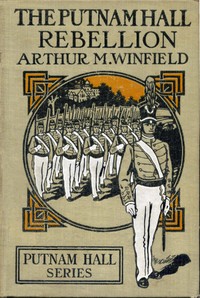
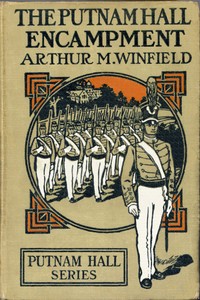
The Putnam Hall Encampment; or, The Secret of the Old Mill — Context and Discussion
School Stories
61,160 recorded words. 3 minutes difference from this book's estimate.
View Gutenberg source #47562
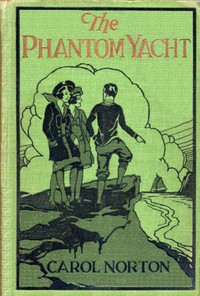
Before opening The Phantom Yacht — Edition Insights, the edition data offers a quick orientation: 60,365 words, 4 hr 23 min estimated reading time, and 8 detected text sections.
The text analysis averages about 15.9 words per sentence, while the detected sections provide another way to judge how the source is divided.
Project Gutenberg metadata also associates the work with “Friendship -- Juvenile fiction,” connecting these edition facts with the source record’s subject description.
Explore this collection
These alternatives are selected using recorded categories and estimated reading time.
About 266 minutes
School Stories
61,160 recorded words. 3 minutes difference from this book's estimate.
View Gutenberg source #47562About 259 minutes
School Stories
59,346 recorded words. 4 minutes difference from this book's estimate.
View Gutenberg source #47451About 254 minutes
School Stories
58,310 recorded words. 9 minutes difference from this book's estimate.
View Gutenberg source #46404Search stored excerpts and compare books → Choose by your preferences →
Choices use stored catalog measurements. Estimates vary with reading speed. A shared category is a catalog label, not a claim that two books have the same argument or literary quality.
Search reads excerpt text stored with this catalog and links to its associated Gutenberg record. The connection is stored in the site database; this tool does not recheck that every excerpt is word-for-word identical to that external record. Excerpt search does not cover every chapter and does not verify historical publication dates.
Catalog snapshot checked: 2026-09-25. Coverage: 98 public books, 98 available source excerpts.
Calculated from edition completeness, EPUB availability, text structure and catalogue metadata. Not a user rating.
Total of 100 points, scaled to a 2.5-5.0 range. Editions with an empty description or a missing EPUB file are not scored.
Public-domain source text
The source text is kept in the dedicated reader, separate from this catalogue record and its commentary.
The opening chapter of The Phantom Yacht establishes a mood of emotional urgency through Dories Moore's tear-blinded rush to say goodbye to her friend Nann. Norton uses contrasting imagery—joyful autumn colors versus Dories's despair—to underscore the girls' bond. The note from Nann, signed "Your sister-friend," sets a tone of intimate loyalty that persists through the mysteries to come.
Norton's dialogue often carries the weight of characterization: Dories's quivering voice and Nann's calm, analytical responses create a dynamic partnership. The author also seeds supernatural elements early, such as the echoing knocker and the "uncanny" sound in the empty house, hinting at the ghostly phenomena that will drive the plot.
Norton's word choices consistently amplify the emotional stakes. In the first chapter, Dories is "almost blinded with tears," her tam "awry," and her sweater "flapping" as she runs. These physical details externalize her inner turmoil. The author favors sensory adjectives—"dismal," "deserted," "quaintly carved"—that build atmosphere without overstatement. Dialogue tags like "cried," "exclaimed," and "whispered" keep the emotional pitch high, while Nann's measured replies ("Why, Dories! Dear, dear Dori") provide a counterpoint. This contrast in diction between the two friends defines their roles: Dories as the impulsive feeler, Nann as the steady thinker.
Norton distinguishes her heroines through speech patterns. Dories uses exclamations and questions ("Oh, look! look!"), while Nann favors declarative sentences and logical deductions ("I believe I have, one of them"). The elderly Aunt Jane speaks in querulous, accusatory tones ("Why did you girls tiptoe around?"), her dialogue revealing suspicion and a tendency to misinterpret events. Norton also employs dialect sparingly: the boys' mention of "Gibralter" and his "punt" suggests regional flavor. The girls' private nickname for each other—"Dori" and "Nann"—reinforces their closeness, and their banter ("White-handed, shouldn't it be?") shows how humor leavens tension.
Norton builds suspense by layering unexplained events. The first chapter introduces a hasty departure; by Chapter XII, a "bleached skeleton" appears. The author uses short chapters (28 in total) and frequent cliffhangers—such as the vanishing airplane—to maintain momentum. Descriptions of setting, like the "gloomy swamp" and "old ruin at midnight," create a Gothic backdrop for the girls' investigations. Norton also employs a pattern of discovery: the girls hear a noise, investigate, and find a clue (e.g., the charred pile in the grate). This rhythm keeps the reader engaged while allowing character reactions to drive the narrative.
Several motifs recur in the excerpts. The word "mystery" appears repeatedly, often in the girls' dialogue, signaling their active role in solving puzzles. The color red—Dories's tam and sweater—stands out against the autumn landscape, perhaps symbolizing her passionate nature. The "phantom yacht" itself is introduced as a visual and auditory phenomenon, blending the supernatural with the plausible. Norton also emphasizes the girls' resourcefulness: they sweep the grate, prepare breakfast, and run to investigate without adult supervision. This independence aligns with the series' target audience of girls 12 to 16, offering models of courage and friendship.
Readers attentive to Norton's authorial choices will notice how she balances emotional immediacy with puzzle-box plotting. The girls' voices—one impulsive, one analytical—create a natural rhythm for unraveling clues. Pay particular attention to how Norton uses setting details (the lilac-guarded gate, the bare floors) to mirror the characters' inner states. The mystery unfolds through what the girls see, hear, and deduce, making their perspective the lens through which the supernatural is tested and explained.
Reading about Dories and Nann piecing together the phantom yacht’s mystery brought me back to rainy afternoons spent with my grandmother, her old paperbacks stacked beside the lamp. That same hushed thrill of clever girls solving things alone returned with Dorothy Dixon and the Double Cousin — Story, Setting & Ideas, where a mistaken identity feels just as wonderfully tangled, reminding me how comforting those dependable friendships always were.
Answer a few questions and save a private reflection on this device.