About 161 minutes
Fire at Red Lake Sandy Steele Adventures #4 — Key Ideas to Explore
Young Readers
36,882 recorded words. 113 minutes difference from this book's estimate.
View Gutenberg source #50257
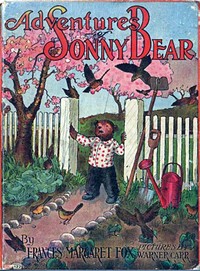
For Adventures of Sonny Bear — Context and Discussion, the stored edition analysis reports 10,815 words, 48 min estimated reading time, and 14 detected text sections.
The text analysis averages about 17.3 words per sentence, while the detected sections provide another way to judge how the source is divided.
Project Gutenberg metadata also associates the work with “Animals -- Juvenile fiction,” connecting these edition facts with the source record’s subject description.
Explore this collection
These alternatives are selected using recorded categories and estimated reading time.
About 161 minutes
Young Readers
36,882 recorded words. 113 minutes difference from this book's estimate.
View Gutenberg source #50257About 171 minutes
Young Readers
39,310 recorded words. 123 minutes difference from this book's estimate.
View Gutenberg source #50225About 174 minutes
Young Readers
39,987 recorded words. 126 minutes difference from this book's estimate.
View Gutenberg source #52296Search stored excerpts and compare books → Choose by your preferences →
Choices use stored catalog measurements. Estimates vary with reading speed. A shared category is a catalog label, not a claim that two books have the same argument or literary quality.
Search reads excerpt text stored with this catalog and links to its associated Gutenberg record. The connection is stored in the site database; this tool does not recheck that every excerpt is word-for-word identical to that external record. Excerpt search does not cover every chapter and does not verify historical publication dates.
Catalog snapshot checked: 2026-09-25. Coverage: 98 public books, 98 available source excerpts.
Calculated from edition completeness, EPUB availability, text structure and catalogue metadata. Not a user rating.
Total of 100 points, scaled to a 2.5-5.0 range. Editions with an empty description or a missing EPUB file are not scored.
Public-domain source text
The source text is kept in the dedicated reader, separate from this catalogue record and its commentary.
The stories in Adventures of Sonny Bear follow a consistent pattern: a small domestic crisis—porridge too hot, a garden chore, an unexpected visitor—resolved through the family's cooperative routines. The text relies heavily on repeated phrases such as “big, big,” “middle-sized,” and “wee, wee” to distinguish the three bears, a device that structures both dialogue and narration. Despite the catalog subject “Picnics,” the excerpts show only one picnic story in the table of contents; the actual text focuses more on household tasks like hoeing blackberry bushes, washing porridge bowls, and fetching water from the river.
The excerpts reveal that nearly every sentence is built around triadic repetition: “big, big Father Bear,” “middle-sized Mother Bear,” “wee, wee Baby Bear.” This pattern extends to objects—porridge bowls, chairs, beds, hoes, tin pails—and actions, such as each bear tasting porridge or hoeing a corresponding row of bushes. The repetition is not merely decorative; it organizes the narrative so that a young listener can anticipate what comes next. For example, when the Goldilocks family returns, each member speaks in turn using the same formula: “Somebody has been sitting in my chair!” The effect is rhythmic and cumulative, resembling a call-and-response structure.
Despite the catalog subject “Animals,” the excerpts depict the bears engaged in distinctly human domestic work. In “What Father Bear Said When He Was Tired,” the family plants blackberry bushes, buys hoes and tin pails, and waters the garden every evening. Mother Bear washes porridge bowls, and Father Bear fans himself with a red bandana handkerchief after hoeing. The garden is a central setting, not a wild forest. The catalog subject “Picnics” appears only once in the table of contents; the actual excerpts show no picnic scenes, only chores. This suggests the book may balance labor with leisure, but the excerpts alone do not confirm that balance.
The catalog includes “Intergenerational relations,” and the excerpts show this primarily through voice and size. Father Bear speaks in a “big, gruff whisper,” Mother Bear in a “middle-sized” tone, and Baby Bear in a “shrill little voice.” Their interactions are gentle: Father Bear tiptoes to avoid waking the baby, and Mother Bear negotiates with him about garden work. When Baby Bear cries because he cannot go outside, he soon settles down to play with blocks. The family resolves minor conflicts without anger, and even the Goldilocks episode ends with laughter rather than punishment. The excerpts suggest a world where intergenerational friction is mild and quickly resolved.
Readers approaching Adventures of Sonny Bear should note that the catalog subjects—especially “Picnics” and “Families”—are only partially supported by the excerpts. The text emphasizes routine, repetition, and domestic order more than adventure. The stories are best read aloud, where the rhythmic language can be appreciated. The illustrations by Warner Carr are mentioned but not described in the excerpts; their role in the narrative remains unknown.
There’s a comfort in Adventures of Sonny Bear, in its steady rituals and the warmth of family picnics, that lingers like an old friend’s voice. I sometimes recall that same quiet steadiness in Troubled Waters Sandy Steele Adventures #6 — Story, Setting & Ideas, though its waters run less tame. Both share a patient pulse, a way of finding home amid the current.
Answer a few questions and save a private reflection on this device.