About 174 minutes
The Deaf Shoemaker: To Which Are Added Other Stories for the Young — Context and Discussion
Young Readers
39,987 recorded words. 2 minutes difference from this book's estimate.
View Gutenberg source #52296
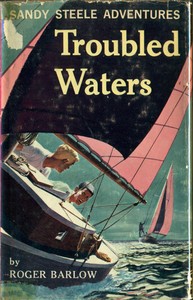
For Troubled Waters Sandy Steele Adventures #6 — Story, Setting & Ideas, the stored edition analysis reports 40,447 words, 2 hr 56 min estimated reading time, and 6 detected text sections.
The text analysis averages about 16.2 words per sentence, while the detected sections provide another way to judge how the source is divided.
Project Gutenberg metadata also associates the work with “Sailing -- Juvenile fiction,” connecting these edition facts with the source record’s subject description.
Explore this collection
These alternatives are selected using recorded categories and estimated reading time.
About 174 minutes
Young Readers
39,987 recorded words. 2 minutes difference from this book's estimate.
View Gutenberg source #52296About 171 minutes
Young Readers
39,310 recorded words. 5 minutes difference from this book's estimate.
View Gutenberg source #50225About 161 minutes
Young Readers
36,882 recorded words. 15 minutes difference from this book's estimate.
View Gutenberg source #50257Search stored excerpts and compare books → Choose by your preferences →
Choices use stored catalog measurements. Estimates vary with reading speed. A shared category is a catalog label, not a claim that two books have the same argument or literary quality.
Search reads excerpt text stored with this catalog and links to its associated Gutenberg record. The connection is stored in the site database; this tool does not recheck that every excerpt is word-for-word identical to that external record. Excerpt search does not cover every chapter and does not verify historical publication dates.
Catalog snapshot checked: 2026-09-25. Coverage: 98 public books, 98 available source excerpts.
Calculated from edition completeness, EPUB availability, text structure and catalogue metadata. Not a user rating.
Total of 100 points, scaled to a 2.5-5.0 range. Editions with an empty description or a missing EPUB file are not scored.
Public-domain source text
The source text is kept in the dedicated reader, separate from this catalogue record and its commentary.
The story begins not with a storm but with a phone call. Sandy Steele learns he has inherited a sloop from his uncle Russ, and the first chapter establishes a pattern of practical problem-solving that runs through the excerpts. John Steele, a geologist, jokes that his knowledge of water could be carved on granite, while Sandy’s workshop is cluttered with inventions. The gift is conditional: Sandy must find someone who knows how to sail.
By the later excerpts, the boat is no longer a gift but a trap. Sandy watches from a porthole as his own sloop, now sailed by the antagonist Jones, leads him toward a freighter. The contrast between the opening excitement and the later helplessness is sharp, and the details—the flare gun, the first-aid kit, the tape strapped to Sandy’s leg—are set up early for later use.
The opening chapter, “An Unusual Gift,” introduces Sandy’s world through objects and dialogue. Sandy’s father tosses a piece of quartz crystal while they talk, a small detail that ties to his profession. The workshop is described as a “confusing mass of equipment,” and Sandy lists his father’s skills: inventor, chemist, electrical engineer, carpenter. This catalogue suggests a household where tinkering is normal, and it primes the reader for the kind of resourcefulness Sandy will later need.
The gift itself is a sloop, and the chapter includes a labeled diagram of its parts—mainsail, jib, mast, boom, shrouds, headstay, backstay, rudder, tiller, mainsheet, hawk, halyards. This technical vocabulary is not just decoration; it reappears in later action sequences, such as when Jones “skillfully handling both the tiller and the sheets” brings the boat about. A reader unfamiliar with sailing terms may want to glance at the diagram before proceeding.
The middle excerpts shift the setting from home to sea. Sandy and his friend Jerry are no longer deciding whether to accept the gift; they are prisoners in the sloop’s cabin, watching their own boat sail ahead. The prose emphasizes sensory details: the “creak of tackle and rigging,” the “shift of weight” as the boat comes about, the “wisps of gray-white smoke” from the freighter’s stack. The freighter is described as “ordinary-looking” but to Sandy and Jerry it appears “sinister and piratical.”
The dialogue here is terse. Jerry compares their situation to “chickens in a crate being taken to market,” and Sandy’s response is immediate action: he asks for the first-aid kit and begins strapping the flare pistol to his leg. The plan is not fully explained, but the physical details—the brass flare pistol, the tape, the rolled-up pants leg—are vivid and concrete. The reader is left to wonder whether a flare gun can pass for a real weapon in the dark.
Sandy’s plan hinges on deception. He tells Jerry, “It fooled me when I saw it and it just might possibly fool someone else.” This line reveals a key trait: Sandy learns from his own mistakes. The flare pistol is not a gun, but its appearance might buy them time. The first-aid kit, found in the same locker as the money, becomes a tool for concealment.
The excerpts do not reveal whether the plan succeeds, but they establish the stakes. The freighter is described in precise detail: black hull, white deckhouse, black stack with green stripes. The counterfeit money—a “million dollars’ worth of trouble” per the chapter title—is present but not yet explained. The narrative withholds the full scope of the danger, keeping the focus on immediate physical actions. This restraint builds tension without relying on exposition.
Robert Leckie’s prose is direct and action-oriented, with short paragraphs and frequent dialogue tags. The point of view stays close to Sandy, filtering events through his observations: “Even in his hopelessness, Sandy could not help pausing to admire his boat.” This moment of aesthetic appreciation amid danger is characteristic of the series’ tone—adventure tempered by a boy’s genuine love of sailing.
The structure of the excerpts mirrors the arc of the story: from a domestic setting (the workshop) to open water, then to confinement in the cabin. The later passages are almost entirely in present tense within the narrative, creating urgency. The reader is given just enough technical sailing language to follow the action, but not so much that it overwhelms. The diagram at the start of the book is a practical aid, and the text rewards those who refer back to it.
Because the excerpts cover only the beginning and a middle crisis, the resolution of Sandy’s flare-gun ruse and the fate of the counterfeit money remain unknown. Readers should pay attention to the early setup of skills and objects: the workshop tinkering, the sailing diagram, the first-aid kit. These details are not incidental—they are the tools Sandy will use. The story rewards careful observation of how a gift becomes a trap, and how a boy who admires his boat learns to fight for it.
That moment in the sixth Sandy Steele story—when the boys rig that desperate escape with tape and a flare—stayed with me long after I closed it. There’s something about friendships tested by sudden danger that lingers quietly. It reminded me of When Santiago Fell; or, The War Adventures of Two Chums — Text and Context, where that same raw loyalty carries through darker waters. I keep thinking about how those old stories hold us so gently.
Answer a few questions and save a private reflection on this device.