About 171 minutes
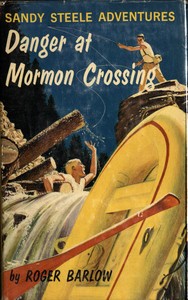
Danger at Mormon Crossing Sandy Steele Adventures #2 — Text and Context
Young Readers
39,310 recorded words. 10 minutes difference from this book's estimate.
View Gutenberg source #50225
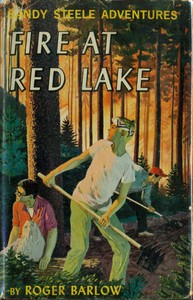
For Fire at Red Lake Sandy Steele Adventures #4 — Key Ideas to Explore, the stored edition analysis reports 36,882 words, 2 hr 41 min estimated reading time, and 5 detected text sections.
The text analysis averages about 12.4 words per sentence, while the detected sections provide another way to judge how the source is divided.
Project Gutenberg metadata also associates the work with “Camping -- Juvenile fiction,” connecting these edition facts with the source record’s subject description.
Explore this collection
These alternatives are selected using recorded categories and estimated reading time.
About 171 minutes
Young Readers
39,310 recorded words. 10 minutes difference from this book's estimate.
View Gutenberg source #50225About 174 minutes
Young Readers
39,987 recorded words. 13 minutes difference from this book's estimate.
View Gutenberg source #52296About 176 minutes
Young Readers
40,447 recorded words. 15 minutes difference from this book's estimate.
View Gutenberg source #50353Search stored excerpts and compare books → Choose by your preferences →
Choices use stored catalog measurements. Estimates vary with reading speed. A shared category is a catalog label, not a claim that two books have the same argument or literary quality.
Search reads excerpt text stored with this catalog and links to its associated Gutenberg record. The connection is stored in the site database; this tool does not recheck that every excerpt is word-for-word identical to that external record. Excerpt search does not cover every chapter and does not verify historical publication dates.
Catalog snapshot checked: 2026-09-25. Coverage: 98 public books, 98 available source excerpts.
Calculated from edition completeness, EPUB availability, text structure and catalogue metadata. Not a user rating.
Total of 100 points, scaled to a 2.5-5.0 range. Editions with an empty description or a missing EPUB file are not scored.
Public-domain source text
The source text is kept in the dedicated reader, separate from this catalogue record and its commentary.
The opening chapter of Fire at Red Lake establishes a distinct rhythm: the station wagon's jolts over a rutted road are matched by the quick, teasing dialogue among Sandy Steele, Jerry James, and Quiz Taylor. The boys' banter—Jerry's threat of 'deathly screams' and Quiz's precise conversion of a quarter mile to feet—sets a tone of adolescent camaraderie that will be tested by the forest fire to come. Leckie uses this interplay to introduce character dynamics before the plot shifts gears.
The narrative voice in the early chapters alternates between the boys' informal exchanges and the terse, technical language of the fire crew. When Ranger Landers takes over, the prose becomes clipped and procedural: 'Class E is three hundred acres and up,' he explains, and the dialogue shifts to backfire lines and skeleton crews. The contrast is sharp—Sandy's casual question 'What's a Class E fire?' is answered with a fire boss's map-based strategy. This tonal shift mirrors the story's movement from vacation to emergency, and Leckie sustains it by embedding firefighting terminology—'three-thousand-foot line,' 'natural firebreak'—into the action without explanatory pauses.
Leckie gives the fire itself a kind of presence through sensory detail. When Sandy spots the first smoke from the tower, the description is minimal: 'a thin swirl of smoke.' But as the fire grows, the language becomes more vivid: 'an enormous golden cloud hung over the trees like a halo,' which Ranger Fellows immediately renames 'deadly beauty.' The fire's behavior is tracked through class ratings and spread rates, but its visual impact is rendered in short, stark images—dusk settling, the golden cloud, the difficulty of seeing 'your hand in front of your face' at night. These details keep the physical threat immediate without anthropomorphizing the flames.
The pacing of Fire at Red Lake is driven by the step-by-step logic of firefighting. After the initial setup, the narrative slows to follow the crew's preparations: the fire boss studies the map, assigns gang bosses, and orders a bulldozer to a ridge. The boys are given a specific role—fire scouts relaying messages—and the text tracks time precisely: 'almost five hours had passed since he had spotted the first thin swirl of smoke.' This procedural rhythm creates a documentary feel, with each paragraph advancing the tactical situation. The result is a pace that mirrors the fire's own advance—steady, methodical, and punctuated by moments of sudden urgency.
Readers should pay attention to how Leckie uses the boys' limited perspective to filter the firefighting expertise. Sandy, Jerry, and Quiz learn alongside the reader, asking questions that prompt explanations of class ratings and backfire lines. This device keeps technical information digestible while maintaining the story's forward momentum. The missing atomic bomb, mentioned in the chapter list, remains a looming subtext that the excerpts do not resolve.
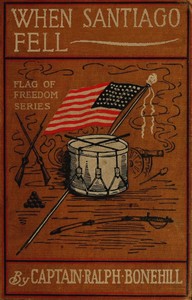
Rain on the windows blurred the pages of Fire at Red Lake, where Sandy’s frantic backfire lines felt oddly quiet against the din. That same hushed tension lingered after I closed it, drifting almost by accident to the old soldier’s tale in When Santiago Fell; or, The War Adventures of Two Chums — Text and Context, where another kind of heat—young bravado against the Spanish—smoldered just beneath the prose.
Your answers remain private and are stored only in this browser.