About 266 minutes
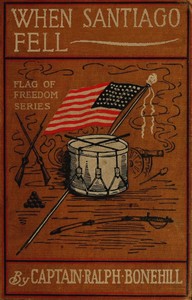
When Santiago Fell; or, The War Adventures of Two Chums — Text and Context
Young Readers
61,027 recorded words. 394 minutes difference from this book's estimate.
View Gutenberg source #51798
Before opening Evenings at Home; Or, The Juvenile Budget Opened — Text and Context, the edition data offers a quick orientation: 151,799 words, 11 hr estimated reading time, and 103 detected text sections.
The text analysis averages about 19.4 words per sentence, while the detected sections provide another way to judge how the source is divided.
Project Gutenberg metadata also associates the work with “Children's poetry,” connecting these edition facts with the source record’s subject description.
Explore this collection
These alternatives are selected using recorded categories and estimated reading time.
About 266 minutes
Young Readers
61,027 recorded words. 394 minutes difference from this book's estimate.
View Gutenberg source #51798About 247 minutes
Young Readers
56,767 recorded words. 413 minutes difference from this book's estimate.
View Gutenberg source #45192About 231 minutes
Young Readers
53,105 recorded words. 429 minutes difference from this book's estimate.
View Gutenberg source #45457Search stored excerpts and compare books → Choose by your preferences →
Choices use stored catalog measurements. Estimates vary with reading speed. A shared category is a catalog label, not a claim that two books have the same argument or literary quality.
Search reads excerpt text stored with this catalog and links to its associated Gutenberg record. The connection is stored in the site database; this tool does not recheck that every excerpt is word-for-word identical to that external record. Excerpt search does not cover every chapter and does not verify historical publication dates.
Catalog snapshot checked: 2026-09-25. Coverage: 98 public books, 98 available source excerpts.
Calculated from edition completeness, EPUB availability, text structure and catalogue metadata. Not a user rating.
Total of 100 points, scaled to a 2.5-5.0 range. Editions with an empty description or a missing EPUB file are not scored.
Public-domain source text
The source text is kept in the dedicated reader, separate from this catalogue record and its commentary.
Evenings at Home opens with a preface that positions the collection as a corrective to what the American publishers call the 'affectation of simplicity' in contemporary children's books. The editors claim that the ideal juvenile work should 'give the idea of having been written by one of them'—a child. This ambition is tested across the 103 text sections, which shift between prose dialogues, moral tales, and verse narratives. One of the most striking features is the variation in pace: didactic passages move slowly, while the poems accelerate into headlong action.
The collection juxtaposes two distinct narrative registers. In prose sections, the tone is often measured and instructive, with characters like the father in 'Canute's Reproof' speaking in balanced, aphoristic sentences. The verse, however, adopts a more colloquial and energetic voice. In 'Jehu's Rashness,' the narrator uses exclamations ('Lord! how the drivers cursed and swore') and onomatopoeic verbs ('slap-dash,' 'crash went the panniers') that mimic the chaos of the runaway gig. This shift is not merely stylistic—it signals a change in the reader's expected engagement. The prose invites reflection; the verse demands visceral participation.
The poem 'Jehu's Rashness' demonstrates a deliberate acceleration of pace. The opening stanzas move in a regular ballad meter, but as the horses bolt, the rhythm tightens. Lines become shorter, and the rhyme scheme drives forward: 'They drove the crowd from side to side / And shook poor Jehu's bones.' The catalogue of disasters—trampled pigs, a farmer's wife overturned, a bear that 'stalked and roared'—accumulates in a breathless sequence. The repetition of 'and' (anaphora) creates a sense of unstoppable momentum. This technique contrasts sharply with the slower, more explanatory prose sections, where moral lessons are spelled out at length.
Despite the fantastical elements—a talking bear, a king's reproof—the poems ground themselves in concrete, everyday objects. In 'Jehu's Rashness,' the fair is filled with 'nuts, oranges, and gingerbread,' 'scissors, knives, and thimbles.' These details serve a dual purpose: they make the scene vivid for a young reader, and they anchor the moral lesson in a recognizable world. The wreckage is not abstract; it is a 'heap of crockery-ware' and a 'showman's broken box.' This specificity is a hallmark of the collection's approach to instruction through entertainment, avoiding the 'puerile' abstraction the preface condemns.
Readers approaching Evenings at Home will find that its pleasures lie less in plot than in the texture of its language. The alternation between prose and verse, between slow instruction and rapid catastrophe, rewards attention to rhythm and word choice. The poems, in particular, repay reading aloud—their sound effects and pacing are integral to their effect. This is a book that teaches not only through its morals but through the very shape of its sentences.
I keep thinking about how those old stories shift so suddenly from steady lessons to wild, galloping verse—that rush of energy stays with you. When Santiago Fell; or, The War Adventures of Two Chums — Text and Context has a similar way of catching you off guard, turning a quiet moment into something urgent and lasting.
Save your reaction, strongest insight, and memorable passage.