About 231 minutes
Linda Carlton's Island Adventure — Key Ideas to Explore
Young Readers
53,105 recorded words. 16 minutes difference from this book's estimate.
View Gutenberg source #45457
This digital edition of Among the Esquimaux; or, Adventures under the Arctic Circle — A Closer Reading is described by source-level measurements including 56,767 words, 4 hr 7 min estimated reading time, and 6 detected text sections.
The text analysis averages about 22.0 words per sentence, while the detected sections provide another way to judge how the source is divided.
Project Gutenberg metadata also associates the work with “Orphans -- Juvenile fiction,” connecting these edition facts with the source record’s subject description.
Explore this collection
These alternatives are selected using recorded categories and estimated reading time.
About 231 minutes
Young Readers
53,105 recorded words. 16 minutes difference from this book's estimate.
View Gutenberg source #45457About 266 minutes
Young Readers
61,027 recorded words. 19 minutes difference from this book's estimate.
View Gutenberg source #51798About 208 minutes
Young Readers
47,663 recorded words. 39 minutes difference from this book's estimate.
View Gutenberg source #44133Search stored excerpts and compare books → Choose by your preferences →
Choices use stored catalog measurements. Estimates vary with reading speed. A shared category is a catalog label, not a claim that two books have the same argument or literary quality.
Search reads excerpt text stored with this catalog and links to its associated Gutenberg record. The connection is stored in the site database; this tool does not recheck that every excerpt is word-for-word identical to that external record. Excerpt search does not cover every chapter and does not verify historical publication dates.
Catalog snapshot checked: 2026-09-25. Coverage: 98 public books, 98 available source excerpts.
Calculated from edition completeness, EPUB availability, text structure and catalogue metadata. Not a user rating.
Total of 100 points, scaled to a 2.5-5.0 range. Editions with an empty description or a missing EPUB file are not scored.
Public-domain source text
The source text is kept in the dedicated reader, separate from this catalogue record and its commentary.
Edward S. Ellis opens Among the Esquimaux with the Nautilus nearing York Factory, a Hudson Bay Company post described not as a factory but as a fur-trade headquarters. The narrator's voice is brisk and informative, pausing to explain that the fort's wooden walls have never been pierced by a hostile bullet, a claim that signals the story's confidence in peaceful cross-cultural encounters. This expository tone, however, soon gives way to a more dramatic register when the boys Fred and Rob witness the aurora borealis. Their awe—"I never dreamed that anywhere in the world one could see such a sight as that"—is met with the sailor Jack's sniff of disgust: "The Northern Lights... is that all?" This clash of perspectives, between wonder and familiarity, becomes a structural device, as Ellis repeatedly pairs the boys' enthusiasm with the seasoned characters' pragmatism.
Ellis's word choices mark a clear division between the boys' romanticized Arctic and the practical world of Jack and Docak. When Fred calls the aurora "a sight worth a journey around the world," Jack dismisses it as "rather purty" but an "old story." The narrator's own language leans toward the sublime: the aurora's "ribbons and streamers" dart "to and beyond the zenith," and the display is described as "overwhelming beauty and grandeur." Yet this elevated diction is undercut by Jack's colloquialisms—"mighty pleasant out-doors"—and by Docak's silence on the matter. The Esquimaux, we are told, "see it too often to care about it." Ellis thus uses vocabulary to dramatize a tension: the boys' literary awe versus the locals' lived indifference. The effect is not to mock either perspective but to show how the same phenomenon can be both transcendent and routine, depending on one's history with it.
The conversations in the excerpt do more than advance plot; they reveal character through speech patterns. Rob and Fred speak in complete, earnest sentences: "I pity the man who says, 'There is no God,' or who can look unmoved to the very depths of his soul." Jack, by contrast, uses contractions, dropped consonants, and a sailor's bluntness: "I'll own that they are rather purty." Docak, the Esquimaux, is given no direct dialogue in these pages; his presence is noted, but his voice is filtered through Jack's report: "Docak and me had more important bus'ness to talk about." This asymmetry suggests that Ellis, writing in 1894, grants the native character less verbal agency, even as he positions him as a knowledgeable guide. The boys' philosophical musings—on electricity, God, and the pole—stand out against Jack's practical concerns about the hunting trip, creating a layered conversation where each speaker's idiom reflects his role in the story.
Ellis's descriptive passages are dense with sensory detail, but they also carry a pedagogical weight. The opening chapter explains York Factory's function, its history, and its peaceful relations with Indigenous peoples, as if the reader needs a primer before the adventure begins. Later, the aurora description is almost scientific: "The subtle exchange of electrical conditions must have reached something like an equipoise." Yet this explanatory impulse is balanced by moments of pure spectacle, as when the lights "shortened their lightning excursions into space." The setting is not merely backdrop; it is a force that shapes the characters' reactions. The cold, for instance, is noted only after the aurora fades: "Gracious! but it has become cold." The boys forget the temperature while watching, but the environment reasserts itself. Ellis uses description to remind readers that the Arctic is both beautiful and hostile, a place where wonder and discomfort coexist.
The excerpted chapters show a pattern that likely extends through the book: a shift from exposition to action to reflection. Chapter I is largely expository, introducing the Nautilus and York Factory. Chapter II ("A Colossal Somersault") promises a dramatic event, though the excerpt does not include it. The aurora scene, from later in the text, follows a different rhythm: a long, lyrical description, then dialogue, then a return to the warmth of the living room. This alternation between the sublime and the domestic—between the icy outdoors and the firelit interior—structures the boys' experience. Ellis also uses chapter endings to create suspense: "The Coming Shadow" and "Walled In" suggest perils ahead. The narrative voice remains steady, even in crisis, maintaining a tone of controlled excitement. Readers familiar with boys' adventure fiction of the era will recognize this formula, but Ellis's attention to the aurora's detail and the characters' varied responses gives the formula a distinctive texture.
Readers approaching Among the Esquimaux should attend to the interplay between the boys' wonder and the veterans' world-weariness. Ellis does not resolve this tension; instead, he lets it drive the narrative forward. The hunting trip that Jack and Docak plan may test Fred and Rob's romantic notions against the practical realities of Arctic survival. The excerpts offer no conclusion, but they establish a pattern: the boys will learn, but not without friction. This is a story less about the Arctic itself than about how different people see it—and how those visions collide.
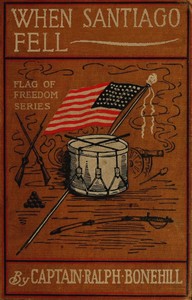
Reading about Jack and Docak’s unimpressed glances at the Northern Lights reminded me of evenings when my own wonder went unanswered. I felt that same quiet ache in When Santiago Fell, where the boys’ thrilling war feels so distant from the adults’ weary silence. When Santiago Fell; or, The War Adventures of Two Chums — Text and Context captures that gap between what we expect and what others quietly endure.
Save your reaction, strongest insight, and memorable passage.