About 212 minutes
Red Dynamite A Mystery Story for Boys — A Closer Reading
Fairy Moral Tales
48,629 recorded words. 29 minutes difference from this book's estimate.
View Gutenberg source #44111
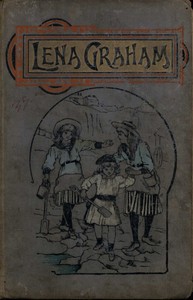
Lena Graham — Background and Themes can be approached with a clearer sense of reading commitment from its source measurements: 42,061 words, 3 hr 3 min estimated reading time, and 6 detected text sections.
The text analysis averages about 19.1 words per sentence, while the detected sections provide another way to judge how the source is divided.
Project Gutenberg metadata also associates the work with “Conduct of life -- Juvenile fiction,” connecting these edition facts with the source record’s subject description.
Explore this collection
These alternatives are selected using recorded categories and estimated reading time.
About 212 minutes
Fairy Moral Tales
48,629 recorded words. 29 minutes difference from this book's estimate.
View Gutenberg source #44111About 214 minutes
Fairy Moral Tales
49,035 recorded words. 31 minutes difference from this book's estimate.
View Gutenberg source #44293About 134 minutes
Fairy Moral Tales
30,647 recorded words. 49 minutes difference from this book's estimate.
View Gutenberg source #43886Search stored excerpts and compare books → Choose by your preferences →
Choices use stored catalog measurements. Estimates vary with reading speed. A shared category is a catalog label, not a claim that two books have the same argument or literary quality.
Search reads excerpt text stored with this catalog and links to its associated Gutenberg record. The connection is stored in the site database; this tool does not recheck that every excerpt is word-for-word identical to that external record. Excerpt search does not cover every chapter and does not verify historical publication dates.
Catalog snapshot checked: 2026-09-25. Coverage: 98 public books, 98 available source excerpts.
Calculated from edition completeness, EPUB availability, text structure and catalogue metadata. Not a user rating.
Total of 100 points, scaled to a 2.5-5.0 range. Editions with an empty description or a missing EPUB file are not scored.
Public-domain source text
The source text is kept in the dedicated reader, separate from this catalogue record and its commentary.
From its opening chapter, Lena Graham establishes a pattern of movement between enclosed domestic spaces and expansive natural settings. The narrative repeatedly returns to a photograph on the mantelpiece—a group portrait of Lena’s unknown parents and sisters—as a focal point for her longing and curiosity. This image, described as showing Colonel Graham “very grave and a little bit stern,” becomes a touchstone for Lena’s anxieties about reunion and belonging. The story’s structure mirrors this oscillation: scenes of interior conversation and letter-reading alternate with excursions into gardens, fields, and coastal rocks, each transition marked by a shift in tone and pace.
The photograph that Lena studies “for the hundredth time” is more than a plot device; it is a structural hinge. Lowndes uses it to externalize Lena’s inner conflict between attachment to her aunt and anticipation of her parents. The image is described with precise details—Mrs. Graham seated, Milly on a stool, Colonel Graham leaning on the chair—that Lena interprets as signs of character. She wonders if her father’s grave look stems from “having been in battle.” This habit of reading faces in a static image recurs when the family later views their new house: the windows shine “like friendly eyes of welcome.” The novel thus builds a visual vocabulary where architecture and photographs alike are invested with emotional meaning, and characters repeatedly scrutinize appearances for clues about inner lives.
The narrative’s first major movement is a literal journey: from Aunt Mary’s home to the Graham family’s new house, Astbury. This transition is structured around a series of contrasts. The borrowed carriage from Colonel Freeling—a “grand carriage”—raises Lena’s expectations of a “stately mansion,” only to be replaced by the modest reality of a “small but very pretty house.” Lowndes emphasizes the deflation and subsequent acceptance: “All Lena’s visions faded away.” The arrival scene lingers on sensory details—the setting sun, roses and wisteria on the walls—that signal a shift from anticipation to immediate delight. This pattern of expectation revised by experience recurs throughout the book, as the girls explore their new surroundings and encounter people who do not match their preconceptions.
Once settled at Astbury, the children are allowed to “ramble off at their own sweet will,” and the narrative opens into a series of exploratory episodes. The description of the landscape—“field after field” stretching “far away on every side”—creates a sense of unbounded space. Within this green world, Lena’s prior knowledge of wildflowers establishes her as an authority, a subtle shift in power from the earlier scenes where she was the anxious newcomer. The first human encounter, with a sun-browned girl in blue serge and a pushed-back sailor hat, is marked by mutual curiosity and a “cold shyness” that contrasts with the children’s eagerness. The little dog’s shrill barks introduce a note of comic tension. These outdoor meetings are structurally distinct from the interior dialogues, offering a different register of social negotiation—one governed by physical presence rather than letters or photographs.
Lowndes balances the outdoor rambles with scenes set in parlors and bedrooms, where letters and conversations advance the plot. The opening chapter’s long exchange between Lena and Aunt Mary is typical: it unfolds in a static, furnished room, with the mantelpiece photograph as a silent participant. Later, the arrival of a letter from the travellers is anticipated with the same intensity Lena gave to the photograph. These interior scenes are dense with dialogue and emotional negotiation, while the outdoor episodes are more descriptive and action-oriented. The novel’s structure thus alternates between two modes: the reflective, verbal world of the home and the sensory, exploratory world of nature. This rhythm gives the story a distinctive pulse, as each new setting—whether the slippery rocks of the title illustration or the kitchen-garden—offers a fresh context for the characters to reveal themselves.
Readers attentive to the interplay of space and image will find in Lena Graham a carefully patterned narrative. The photograph, the borrowed carriage, the wildflower-strewn fields, and the shy neighbor all serve as coordinates in a geography of expectation and discovery. Lowndes’s method is to let settings do much of the emotional work, so that a change of scene often signals a change in the characters’ relationships. This edition preserves the original chapter breaks and illustrations, allowing modern readers to trace those movements as the author designed them.
There’s something in how Lena Graham lingers on photographs—frozen moments against wider landscapes—that reminds me of the quieter ache in Lost in the wilds — Text and Context. Both feel like rooms you leave but keep returning to, the way certain images stay behind your eyes long after the page turns.
Create a short personal record of your experience with this book.