About 212 minutes
Red Dynamite A Mystery Story for Boys — A Closer Reading
Fairy Moral Tales
48,629 recorded words. 2 minutes difference from this book's estimate.
View Gutenberg source #44111
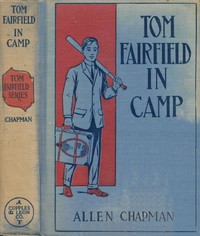
This digital edition of Tom Fairfield in Camp; or, The Secret of the Old Mill — Background and Themes is described by source-level measurements including 49,035 words, 3 hr 34 min estimated reading time, and 6 detected text sections.
The text analysis averages about 13.1 words per sentence, while the detected sections provide another way to judge how the source is divided.
Project Gutenberg metadata also associates the work with “Boys -- Juvenile fiction,” connecting these edition facts with the source record’s subject description.
Explore this collection
These alternatives are selected using recorded categories and estimated reading time.
About 212 minutes
Fairy Moral Tales
48,629 recorded words. 2 minutes difference from this book's estimate.
View Gutenberg source #44111About 234 minutes
Fairy Moral Tales
53,648 recorded words. 20 minutes difference from this book's estimate.
View Gutenberg source #43853About 240 minutes
Fairy Moral Tales
55,128 recorded words. 26 minutes difference from this book's estimate.
View Gutenberg source #43640Search stored excerpts and compare books → Choose by your preferences →
Choices use stored catalog measurements. Estimates vary with reading speed. A shared category is a catalog label, not a claim that two books have the same argument or literary quality.
Search reads excerpt text stored with this catalog and links to its associated Gutenberg record. The connection is stored in the site database; this tool does not recheck that every excerpt is word-for-word identical to that external record. Excerpt search does not cover every chapter and does not verify historical publication dates.
Catalog snapshot checked: 2026-09-25. Coverage: 98 public books, 98 available source excerpts.
Calculated from edition completeness, EPUB availability, text structure and catalogue metadata. Not a user rating.
Total of 100 points, scaled to a 2.5-5.0 range. Editions with an empty description or a missing EPUB file are not scored.
Public-domain source text
The source text is kept in the dedicated reader, separate from this catalogue record and its commentary.
The opening chapter of Tom Fairfield in Camp establishes its narrative voice through brisk, colloquial dialogue. Tom and his chum Dick trade lines like "Say, Dick, just throw that forward switch in; will you?" and "Sure I will, Tom." The speech is clipped, with contractions and casual interjections, creating an immediate sense of camaraderie. The motorboat Tag is given a playful personality: it "run[s] like a sewing machine" one day and is "off her feed" the next. Tom’s remark that he named it Tag because "I never know whether I’m ‘it’ or whether she is" blends mechanical frustration with a joke, setting a light, adventurous tone that persists through the early chapters.
The story’s forward momentum relies heavily on conversational exchanges. Characters rarely narrate at length; instead, plans and discoveries emerge through back-and-forth. When Tom proposes tying the boat half a mile from the mill, Jack responds with a conditional: "If we have to run for it I think we can do the half mile somewhat under the time old Wallace can make." This pattern—proposal, counterpoint, agreement—drives the plot without lengthy exposition. Even tension is conveyed through dialogue: Bert asks, "What about Sam or Nick, if they chase us?" and Tom answers flatly, "We won’t run from them, that’s flat!" The voice remains consistent across characters, all speaking in the same direct, slightly slangy register typical of early twentieth-century boys’ series fiction.
The motorboat Tag is more than transportation; its behavior dictates the rhythm of scenes. In the opening, cranking the engine is a small drama: "Tom revolved the fly wheel vigorously, but there was only a sort of sigh from the engine." The boat’s unreliability introduces uncertainty. Later, the boys cut the Tag’s speed by half to approach the mill quietly, showing how the craft’s noise level becomes a tactical concern. The boat’s presence also structures the narrative—launching, cruising, tying up, and later stranding (chapter XVI) create natural pauses and shifts in pace. When the boys decide to "stick to the old mill" rather than search Crystal Lake by boat, the Tag’s limitations shape their strategy.
Several chapters build suspense through careful, step-by-step reconnaissance. In chapter XXII, Tom is selected to "go forward and reconnoiter" while his companions hide. The narration slows to match his cautious advance: "Advancing cautiously, while his companions remained in hiding, our hero got to a point where he could command a good view of the old mill." The prose then pauses on Tom’s internal thought: "Now I guess I’ll just lay low for a while." These moments of stillness contrast with the earlier rapid dialogue and boat travel. The pacing mirrors the boys’ own alternation between action and watchfulness. Earlier, they debate whether to approach the mill all at once or "spy out the lay of the land first," choosing the latter—a decision that prioritizes tension over speed.
Readers attentive to shifts in tempo will notice how Chapman alternates between quick, dialogue-driven scenes and slower, observational passages. The motorboat Tag and the boys’ careful scouting create a rhythm that rewards patience. Pay attention to how the narrative voice remains constant even as the pace changes—the same colloquial energy underlies both a chase and a quiet stakeout.
Reading about the Tag’s steady hum and the patient search for the mill’s secret brought me back to slow afternoons spent turning pages by lamplight. That same quiet persistence lives in The Old Woman Who Lived in a Shoe; Or, There's No Place Like Home — Themes and Context, where home itself becomes a kind of murmuring engine, full of small rooms and hidden reasons. Both feel less like adventure than like listening.
Your answers remain private and are stored only in this browser.