About 259 minutes
Baseball Joe, Home Run King; or, The Greatest Pitcher and Batter on Record — Inside the Classic
Fairy Moral Tales
59,400 recorded words. 123 minutes difference from this book's estimate.
View Gutenberg source #43940
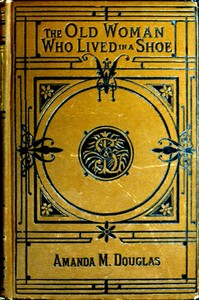
The Old Woman Who Lived in a Shoe; Or, There's No Place Like Home — Themes and Context can be approached with a clearer sense of reading commitment from its source measurements: 87,844 words, 6 hr 22 min estimated reading time, and 11 detected text sections.
The text analysis averages about 12.3 words per sentence, while the detected sections provide another way to judge how the source is divided.
Project Gutenberg metadata also associates the work with “Christian life -- Juvenile fiction,” connecting these edition facts with the source record’s subject description.
Explore this collection
These alternatives are selected using recorded categories and estimated reading time.
About 259 minutes
Fairy Moral Tales
59,400 recorded words. 123 minutes difference from this book's estimate.
View Gutenberg source #43940About 240 minutes
Fairy Moral Tales
55,128 recorded words. 142 minutes difference from this book's estimate.
View Gutenberg source #43640About 234 minutes
Fairy Moral Tales
53,648 recorded words. 148 minutes difference from this book's estimate.
View Gutenberg source #43853Search stored excerpts and compare books → Choose by your preferences →
Choices use stored catalog measurements. Estimates vary with reading speed. A shared category is a catalog label, not a claim that two books have the same argument or literary quality.
Search reads excerpt text stored with this catalog and links to its associated Gutenberg record. The connection is stored in the site database; this tool does not recheck that every excerpt is word-for-word identical to that external record. Excerpt search does not cover every chapter and does not verify historical publication dates.
Catalog snapshot checked: 2026-09-25. Coverage: 98 public books, 98 available source excerpts.
Calculated from edition completeness, EPUB availability, text structure and catalogue metadata. Not a user rating.
Total of 100 points, scaled to a 2.5-5.0 range. Editions with an empty description or a missing EPUB file are not scored.
Public-domain source text
The source text is kept in the dedicated reader, separate from this catalogue record and its commentary.
Amanda M. Douglas's The Old Woman Who Lived in a Shoe; Or, There's No Place Like Home (1874) takes its title from the familiar nursery rhyme, but the story itself is a detailed domestic novel centered on the Kenneth family. The opening chapters establish a pattern of movement between the cramped interior of the family home—referred to as “the shoe”—and the outdoor spaces where the children work and play. Gardens, hayfields, and flower beds recur as settings where characters labor, hope, and encounter sudden misfortune.
The narrative voice shifts between close third-person observation of individual characters and broader commentary on family life. Douglas frequently uses floral imagery to mark both beauty and transience: honeysuckle and roses are “trained over the house,” while a hayfield accident abruptly transforms a “gay as a lark” boy into a motionless figure. These contrasts between cultivated growth and sudden harm shape the novel’s emotional rhythm.
The nursery-rhyme shoe is not merely a title; it functions as a recurring spatial metaphor. The Kenneth home is described as “a pretty little nest, in spite of want of paint and a general tumbling into decay,” a phrase that echoes the cramped but cherished dwelling of the rhyme. Douglas repeatedly emphasizes the house’s smallness and the family’s proximity to one another, creating a sense of both intimacy and pressure. Characters move in and out of this central space—to the garden, the hayfield, the neighbor’s farm—but the shoe remains the emotional anchor. The novel’s subtitle, “There’s No Place Like Home,” reinforces this centripetal structure: even when characters venture outward, the narrative pulls them back to the domestic threshold. This pattern is established early and persists through the excerpts, with scenes of departure and return marking the story’s rhythm.
Gardens appear repeatedly as spaces where characters attempt to impose order on an uncertain world. Hal, one of the younger Kennedys, plans “nice hot-beds for next spring” and hopes to sell “early lettuce and radishes.” His grandmother smiles at his ambition, and the narrative notes that “the place had begun ‘to blossom like a rose.’” These garden passages are among the most detailed in the excerpts, with specific plants—honeysuckle, roses, wisteria—named and described. The garden represents a controlled, productive environment, in contrast to the unpredictable hayfield where Hal later suffers his accident. Douglas uses the garden to suggest that careful labor can yield beauty and sustenance, but she does not allow this promise to go untested. The accident that follows undercuts the garden’s hopefulness, reminding readers that even the most orderly plans can be disrupted by chance.
The hayfield accident is the most dramatic incident in the excerpts, and it exemplifies Douglas’s technique of juxtaposing pastoral calm with sudden harm. The scene begins with Hal “gay as a lark” atop a hay wagon; moments later, he lies “deathly white” after a fall. The narrative slows to record physical details: “a deep groan escaped the lips that had laughed with gladness only a moment ago, and were now drawn to a thin blue line.” The response of the farm workers—Sam brushing away tears, Farmer Morris spreading his coat over the boy—emphasizes the communal shock. Douglas does not linger on the medical specifics beyond locating the injury “in the thigh,” but she dwells on the emotional aftermath: Granny Kenneth “rocked herself to and fro, her poor old brain wild with apprehension.” This movement from outdoor labor to interior crisis, from laughter to groaning, is a structural pattern that recurs throughout the novel, creating a world where safety is fragile.
Religious language appears in moments of crisis, but it is often tentative rather than assured. When Hal is injured, Granny asks, “will God hear us, and pity me a little?” The question is left unanswered in the excerpt; the narrative moves instead to the doctor’s arrival and the physical examination. Earlier, the dedication page frames the story as one “of love and faith, of work and waiting, and the gentle virtues that are none the less heroic for blooming in the centre of the home circle.” This language of “work and waiting” recurs in the characters’ actions: Hal works his garden, Granny waits by his bedside, and the community gathers without grand pronouncements. Douglas’s treatment of faith is understated, embedded in the rhythms of daily labor and the quiet endurance of hardship. The novel does not preach; instead, it shows characters turning to practical action—fetching water, sending for a doctor—as their primary response to suffering.
Readers approaching The Old Woman Who Lived in a Shoe should attend to the way Douglas builds meaning through repeated settings and objects: the shoe-shaped home, the garden, the hayfield. These are not mere backdrops but active elements that shape the characters’ possibilities and limitations. The novel’s structure moves between interior and exterior, between hope and accident, without resolving the tension. Pay particular attention to how Douglas uses physical details—a flower trained over a door, a groan in a hayfield—to carry emotional weight. The story rewards a slow reading that notices these recurrences.
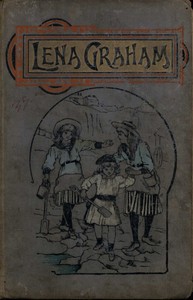
I keep thinking about that old shoe house, how the Kennedys made do and still found quiet blooms in their garden. It reminded me of another story where home feels both too small and too dear, where faith gets tested by small disasters. Lena Graham — Background and Themes touched that same tender place, the ache of loving a crowded, imperfect life. Some books just sit with you gently, like a memory you didn't expect to keep.
Capture what you thought, learned, and would like to remember.