About 240 minutes
Lost in the wilds — Text and Context
Fairy Moral Tales
55,128 recorded words. 6 minutes difference from this book's estimate.
View Gutenberg source #43640
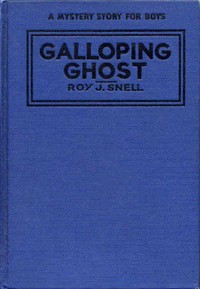
The catalog record for The Galloping Ghost A Mystery Story for Boys — Themes and Context provides practical reading context through 53,648 words, 3 hr 54 min estimated reading time, and 8 detected text sections.
The text analysis averages about 11.1 words per sentence, while the detected sections provide another way to judge how the source is divided.
Project Gutenberg metadata also associates the work with “Kidnapping -- Juvenile fiction,” connecting these edition facts with the source record’s subject description.
Explore this collection
These alternatives are selected using recorded categories and estimated reading time.
About 240 minutes
Fairy Moral Tales
55,128 recorded words. 6 minutes difference from this book's estimate.
View Gutenberg source #43640About 214 minutes
Fairy Moral Tales
49,035 recorded words. 20 minutes difference from this book's estimate.
View Gutenberg source #44293About 212 minutes
Fairy Moral Tales
48,629 recorded words. 22 minutes difference from this book's estimate.
View Gutenberg source #44111Search stored excerpts and compare books → Choose by your preferences →
Choices use stored catalog measurements. Estimates vary with reading speed. A shared category is a catalog label, not a claim that two books have the same argument or literary quality.
Search reads excerpt text stored with this catalog and links to its associated Gutenberg record. The connection is stored in the site database; this tool does not recheck that every excerpt is word-for-word identical to that external record. Excerpt search does not cover every chapter and does not verify historical publication dates.
Catalog snapshot checked: 2026-09-25. Coverage: 98 public books, 98 available source excerpts.
Calculated from edition completeness, EPUB availability, text structure and catalogue metadata. Not a user rating.
Total of 100 points, scaled to a 2.5-5.0 range. Editions with an empty description or a missing EPUB file are not scored.
Public-domain source text
The source text is kept in the dedicated reader, separate from this catalogue record and its commentary.
The opening chapter of The Galloping Ghost drops the reader into disorientation: Red Rodgers wakes on a vibrating floor, unsure if he has gone deaf, then hears a “wild, weird, mad, hilarious laugh.” The narrative immediately establishes a pattern of sensory uncertainty—sound, sight, and touch are all unreliable. Red’s first-person reflections are interspersed with third-person description, creating a close but not omniscient perspective. The laugh is “almost human, but not quite,” a detail that will recur as the story balances natural and seemingly supernatural explanations.
The excerpts emphasize tangible evidence over deduction. A jimmy bar recovered from a speed boat is matched to the impression left on a pried-open car window. Whittled wood shavings and an “invisible footprint” on a sheet are treated as serious leads. Tom Howe’s excitement—“Say, boy! … That’s the bar!”—shows how the plot hinges on matching objects to their marks. The story treats these items as almost talismanic; Johnny’s bar is “saved from a watery grave,” and its identification resolves a key link. The reader is invited to track these physical clues alongside the characters.
Snell devotes extended passages to weather and terrain, especially in the “Dreaming at Dawn” chapter. The approach of a storm is described in sensory layers: the “long, deep, long-drawn sigh” of the lake, the gulls standing “like uniformed officers,” the “ten thousand spots of gleaming white” advancing across the water. The setting is not backdrop but antagonist—the storm forces Red and Berley to wait, and the islands offer both concealment and danger. The prose shifts from tight action to lyrical observation, a rhythm that distinguishes this mystery from purely plot-driven boys’ adventure stories.
Despite the catalog subject “Ghosts -- Juvenile fiction,” the excerpts never confirm a supernatural entity. The laugh in chapter 1 is attributed to “some wild thing,” and the ghost of the title appears only in chapter headings (“The Ghost Appears,” “A Haunted Bay”). The narrative maintains a rationalist frame: characters discuss “invisible footprints” and “impressions in wood” as forensic evidence. The ghost may be a natural phenomenon or a human disguise, but the text withholds certainty. This ambiguity is a deliberate structural choice, allowing the mystery to sustain both a literal and a figurative reading.
Readers approaching The Galloping Ghost should attend to the interplay between the catalog subjects—kidnapping, escapes, ghosts, football—and the actual texture of the prose. The football element is barely present in the excerpts (a single reference to touchdowns), while the landscape and clue-work dominate. The story rewards attention to physical details: a nick in a bar, the shape of a whittled shaving, the sound of a laugh. Treat the ghost as a question rather than a given, and the novel’s pleasures lie in its patient, atmospheric buildup.
I keep thinking about the footprint that wasn’t there in Roy Snell’s story, how the boys built a whole theory around an absence. It reminded me of quiet gaps in Lena Graham — Background and Themes, the way her story unfolds less from actions than from things left unsaid. Both feel like winter afternoons, no sound but your own breath.
A brief reflection can help important ideas stay with you longer.