About 214 minutes
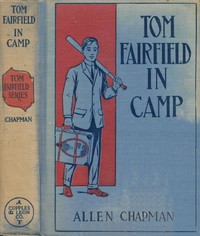
Tom Fairfield in Camp; or, The Secret of the Old Mill — Background and Themes
Fairy Moral Tales
49,035 recorded words. 2 minutes difference from this book's estimate.
View Gutenberg source #44293
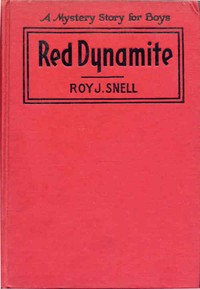
The catalog record for Red Dynamite A Mystery Story for Boys — A Closer Reading provides practical reading context through 48,629 words, 3 hr 32 min estimated reading time, and 7 detected text sections.
The text analysis averages about 11.0 words per sentence, while the detected sections provide another way to judge how the source is divided.
Project Gutenberg metadata also associates the work with “Friendship -- Juvenile fiction,” connecting these edition facts with the source record’s subject description.
Explore this collection
These alternatives are selected using recorded categories and estimated reading time.
About 214 minutes
Fairy Moral Tales
49,035 recorded words. 2 minutes difference from this book's estimate.
View Gutenberg source #44293About 234 minutes
Fairy Moral Tales
53,648 recorded words. 22 minutes difference from this book's estimate.
View Gutenberg source #43853About 240 minutes
Fairy Moral Tales
55,128 recorded words. 28 minutes difference from this book's estimate.
View Gutenberg source #43640Search stored excerpts and compare books → Choose by your preferences →
Choices use stored catalog measurements. Estimates vary with reading speed. A shared category is a catalog label, not a claim that two books have the same argument or literary quality.
Search reads excerpt text stored with this catalog and links to its associated Gutenberg record. The connection is stored in the site database; this tool does not recheck that every excerpt is word-for-word identical to that external record. Excerpt search does not cover every chapter and does not verify historical publication dates.
Catalog snapshot checked: 2026-09-25. Coverage: 98 public books, 98 available source excerpts.
Calculated from edition completeness, EPUB availability, text structure and catalogue metadata. Not a user rating.
Total of 100 points, scaled to a 2.5-5.0 range. Editions with an empty description or a missing EPUB file are not scored.
Public-domain source text
The source text is kept in the dedicated reader, separate from this catalogue record and its commentary.
Roy J. Snell opens Red Dynamite with a scene that immediately establishes a dual rhythm: the slow, grinding work of a mountain mill and the quick, skeptical curiosity of Johnny Thompson, a boy from Illinois. The dialogue between Johnny and Ballard Ball moves in short, punchy exchanges, each line advancing the mystery of the jugs that “smoke” and freeze a leg on contact. Snell’s prose here is economical, relying on sensory details—the “sucking and hissing” sound, the “white smoke”—to build intrigue without overexplaining. The pace quickens as Johnny’s doubt gives way to determination, a pattern that recurs throughout the excerpts: moments of quiet observation are punctuated by sudden action or revelation.
Snell drives the story forward almost entirely through dialogue. In the opening chapter, Johnny’s questions (“But what’s down there?”) and Ballard’s laconic replies (“Nothing down there but water.”) create a back-and-forth that mimics the rhythm of investigation. The author rarely lingers on description; instead, characters reveal information through conversation. This technique keeps the narrative brisk, but it also means that voice—particularly Ballard’s drawl and Johnny’s directness—carries the burden of characterization. When Ballard says, “Cross my heart,” the phrase feels both sincere and evasive, hinting at the mountain code of secrecy that Snell weaves into the plot.
The excerpts show a deliberate variation in pace. Early chapters move slowly, with Johnny absorbing the mill’s atmosphere and the mystery of the jugs. Then, abruptly, the tempo changes: a car ride, a farewell, and a hunting trip are compressed into a few paragraphs. Snell uses short sentences and line breaks to accelerate the action, as when Johnny “stopped the car” and Ballard “hopped out.” Later, the pace slows again for introspection: “For a moment Johnny sat in his car thinking.” These shifts are not arbitrary; they mirror the protagonist’s mental state—curious, then decisive, then reflective. The football passages, though not fully excerpted, likely introduce another gear: the rapid, physical rhythm of the game.
Snell’s narrative voice often withholds information, letting characters’ silences speak. When Jensie announces she will hunt with Ballard, she offers no explanation, and Johnny “expected him to know the reason. He did—and was glad.” This technique creates a sense of shared understanding among the characters, while the reader is left to infer. Similarly, Donald Day’s invitation to the mystery room is interrupted by news of Uncle Mose Short, and the revelation is postponed. Snell trusts the reader to follow these gaps, a strategy that maintains suspense without artificial cliffhangers. The result is a story that feels both fast-paced and deliberately paced, with pauses that deepen the mystery.
Readers should pay attention to how Snell uses the Cumberland setting not just as backdrop but as a source of rhythm—the mill’s grinding, the hills’ echoes, the darkness that swallows Ballard. The narrative voice is lean, favoring action over atmosphere, but the changes in pace reward close reading. Watch for moments when the prose slows: they often signal a clue or a shift in loyalty.
There’s something about Johnny’s mountain jugs that reminds me of the careless girl’s water-cresses—both are small, peculiar things that hold more than they first promise. Maybe that’s just what old books do, sitting quietly until you notice how their odd details linger. I keep thinking about Little Bessie, the Careless Girl, or, Squirrels, Nuts, and Water-Cresses — Context and Discussion the same way, the way you’d remember a field you once walked through.
A brief reflection can help important ideas stay with you longer.